Recipe: Red Velvet Cupcakes

Red velvet cakes are characterized by its bright red hue, due in part to the food coloring used and to the reaction of the vinegar and baking soda with the cocoa powder.

Red velvet cupcakes have grown popular over the years, particularly during Christmas and Valentine’s Day.

Here’s a variation on the recipe I found on Pinterest, adjusted due to availability of ingredients.

Ingredients:

  • 1 1/4 cup vegetable oil
  • 1 cup buttlermilk
  • 2 large eggs
  • 1 tsp white vinegar
  • Red food coloring
  • 2 tsp vanilla
  • 2 1/2 c all purpose flour
  • 1 3/4 c sugar
  • 1 tsp baking soda
  • 3/4 tsp salt
  • 1 tbsp cocoa powder

Procedure:

  • Pre-heat oven to 175-deg C and line muffin tins with paper cups.
  • In a large bowl, beat together oil, buttermilk, eggs, vinegar and vanilla extract. Add in a few drops of food coloring until you get a bright red color.
  • In a separate bowl, sift together the flour, sugar, baking soda, salt and cocoa powder.
  • Add the dry to the wet ingredients 1/2 cup at a time, mixing between each addition to avoid any lumps in the batter.
  • Using a regular 12-cup muffin pan, fill each cup 2/3 of the way with batter and bake for 18-20 minutes until a toothpick inserted comes out clean. Transfer the cupcakes to a cooling rack.

For the cream cheese frosting, double the recipe used in my Carrot Cupcakes post.

Recipe yields 24 cupcakes.

Now available: Goju Natural Fruit Infusion Drinks

Fruit infusion drinks are a growing trend, particularly among the health-conscious, and are often cited as a weight-loss or detox secret. Proponents of this trend report feeling healthier and more invigorated after including this type of beverage in their diet.

Infusing water with fruit also has the added benefit of adding flavor and zing to the otherwise plain ole’ H20 which is great for foodies like me who would gravitate more towards improvement in taste. Besides, any trend that will get one to drink more water should be good, hmmm?

Fruit-flavored or -infused water can be DIY-ed by immersing pieces of fruit into cold water for a period of time using specially designed water bottles and pitchers. However, some people do not have the time to scour the markets for fresh produce, obtain the necessary equipment and prepare their fruit infusion drinks.

Fortunately, Vida Nutriscience, the beauty, slimming and wellness company behind Snow Caps, My Slim, Crystal White and Snow Skin brands, is entering the ready-to-drink market with its new brand, Goju Natural Fruit Infusion.

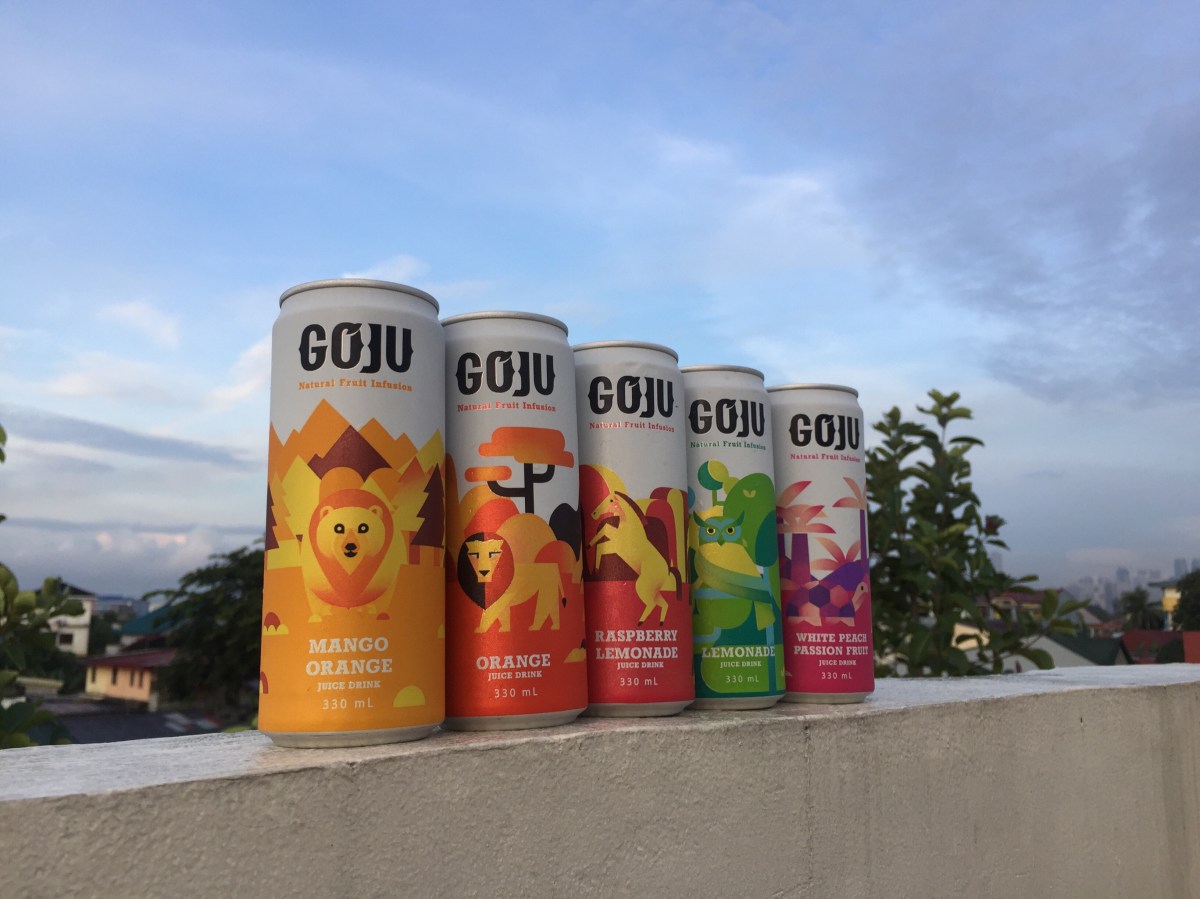
Taking its name from the combination of “Go” and “Juice”, the new product line consists of five fruit juice concoctions packaged in brightly colored 330ml cans, each with its own unique taste, identity and health benefits.

  • Lemonade: A blend of natural lemons and packed with vitamin C, it helps in boosting energy, cleansing the kidneys and the urinary tract, losing weight and boosting the body’s defense system.
  • Mango and Orange: A blend of orange, mango, passion fruit, lemon and vitamin C, it helps in boosting immunity, improving digestion, losing weight and beautifying one’s skin.
  • Raspberry Lemonade.  A mixture of raspberry and lemonade, it helps in improving blood circulation, fighting inflammation, boosting energy and maintaining kidney health.
  • White Peach Passion Fruit. A concoction of natural white peach, passion fruit, pineapple, lemon and vitamin C, it helps in improving digestion, circulation and bone health and rehydrating one’s skin.
  • Orange. The old fashioned freshly squeezed orange juice now in a can, it helps in boosting the immune system and maintaining blood pressure levels.

I was given ten cans of Goju to sample so I shared the wealth and got my family and friends to try it out with various meals throughout the day.

I don’t like heavy breakfasts so I paired my Goju Mango Orange with some hopiang baboy for a light and energizing start to my workday.

A friend paired her Goju Lemonade with her packed veggie lunch, adding a burst of sweetness to her already healthy meal.  Meanwhile, while lunching out with officemates, I partnered our Goju Orange and Goju Raspberry Lemonade with our smoked pork ribs.

I treated myself to a snack of siopao asado while sipping on my Goju Orange.

Another friend brought home her Goju Lemonade and paired it with her homemade pizza dinner prepared by her kids.

My daughter, on the other hand, snacked on a GoJu Raspberry Lemonade to energize her while she’s doing her homework.

Our consensus on this new drink product as a whole are:

  • It gives a fresh (and currently relevant) twist on the traditional ready-to-drink beverage.
  • It has a fresh and natural flavor, similar to how a freshly made juice drink will taste.
  • It can be paired with various kinds of food, at different times of the day, making it a highly flexible and adaptable beverage.
  • It has a cool aesthetic as well, very Instagrammable and fun to look at.

To maximize your enjoyment of your own Goju Natural Fruit Infusion, remember the following:

  • Shake the can well before opening.
  • Keep it refrigerated as it is best served when chilled.
  • Avoid exposing the can to high temperature.
  • The drink contains natural ingredients so some sediments may appear.

Goju Natural Fruit Infusion is available at Landmark and Anson’s in Metro Manila and at CSI Supermarket in North Luzon.

Disclosure: This post is sponsored by Vida Nutriscience who also provided product samples for me to review.  Product details are provided by the company as well.

This post contains affiliate links.

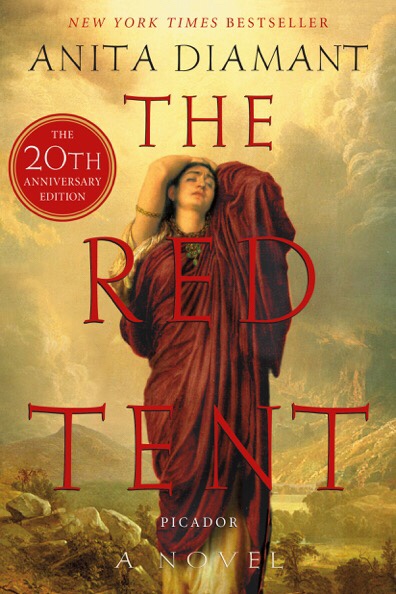
A silent Biblical character was given voice in Anita Diamant’s The Red Tent

The story of Jacob’s daughter Dinah is problematic for many Bible readers. The chapter in the book of Genesis in which she appeared is often referred to as the “rape of Dinah.”  After her abduction by the prince of Shechem and her subsequent marriage to him, her brothers Levi and Simeon carried out the murder of her husband and all the menfolk in the land, citing the dishonor done to their family.  After this narrative, Dinah was never heard of again.

Similar to most female characters in the Bible, Dinah is silent.  Other then the notation of her birth in an earlier chapter, what is written about her spans the thirty-one short verses in Genesis 34, none of which are direct quotations from her.

In The Red Tent by Anita Diamant, however, Dinah’s role, and those of the other women in the narrative, are greatly expanded.  Jacob’s wives, Leah and Rachel, evolved from sisters competing for the love of one man: they became leaders of the women in their tribe, guardians of women’s secret and sacred traditions.  Their handmaids, Bilhah and Zilpah, transformed from slave girls and concubines, to sisters and co-mothers of the Jacob’s wives.  Dinah, as the only girl among a brood of boys, became the cherished daughter of four mothers, the vessel of their hopes and dreams.

Much of the secret lives of these women took place in the red tent: it was the place where, under ancient law, women go into seclusion during menstruation or after childbirth.  It was here where their bonds are formed and strengthened, where they were bolstered by the encouragement and support of the other women in the tribe.

Dinah’s idyllic relationship with her family came to an end when she entered into her ill-fated marriage with Shalem, resulting into his murder at the hands of her brothers.

Cursing her father and brothers, she fled together with Shalem’s mother to Egypt where her mother-in-law raised her son among her family of scribes.

In the years that followed, Dinah built a life for herself: she became known for her skills in midwifery, she developed a close friendship with a fellow midwife, Meryt and was welcomed into her family, and she found new love in Benia, a woodworker in the Valley of Kings.

She would then encounter her long-lost brother, Joseph, who has risen high to become the Grand Vizier of Egypt, and who proposed to bring her back to her father’s camp to see him before he dies.

In this retelling of the Biblical tale, Diamant sheds light on the secret lives of women in ancient times. Their stories and traditions are passed down from mother to daughter, sister to sisters. Their bodies are celebrated and consecrated to their goddesses. Their roles within the tribes are shown as vital: they are caretakers, nurturers and healers, not just of their own children but of the whole community.

Diamant also calls attention to the weakness of men: how Jacob’s negligence of his sons resulted in the murder of Shalem and Joseph’s slavery in Egypt; how the malice of Simeon and Levi tore their family apart; and how Shalem’s love for Dinah made him agree to her brothers’ demands which resulted to the destruction of his people.

The novel is also one of hope: in the Bible, Dinah disappears from the narrative after the prince’s murder while in The Red Tent, she was able to forge her own path away from the protection of her family.

It also paints Egyptians, particularly the common people, in a new light, very far from depictions of oppressive slave-drivers towards Hebrews. Here, they are regular folks – midwives, scribes, carpenters and bakers – who are all simply living their lives.

The Red Tent is an important work, not just as a retelling of a Biblical tale, but as a depiction of the secret lives of women in ancient times. While Dinah, Leah, Rachel and their ilk were given minor roles in the Holy Book, in this novel, their lives and their stories are front and center.

I highly recommend this book to fans of Biblical fiction.

Click here to buy this book on Amazon.com.

In 2014, The Red Tent was adapted into a two-part miniseries starring Rebecca Ferguson (“Mission Impossible: Rogue Nation, ” “The White Queen“) as Dinah, Minnie Driver (“Sleepers,” “Grosse Pointe Blank“) as Leah, Morena Baccarin (“Deadpool,” “Gotham“) as Rachel and Iain Glenn (“Game of Thrones“) as Jacob. Click here to watch the The Red Tent on Amazon Prime.  Watch it for free when you sign up for your 30-day trial.

Love books and reading? Try Kindle Unlimited on Amazon. Get your first month FREE.

No Kindle device? Download the Kindle App for FREE to read your favorite books anytime and anywhere.

No time to read? Listen to your favorite books instead while you drive, run, shop, and more.  Try Audible for free for 30 days and get two free audiobooks.

Baguio Trip Basics: How to do what you want to do in the City of Pines

Much has been said and written about what to do during a sojourn to Baguio City. From the places to visit, food to eat and stuff to buy, it really is a challenge to be able to tick off all the stuff in your Baguio itinerary. So for this post, I’ll focus on the how, the strategies you can use to make the most out of your trip.

During the fam’s recent trip to the City of Pines, we discovered that, as with most things, especially travelling, planning is key:

Know your priorities. For example, prior to setting out for this trip, we determined that the highlight for this trip is a visit to the BenCab Museum. With this as a priority, we were able to carve out most of our second day for this activity: from eating breakfast at the Cafe Sabel within the museum’s grounds, exploring the museum’s galleries, even getting notebooks that feature BenCab’s artworks from the souvenir shop.

Stay in the center of the action. It’s a good thing that the place where my family stayed during our vacay – Summerlin Appartelle, available on AirBnB – is conveniently located along Gibraltar Road: a stone’s throw away from The Good Shepherd Convent (where we shopped for pasalubongs for the folks back home including that famous Ube Jam!), and a short drive away from the Mansion House (where bought raisin breads that rival those from Baguio Country Club) and from Korean Palace (where we planned on pigging out on samgyeopsal and other Korean food favorites). Happily, the appartelle is also just on the adjacent street to where Amare La Cucina is located; this is where we met some of our relatives to catch up over some Baguio’s famously yummy brick oven pizzas. Also, with the traffic congestion and lack of parking spaces in the city, you might want to consider leaving the car where you’re staying and just taking a cab to where you want to go; fortunately, ride-hailing apps like Micab and Grab are already operational in Baguio.

(Not yet on AirBNB? Sign up using my link to get Php1,600 in travel credit.)

Leave some room for the Baguio must-dos. Things like shopping for walis tambo and eating strawberry taho at the Camp 7’s Pasalubong Center along Kennon Road as we were leaving Baguio rounded up the family’s Baguio experience.

Do you have tried-and-tested travel tips? Do share them in the comments!

Got the wanderlust? Check out these books on Amazon.com!

Love books and reading? Try Kindle Unlimited on Amazon. Get your first month FREE.

No Kindle device? Download the Kindle App for FREE to read your favorite books anytime and anywhere.

No time to read? Listen to your favorite books instead while you drive, run, shop, and more.  Try Audible for free for 30 days and get two free audiobooks.

Age of Faith Series by Tamara Leigh presents inspirational romances set in the Middle Ages

The Medieval period (which lasted from the fifth to fifteenth century), also known as the Middle Ages, were also often referred to the Age of Faith.  It was at this time that most of Europe took on a deeply religious aspect, particularly in Christianity.

This is also the setting of Tamara Leigh’s Age of Faith series.  A prime example of the historical inspirational romance genre, the series covers the struggles of siblings belonging to a noble Christian family to find and keep love amidst the upheavals of twelfth century England.

Inspirational romances (or inspies) deal with the growth of the featured characters, their relationships and their spiritual development.  While physical attraction, romantic tension and emotional connection between the hero and heroine are delved into, explicit scenes and language have no place in such stories.

I found the first five books to be compelling reads, with engaging characters and plots.  The leads have a good amount of chemistry, while side characters add variety to the narrative and are sometimes spun off into leads in their own stories in the series.

Book 1: The Unveiling

In the first book of series, Baron Garr Wulfrith takes on a new squire for training, not knowing that the squire is actually Lady Annyn Bretanne in disguise, set on avenging her brother’s death which she blames on the baron.

Book 2: The Yielding

Wulfrith’s younger sister Beatrix fell into a life-altering accident while aiding her sister Gaenor in evading marriage to their family’s enemy.  The same accident also resulted in the death of one of their pursuers, whose brother, Michael D’Arci, is bent on revenge against Beatrix.

The Kindle version of this book is currently FREE on Amazon.com so click on the title or the image above and download today!

Book 3: The Redeeming

Gaenor fled her bethrothed Christian Lavonne, a man she has never met, in fear of potential abuse and recriminations due to her family’s long enmity with the Lavonnes and her recent sin. Christian, on the other hand, wants nothing more than to tend to his lands and people, and end the destruction brought about by his family’s feud with the Wulfriths.

Book 4: The Kindling

The secret illegitimate daughter of the Wulfriths’ longtime enemy, Helene Tippet finds herself put to the task of healing Sir Abel Wulfrith.

Book 5: The Longing

For eleven years, Everard Wulfrith carried the torch for his lost love Judith and blamed her sister-in-law Susannah de Balliol for their separation. Then Susannah reappears in his life along with her nephew who could also be his son.

The next three books, which I have not yet read, expand the scope of the series beyond the original family.  They follow the Wulfriths’ friends and allies and their own search for love.

Book 6: The Vexing

Lady Beata Fauvel is much sought-after among noblemen, being a wealthy heiress. When Sir Durand Marshal is ordered to guard her and ensure she does not wed without their sovereign’s approval, he finds himself drawn to the woman known as the Vestal Widow.

Book 7: The Awakening

Baron Lothaire Soames believes wealthy Lady Laura Middleton betrayed him years ago but he now pursues her as he is need of funds.  He finds himself falling for her again, wondering if he can forgive the one he can’t forget.

Book 8: The Raveling

Sir Elias de Morville sets out to rescue an abducted boy who could be his long lost son, aided by a mysterious woman known only as Honour.

For more details or to buy any of these books on Amazon.com, simply click on the titles.

Check out my other blog posts on my favorite books:

Photo by Artem Sapegin on Unsplash

Book Review: The Legend of Sheba – Rise of a Queen by Tosca Lee

The Bible mentions a foreign queen who journeys to Solomon’s court to test him and exchange lavish gifts. In legend, she took home more than just gifts and trade agreements: she took home a baby, a child with Solomon, from whom the line of Ethiopian kings that extends to the 20th century would trace their lineage.

In The Legend of Sheba – Rise of a Queen, Tosca Lee does a great job in sifting through packets of Biblical verse and ancient lore to come up with an exquisite retelling.

Her Queen of Sheba – Bilquis also known as Makeda – was blessed and burdened with beauty. The death of her mother plunged her into suffering before taking her destiny as queen of her father’s kingdom, at great cost to her heart.

Her refusal to wed echoes a similar scene in the movie Elizabeth (starring Cate Blanchett) which illustrate the challenges faced by powerful women in a man’s world.

Her relationship with Solomon develops over distance and the course of several years. It is important to note that they met and parleyed with each other as equals. She is a queen in her own right, not a treaty wife or a consort. Despite their developing love for each other, they had to separate due to her obligations to her own kingdom and the intrigues within Solomon’s harem.

I find Bilquis very intriguing: she is haunted by her past but bravely forges on for the good of her kingdom.

I recommend The Legend of Sheba – Rise of a Queen to people who, like me, wonder about side characters in lore and history, and want to see their perspective.

Click here to buy this book on Amazon.com.  Its prequel titled Ismeni: An eShort Prelude to The Legend of Sheba is also available as a free e-book.

Other works of Tosca Lee include:

Check out my reviews of other Biblical fiction:

Image by senivpetro on Freepik 

Esther – Royal Beauty by Angela Hunt

Angela Hunt’s Dangerous Beauty series begins with Esther: Royal Beauty. It is the fourth fictional account on the biblical Queen Esther that I have read. The narrative is told from two perspectives: that of Harbonah, one of the eunuchs who served the king of Persia; and that of Hadassah, later called Esther, the beautiful Jewish orphan with a world-changing destiny.

I can’t help but compare this book to another book on Esther: Roseanna M. White’s Jewel of Persia:

  1. Both books portray Esther as growing in maturity and queenly grace. In Esther: Dangerous Beauty, however, Esther is shown to be more shallow, concerned with nice clothes and dreaming of marrying the handsome Persian brother of her friend. She found her way into the Persian royal harem when she was abducted from her Jewish fiance by slave traders seeking to profit from the search for a new queen. Guided by her devout foster father, Mordecai, and the eunuchs she befriended, she wins the heart of the king for a time.
  2. Similar to Jewel of Persia, Queen Vashti is shown to be callous and ruthless woman, capable of unspeakable crimes to achieve her ends.
  3. King Xerxes, unnamed in this novel, is enigmatic. He rarely speaks and, being the sun around which the other characters revolve, his actions are given commentary by Esther and Harbona, and interpreted through their understanding. For me, his character is not fully fleshed out; even his involvement in the infamous affair with his son’s wife was told similar to a shady rumor, not provided with enough motivation.

Esther: Royal Beauty combines the biblical stories with historical accounts (as recorded by Herodotus), and is a good book with which to pass the time. However, I would have liked the King of Kings to be more real.

Click here to buy Esther: Royal Beauty on Amazon.com.

Other books in Angela Hunt’s Dangerous Beauty Series are:

Check out my posts on other Biblical fiction:

Image by senivpetro on Freepik

Book Review: Jewel of Persia by Roseanna M. White

Roseanna M. White’s Jewel of Persia sheds light on the hidden life of one of the Bible’s most enigmatic women: Queen Esther. Unlike most books about the events that make up the origins of the Jewish holiday Purim which focused solely on Esther and her journey from Jewish orphan to Queen of Persia, Jewel of Persia, ties Esther’s life with that of her childhood friend Kasia. Also, the competition to be Xerxes’ queen is not portrayed as a series of abductions with girls taken unwillingly into the harem. Rather, it was a contract willingly entered into by the potential brides.

I find Jewel of Persia quite gripping, particular when you consider that:
1. Esther was not portrayed as the love of Xerxes’ life. Rather, it was Kasia whose chance encounter with the king sealed her fate to become his most-loved concubine. Kasia’s love for the king was big enough to forgive his many failings as a ruler and as a man, and even to welcome Esther to the harem and help her fulfill her own destiny.

2. Kasia and Esther’s faith is central to the story. It sustains them through the many trials: such as the trials Kasia faced as an outsider in the harem and Esther’s heartbreak over a childhood love. Their personal relationship with God is contrasted heavily against the religion practiced by her enemies.

3. The book also has lighter moments. A running gag is of Xerxes (as in the Bible) offering cities up to half his kingdom at different instances to the people he favors but being met with requests for something else. By the third time this happens, he wonders why no one seems to want his cities.

Jewel of Persia is a compelling sample of biblical fiction.  Check it out on Amazon.com.

Roseanna M. White’s other biblical fiction works include:

Check out my other blog posts on my favorite books:

Image by senivpetro on Freepik

Unli Samgyeopsal at Korean Palace, Baguio

Similar to the phenomenon in Manila, Korean restaurants have sprouted across Baguio City, spurred no doubt by the growing appreciation for the gastronomic pleasures brought by Korean cuisine.

On our second night in the City of Pines, the fam braved the cold and drizzles and made the drive to this Korean restaurant which is quite near the apartelle where we were staying.

The resto has grown considerably since our last visit three years ago. The eating area and the parking space have been expanded. Still the place was already quite packed with the dinner crowd by the time we made our way there at 6pm.

At Php399/head, our group was able to eat out fill of samgyeopsal (grilled pork belly), woosamgyup (thin beef brisket slices), pajeon (vegetable pancakes) and all sorts of side dishes. (We did have to do our own grilling, though.)

The staff were polite and accommodating but due to the sheer volume of diners, refill requests did take some time.

By the way, if you ever had that desire to have that photo opp while dressed up in traditional Korean, this place can accommodate you. You can borrow the costumes on display for picture taking purposes.

Korean Palace is located at No 38 South Drive, Baguio City. For inquiries, call + 63 74 4467557.

For tips on surviving an eat-all-you-can setup, view my blog post here.

Why not try your hand at cooking Korean food at home?  Check out these recipe books on Amazon.com!

Want to try some recipes today? There’s no need to leave home to shop for ingredients.  With Honestbee, just order your groceries online and you’ll get them delivered right at your doorstep at your preferred time. Use this referral link and get Php500 off for a minimum spend of Php2,500.  You can download the Honestbee app on iTunes or Google Play.

If you’re in the US and an Amazon Prime member, sign up for a free trial of Amazon Fresh to get your groceries delivered to you.

Baguio’s famous pasalubong: Good Shepherd Ube Jam

Aside from the walis tambo, coffee alamid and Baguio Country Club’s raisin bread, the ube (purple yam) jam from the Good Shepherd Convent tops the list of pasalubong (souvenirs) from the City of Pines that you can bring home to family and friends.

The Good Shepherd Convent manages the Mountain Maid Training Center. It is a social enterprise borne out of the need to sustain the convent’s mission of the sisters which is “bringing about fullness of life with care and compassion, by enabling the economically challenged, deserving youth from the six tribes of the Cordilleras to live in dignity and integrity” through a regular income from product sales.

Today, the training center produces a number of food products that are recognized for their quality with the famous ube jam comprising half of their total sales. Proceeds of the sales of these products support the college education of 370 working students from the convent’s adopted communities.

Fortunately, the Good Shepherd Convent is just a 5 to 10-minute walk from Summerlin Appartelle, where we lodged during our stay in Baguio. Hubby and I made our way there while the kids were resting.

Our stash of Good Shepherd Convent goodies included:

  • An 850g bottle of Ube Jam – of course! – (Php350)
  • Two 440g bottles of Ube Jam (Php210 each)
  • A 12oz bottle of Peanut Butter (Php185)
  • Two jars of Lengua Cookies (Php175 each)
  • A 280g jar of Chocolate Crinkles (Php175)
  • Two 320g jars of Snowball Cookies (Php200 each)
  • Two jars of Caramel Alfajor (P200 each)

Here are some reminders to make the most of your visit:

  • Bring your own reusable shopping bags. Baguio City has an ongoing ordinance that prohibits the use of plastic bags and styrofoam. You can buy ecobags at the counter for as low as Php20 per bag but if you have a huge collection of ecobags at home (like I do!), you might want to bring those instead.
  • To save time, write down your orders on a slip of paper (there are some provided) before you line up at the counter. The prices of the available products are featured in one of the store windows.
  • Check out the view. The convent has a lookout point where you can see the vista of houses lining the mountainside. The lookout point houses a gallery that documents the history of the convent, a mural of Jesus, the Good Shepherd and a statue of Our Lady of the Good Shepherd.

The Good Shepherd Convent is located at No. 15 Gibraltar Road, Baguio City. For inquiries, call + 63 74 4241109.