
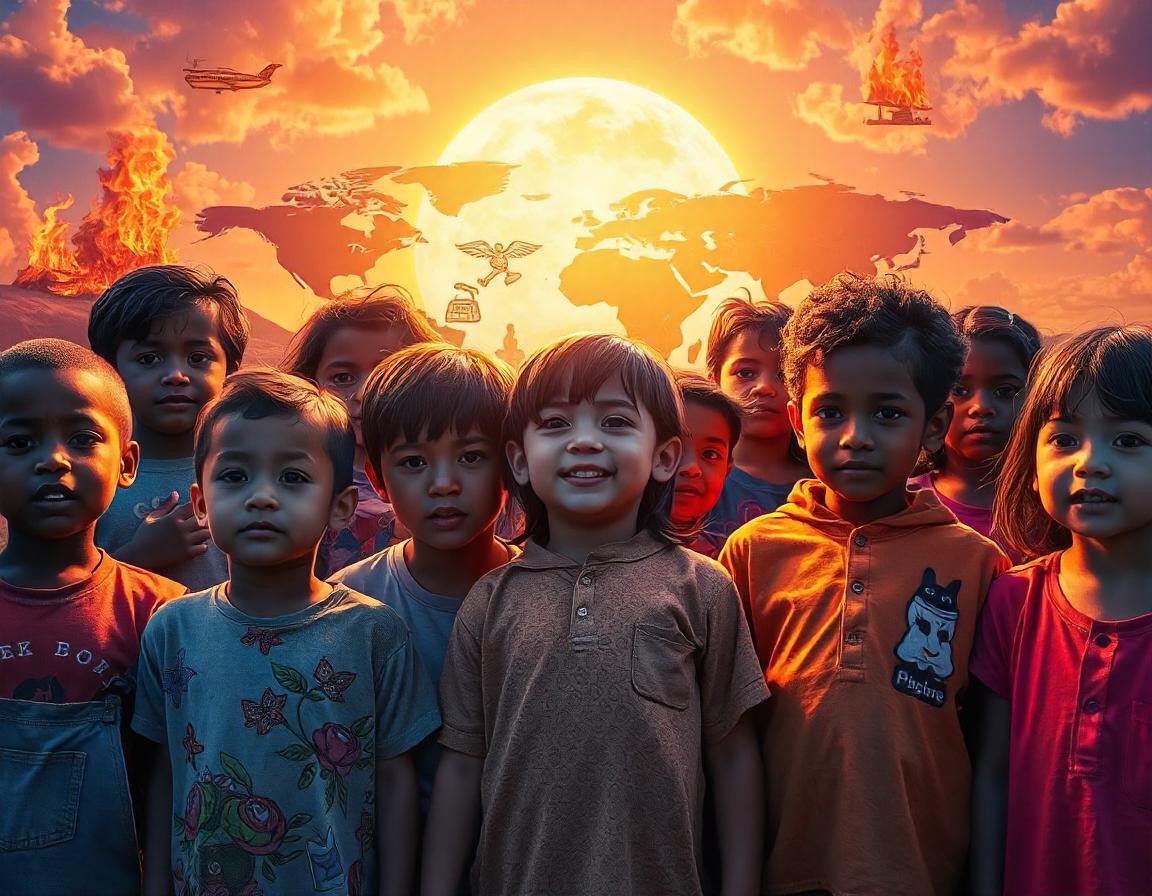
As the world confronts unprecedented challenges, the future of childhood hangs in the balance. UNICEF’s 2024 flagship report, The State of the World’s Children: The Future of Childhood in a Changing World, paints a stark picture of what lies ahead for children. Released on World Children’s Day, the report warns that if urgent action is not taken, the rights and well-being of future generations will be severely compromised.
The report highlights three megatrends—demographic change, climate and environmental crises, and breakthrough technologies—that will significantly shape the lives of children by 2050 and beyond. These global forces present both opportunities and challenges, but one thing is clear: the decisions made by world leaders today will determine the world that children inherit tomorrow.
A World of Crises: The Climate Challenge
Among the most pressing concerns is the climate crisis. 2023 marked the hottest year on record, and the report forecasts even worse conditions in the coming decades. By the 2050s, the number of children exposed to extreme heatwaves is expected to be eight times higher, while the risk of exposure to river floods and wildfires will increase by three and two times, respectively, compared to the early 2000s.
“Children are experiencing a myriad of crises, from climate shocks to online dangers, and these are set to intensify in the years to come,” said UNICEF Executive Director Catherine Russell. “The projections in this report demonstrate that the decisions world leaders make today—or fail to make—define the world children will inherit.”
The impact of these climate hazards will vary depending on a child’s age, health, socioeconomic status, and access to resources. A child with access to climate-resilient shelter, healthcare, and clean water will fare better than one without these essential resources. This stark divide underscores the urgent need for global action to protect vulnerable children, especially those in regions most affected by climate change.
Shifting Demographics: A Changing Global Landscape
The world’s demographic landscape is also changing rapidly. While the global population continues to grow, regions such as Sub-Saharan Africa and South Asia are projected to have the largest child populations by 2050. However, the share of children in the global population is expected to decline in every region. In Africa, for instance, children will make up less than 40% of the population by the 2050s, compared to 50% in the 2000s. In contrast, East Asia and Western Europe will see even sharper declines, with children comprising fewer than 17% of the population.
These shifts pose significant challenges. In some countries, the pressure to expand services for a large child population will intensify, while in others, governments will face the difficult task of balancing the needs of an aging population. These demographic changes will require careful planning and investment in services to ensure that all children receive the care, education, and support they need.
The Digital Divide: Promises and Perils of Technology
In the realm of technology, the rise of artificial intelligence (AI) offers both promise and peril. Today’s children are already interacting with AI embedded in apps, toys, virtual assistants, games, and educational software. But while these technologies hold the potential to revolutionize learning and play, the digital divide remains a significant barrier.
In 2024, over 95% of people in high-income countries have access to the internet, compared to just 26% in low-income nations. This gap means that many children in poorer regions are unable to access the digital tools and skills they need to thrive in an increasingly digital world. This lack of access is compounded by factors such as gender, socio-economic status, and language barriers, which further limit opportunities for some children.
However, the report also offers a glimpse of hope. Advances in education and public health over the past century have led to significant improvements in children’s lives. Life expectancy is projected to increase, and nearly 96% of children worldwide are expected to complete primary education by the 2050s, up from 80% in the 2000s.
A Path Forward: Centering Children’s Rights
The report emphasizes that addressing these challenges requires a renewed commitment to child rights, as outlined in the United Nations Convention on the Rights of the Child. UNICEF calls on world leaders to prioritize children’s well-being by investing in education, services, and resilient infrastructure, while also expanding climate resilience and ensuring safe digital access for all children.
“World Children’s Day is a moment for leaders to demonstrate their commitment to the rights and wellbeing of every child,” said Russell. “We can shape a better future for tomorrow’s children, and we have to get started today.”
This year’s World Children’s Day theme, “Listen to the Future,” encourages leaders to reflect on the world they want to leave behind. As part of the campaign, UNICEF invited children from around the globe to share their hopes and dreams for the future. Letters poured in from Gaza City, Haiti, Tanzania, and other places, expressing children’s wishes for a safe, healthy, and educated future—free from war and climate hazards.
The message is clear: the future of childhood depends on the actions we take today. We must act now to ensure that every child has the opportunity to thrive in a world that is safe, sustainable, and equitable.
As the report concludes, the choices we make in response to these megatrends will shape the world that tomorrow’s children inherit. The question remains: will we act in time to protect their future?
Rewritten from a recent press release.

 Jellybeans in the City