Caught Off Guard: How Inflation Challenges Are Reshaping Retirement in Asia

As the sun sets on years of hard work, retirement is meant to be a time of rest, relaxation, and reward. But for many retirees across Asia, the golden years are proving to be a financial juggling act, especially as inflation continues to bite. A recent survey by Sun Life Asia paints a vivid picture of the challenges faced by retirees in the region and offers a glimpse into the future of retirement planning.

Regrets and Reality: The Filipino Experience

In the Philippines, nearly half of today’s retirees harbor regrets about their financial decisions, with the majority lamenting not saving enough (73%). Others cite unwise investments (47%) or retiring too early (38%) as missteps. These regrets have tangible consequences: one in four retirees finds themselves blindsided by the rising cost of living, particularly healthcare and daily expenses.

The survey, titled Retirement Reimagined: Facing the Future with Confidence, highlights how inflation—markedly higher in the Philippines than the Asia average of 11%—has stretched retirement budgets thin. Many retirees have been forced to cut spending (62%) or turn to family for financial support (48%).

“There is a growing awareness among Filipinos about the importance of financial management to achieve a prosperous and comfortable retirement,” said Carla Gonzalez-Chong, Chief Client Experience and Marketing Officer at Sun Life Philippines. “Financial literacy remains key, and we are committed to this advocacy to help more Filipinos overcome the obstacles and enjoy quality lives in their golden years—just as they deserve.”

The Challenge of Late Planning

Despite these lessons, planning for retirement often starts far too late. Alarmingly, 66% of survey respondents admitted they would only begin preparing for retirement expenses within five years of retirement—or not at all. David Broom, Chief Client and Distribution Officer at Sun Life Asia, warns that this approach leaves many unprepared for the realities of post-work life.

“Our research shows that while independent financial security is seen as the foundation for a rewarding retirement, many people remain unprepared for the realities they face,” Broom said. “Early planning and disciplined saving are key to facing your golden years with confidence.”

The Next Generation: Redefining Retirement

Younger generations, however, are taking note of these challenges and adjusting their expectations. Workers across Asia now anticipate retiring at an average age of 65—seven years later than their retired counterparts. Many cite the need to save more (59%), stay active (59%), and cover increased living expenses (46%) as reasons for postponing retirement.

This shift reflects an evolving understanding of financial independence and longevity. “Ensuring the wellbeing of our growing senior population is a shared challenge in our communities,” Broom said. “We have a unique opportunity to redefine what a secure and healthy retirement looks like and empower people to approach their post-career years with proactive financial planning.”

Gold Star Planners vs. Retirement Rebels

The survey also identified two distinct groups among retirees: the “Gold Star Planners” and the “Retirement Rebels.” Gold Star Planners, who begin planning expenses well ahead of retirement, save more than 10% of their income, and invest in insurance and pension products, are more likely to stay within their budgets and express greater confidence in their health and finances.

In contrast, Retirement Rebels, who lack sufficient planning and insurance protection, often find themselves struggling to adapt. They are more likely to regret their financial decisions and face unexpected expenses in their later years.

Aspirations and Anxieties

For many Filipinos, retirement aspirations remain simple yet profound: spending quality time with family and friends (48%), escaping the daily grind (16%), and traveling the world (14%). However, these dreams are often tempered by concerns about health issues and physical decline (68%), which can derail even the best-laid plans.

A Call to Action

Sun Life’s findings are a wake-up call for individuals across all age groups. As the survey underscores, achieving a secure and fulfilling retirement requires early action, disciplined saving, and professional guidance. For those ready to take control of their financial future, Sun Life offers products like Sun Smarter Life Elite, Sun MaxiLink Prime, and Sun Senior Care, alongside access to trusted financial advisors.

“Retirement is not just a financial milestone—it’s a chance to live the life you’ve always dreamed of,” Gonzalez-Chong said. “With the right planning and support, every Filipino can look forward to golden years filled with joy, security, and peace of mind.”

For more information or to consult a Sun Life advisor, visit www.sunlife.co/TalkToAnAdvisor.

Details provided in a recent press release.

Retirement planning in the Philippines: your guide to secure your financial future

Retirement is an important phase of life that requires careful financial planning to ensure a comfortable and stress-free future. As retirement approaches, it’s essential to have a solid plan in place to secure your financial stability. Wondering what steps to take in planning for a comfortable retirement here in the Philippines? Check out this guide:

How do I plan my retirement in the Philippines?

Planning for retirement in the Philippines involves several crucial steps to help you achieve your financial goals. Let’s delve into these steps:

  1. Set your retirement goals. Begin by envisioning your ideal retirement lifestyle. Consider factors such as where you would like to live, your desired activities, and any potential healthcare expenses. Setting clear goals will help you determine the financial resources you need to achieve them.
  2. Assess your current financial situation. Evaluate your existing financial assets, including savings, investments, and retirement accounts. Determine how much you have saved for retirement and analyze your income and expenses. This assessment will provide a baseline for your retirement planning.
  3. Calculate your retirement needs. Estimate your retirement expenses, taking into account daily living expenses, healthcare costs, travel, and leisure activities. Consider the inflation rate and potential healthcare inflation to ensure your savings can withstand future expenses.
  4. Explore retirement vehicles and options. Research retirement plans offered by reputable financial institutions in the Philippines. One such option is Sun Life’s range of retirement plans, including Sun MaxiLink Prime, Sun FlexiLink, and Sun MaxiLink One. These plans provide investment opportunities along with insurance coverage, allowing you to grow your retirement funds while safeguarding your future.
How do I start a retirement plan?

Starting a retirement plan is a proactive step towards securing your financial future. Here’s how you can get started:

  1. Determine your risk tolerance. Understand your risk tolerance level, as it will influence your investment decisions. Conservative investors may prefer low-risk options, while more aggressive investors might be willing to take on higher risks for potentially greater returns.
  2. Consult with a financial advisor. Seek guidance from a trusted financial advisor who specializes in retirement planning. They can assess your financial situation, understand your goals, and recommend suitable retirement plans that align with your needs and risk profile.
  3. Establish a budget. Creating a budget is crucial for effective retirement planning. Track your income and expenses, and identify areas where you can cut back and save more. Allocate a portion of your income specifically towards your retirement savings.
  4. Start contributing to retirement accounts. Take advantage of retirement accounts available in the Philippines, such as the Personal Equity and Retirement Account (PERA) or employer-sponsored plans like the Social Security System (SSS) or Government Service Insurance System (GSIS). Contribute regularly to maximize your savings potential.
How much money do you need to retire in the Philippines?

The amount of money needed for retirement varies depending on factors such as your desired lifestyle, healthcare needs, and expected inflation rates. While there is no one-size-fits-all answer, it’s crucial to estimate your retirement needs realistically. Here are some considerations:

  1. Calculate your desired retirement income. Estimate the annual income you would need during retirement to sustain your desired lifestyle. Consider your expenses, including housing, food, healthcare, transportation, and leisure activities. Keep in mind that your expenses may change throughout retirement.
  2. Factor in inflation. Account for the impact of inflation on your retirement savings. Inflation erodes the purchasing power of money over time, so it’s essential to adjust your retirement income needs accordingly.
  3. Evaluate potential income sources. Assess potential income sources during retirement, such as pension plans, Social Security benefits, rental income, or investment returns. Determine how these sources can contribute to your retirement income.
  4. Seek professional guidance. Consult with a financial advisor to help you estimate the amount of money you’ll need for retirement. They can assess your goals, analyze your current financial situation, and provide personalized projections based on various scenarios.

Planning for retirement is a crucial aspect of securing your financial future. By following the steps outlined in this guide, including setting clear retirement goals, exploring retirement plans, and estimating your retirement needs, you can take proactive steps toward a comfortable retirement in the Philippines.

Remember, seeking professional advice from a financial advisor can provide valuable insights tailored to your specific circumstances. Start planning early to maximize your savings and enjoy a fulfilling retirement life.

Note: The hyperlinks and descriptions for Sun Life retirement plans have been included in the appropriate sections of the article to provide readers with direct access to more information.

Header image by pressfoto on Freepik

How to stick to your New Year’s Resolution to save money

At the start of every year, we usually make promises to ourselves to be better or do better at various aspects of our lives.

These New Year’s resolutions may involve taking our personal relationships to the next level, pivoting our career paths or leading healthier or more active lifestyles.

Often, we also resolve to be better with our finances, especially when it comes to our savings.

What are savings?

Savings comprise the money that we have left after we subtract our spending (the cost of the goods and services we purchase) from our disposable income (i.e. what is left of our income after taxes).

This can be set aside for planned major expenditures in the future such as school tuition, home or car purchase, vacation or even retirement.

SavingsCalculator.org

Why is it important to save money?

Having ready cash to spend on the things we want (such as the wedding of our dreams or a grand graduation gift to our child) and need (such as home or car repairs) is always great for our peace of mind. Going into debt for these major items, or even for small expenses, not just adds to our stress but may also derail our financial standing in the future.

Also, in case of unforeseen circumstances such as medical emergencies, having some funds set aside that we can dip into so we won’t go into heavy debt is such a relief, isn’t it?

Hence, we have an urgent need to save money.

SavingsCalculator.org

How to save money

We already know that saving money for our future is essential: the problem is how to go about doing it.

After all, with the rising costs of living, the near-constant stream of messages in the media to always consume, consume and consume some more, plus the emotional high we get when we acquire something, we often finds ourselves reaching for our wallets again and again.

In this kind of environment, saving money is near impossible, isn’t it?

From my experience, this can be achieved by creating opportunities to increase our income and reduce our expenses. This may sound complicated at first, but with a few adjustments in how we view and treat our money, we can soon come up with a sizable pot for our savings.

Ways to increase your income

Saving up requires you to have earnings from which you will draw your savings. Earning more money, therefore, gives you a bigger room to spend (or save) money.

  • Pursue a job promotion. If you’ve been with your current employer for quite some time, you excel at what you do and are open to taking on additional responsibilities and work challenges, going for a promotion (and the pay increase and perks it brings) is one way to significantly grow your earnings.
  • Start a side hustle. If a promotion at your current job is a long shot, you can supplement your earnings by making money out of your talents and skills that provide value. In my case, I accept content creation assignments and writing jobs for food businesses. This way, I get to sharpen my skills as a content creator which also benefits my existing job as a marketing professional, while making some money on the side.
  • Create a passive income source. You will be surprised at the ways you can make some money with little to no effort. These include property rentals, royalties from published works and sales of online products. For example, I have enabled ads on my blog and while its earnings are still minuscule at its early stages, it still adds to my earnings with no additional work required from me.
SavingsCalculator.org

Ways to reduce your expenses

Increasing your income will be for nought if your expenses are increasing at the same rate, or worse, at a faster rate than your earnings. Cutting down on your spending will greatly increase the funds that you can set aside for savings:

  • Trim down your monthly bills. You hardly notice them but those monthly recurring expenses do add up. Prune off the monthly subscriptions that you no longer need or can easily replace. For example, you can limit yourself to maintaining just one video streaming subscription instead of five, or give up your gym membership and just learn yoga by watching free videos on Youtube. You should also check if you have a house leak that shoots up your water bill or set a timer for your heating or air-conditioning system to manage your electricity usage.
  • Prioritize your “treats.” Sure, you may feel like indulging yourself to a daily cup of handcrafted beverage at your favorite cafe, or getting a bi-weekly spa treatment but those little expenses do add up. Limit the frequency of your self-indulgences; not only will you save money in the long run, but the anticipation for the treats will make experiencing them even more special.
  • Shop smarter. If you’re used to winging it at the grocery or department store, it may be time to start shopping with a list. The exercise of making a shopping list involves assessing the things you have versus the things you need, minimizing overlaps or wastage.

Begin with the end in mind

By taking these tips to heart, you can find yourself accumulating savings in due time.

To really get you in the mood to save money throughout the year, it’s best to set a goal. It may be for something to reward yourself with – such as a trip you’ve been dreaming of taking or a new car – or something for your future – such as capital for your future business.

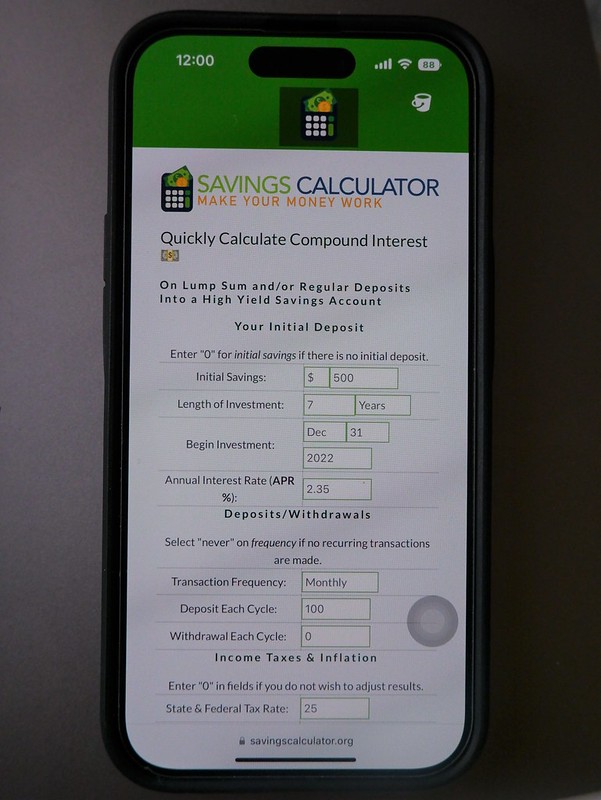
At SavingsCalculator.org, you can set the goal amount for your savings, the amount of money you currently have set aside, the interest rate and how much time you intend to save money for. The site’s calculator will then show the future value of your existing savings and how much you need to set aside each month to reach your goal.

Other calculators in the site can help you calculate:

Saving money may not get us that instant high we get from spending it, but it does set us up for a more comfortable future.

So stick to your New Year’s resolution to save money. Your future self will thank you for it!