
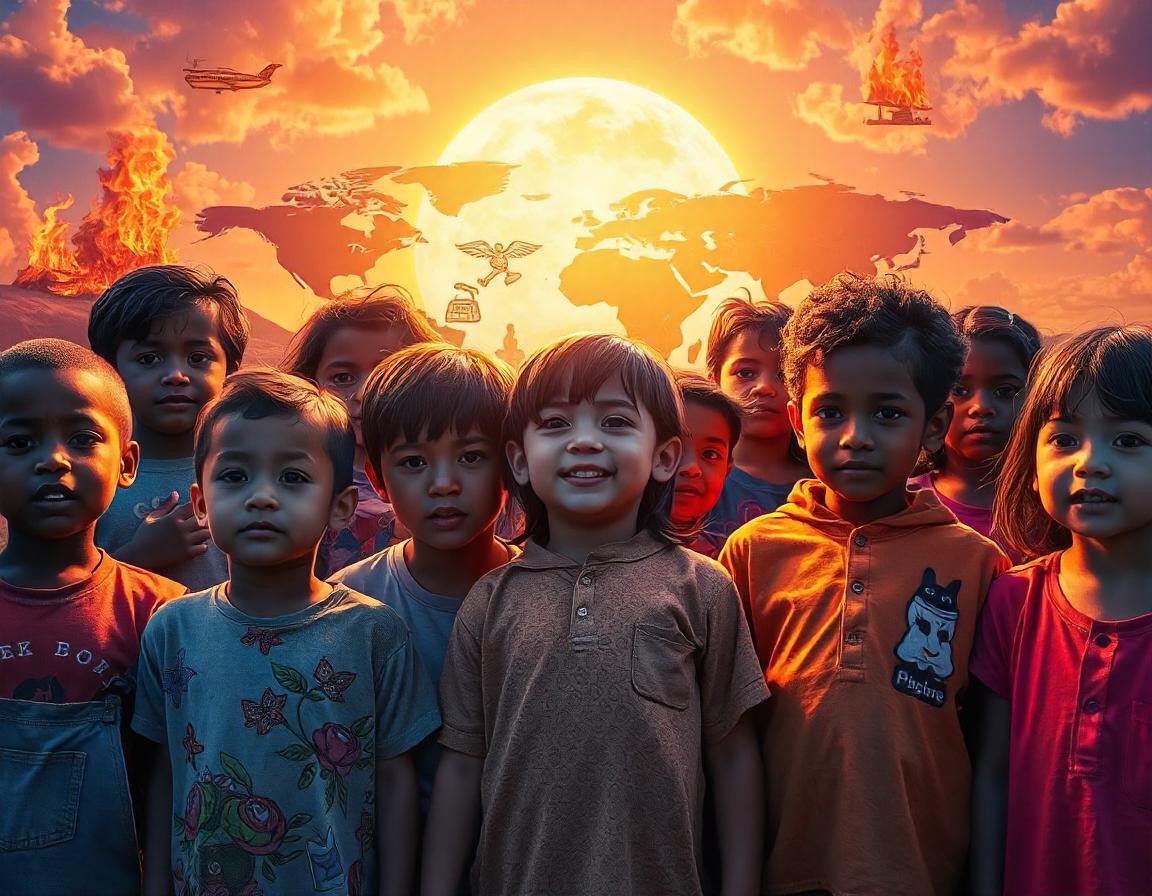
The Future of Childhood: A Call to Protect Children’s Rights in a Changing World

As the world confronts unprecedented challenges, the future of childhood hangs in the balance. UNICEF’s 2024 flagship report, The State of the World’s Children: The Future of Childhood in a Changing World, paints a stark picture of what lies ahead for children. Released on World Children’s Day, the report warns that if urgent action is not taken, the rights and well-being of future generations will be severely compromised.

The report highlights three megatrends—demographic change, climate and environmental crises, and breakthrough technologies—that will significantly shape the lives of children by 2050 and beyond. These global forces present both opportunities and challenges, but one thing is clear: the decisions made by world leaders today will determine the world that children inherit tomorrow.

A World of Crises: The Climate Challenge

Among the most pressing concerns is the climate crisis. 2023 marked the hottest year on record, and the report forecasts even worse conditions in the coming decades. By the 2050s, the number of children exposed to extreme heatwaves is expected to be eight times higher, while the risk of exposure to river floods and wildfires will increase by three and two times, respectively, compared to the early 2000s.

“Children are experiencing a myriad of crises, from climate shocks to online dangers, and these are set to intensify in the years to come,” said UNICEF Executive Director Catherine Russell. “The projections in this report demonstrate that the decisions world leaders make today—or fail to make—define the world children will inherit.”

The impact of these climate hazards will vary depending on a child’s age, health, socioeconomic status, and access to resources. A child with access to climate-resilient shelter, healthcare, and clean water will fare better than one without these essential resources. This stark divide underscores the urgent need for global action to protect vulnerable children, especially those in regions most affected by climate change.

Shifting Demographics: A Changing Global Landscape

The world’s demographic landscape is also changing rapidly. While the global population continues to grow, regions such as Sub-Saharan Africa and South Asia are projected to have the largest child populations by 2050. However, the share of children in the global population is expected to decline in every region. In Africa, for instance, children will make up less than 40% of the population by the 2050s, compared to 50% in the 2000s. In contrast, East Asia and Western Europe will see even sharper declines, with children comprising fewer than 17% of the population.

These shifts pose significant challenges. In some countries, the pressure to expand services for a large child population will intensify, while in others, governments will face the difficult task of balancing the needs of an aging population. These demographic changes will require careful planning and investment in services to ensure that all children receive the care, education, and support they need.

The Digital Divide: Promises and Perils of Technology

In the realm of technology, the rise of artificial intelligence (AI) offers both promise and peril. Today’s children are already interacting with AI embedded in apps, toys, virtual assistants, games, and educational software. But while these technologies hold the potential to revolutionize learning and play, the digital divide remains a significant barrier.

In 2024, over 95% of people in high-income countries have access to the internet, compared to just 26% in low-income nations. This gap means that many children in poorer regions are unable to access the digital tools and skills they need to thrive in an increasingly digital world. This lack of access is compounded by factors such as gender, socio-economic status, and language barriers, which further limit opportunities for some children.

However, the report also offers a glimpse of hope. Advances in education and public health over the past century have led to significant improvements in children’s lives. Life expectancy is projected to increase, and nearly 96% of children worldwide are expected to complete primary education by the 2050s, up from 80% in the 2000s.

A Path Forward: Centering Children’s Rights

The report emphasizes that addressing these challenges requires a renewed commitment to child rights, as outlined in the United Nations Convention on the Rights of the Child. UNICEF calls on world leaders to prioritize children’s well-being by investing in education, services, and resilient infrastructure, while also expanding climate resilience and ensuring safe digital access for all children.

“World Children’s Day is a moment for leaders to demonstrate their commitment to the rights and wellbeing of every child,” said Russell. “We can shape a better future for tomorrow’s children, and we have to get started today.”

This year’s World Children’s Day theme, “Listen to the Future,” encourages leaders to reflect on the world they want to leave behind. As part of the campaign, UNICEF invited children from around the globe to share their hopes and dreams for the future. Letters poured in from Gaza City, Haiti, Tanzania, and other places, expressing children’s wishes for a safe, healthy, and educated future—free from war and climate hazards.

The message is clear: the future of childhood depends on the actions we take today. We must act now to ensure that every child has the opportunity to thrive in a world that is safe, sustainable, and equitable.

As the report concludes, the choices we make in response to these megatrends will shape the world that tomorrow’s children inherit. The question remains: will we act in time to protect their future?

Rewritten from a recent press release.

How Forcing Employees Back to the Office Undermines the Green Revolution Sparked by COVID-19

The COVID-19 pandemic was a disruptive force, reshaping lives and industries across the globe. Yet, amid the challenges, it also triggered an unintended green revolution—an opportunity to rethink our approach to sustainability. As lockdowns and restrictions led to a dramatic reduction in pollution, carbon emissions, and waste, many began to realize that a more sustainable future was possible. However, the push to return employees to the office threatens to undo these environmental gains.

It is evident that forcing people back into traditional office environments contradicts the progress made during the pandemic, undermining the green movement that began when the world paused.

The Environmental Gains of Remote Work

One of the most visible and immediate effects of the pandemic was the sudden and significant drop in carbon emissions. With businesses shifting to remote work, the world saw fewer cars on the road, reduced flights, and closed offices—all contributing to cleaner air and less environmental strain. In the United States alone, remote work in 2020 saved an estimated 50 million metric tons of CO₂ emissions, demonstrating just how impactful a shift in work patterns could be on the environment.

Beyond emissions, the decrease in office activity led to reduced waste. With fewer people in the office, there was less disposable packaging, fewer paper products, and less overall resource consumption. Companies even started reconsidering the need for large office spaces, reducing the overall energy footprint of office buildings.

At home, remote work also spurred more sustainable habits. Many workers invested in energy-efficient home offices, from LED lighting to eco-friendly furniture. For the first time, people were thinking about their environmental impact in the context of their workspaces—a shift that could have long-lasting effects on consumer behavior.

The Case Against Forcing a Return to the Office

Despite these clear environmental benefits, the movement to bring employees back to the office is gaining momentum. This push risks undoing the green revolution sparked by the pandemic. Commuting, business travel, and the energy consumption of office buildings are major contributors to global carbon emissions. Forcing workers back to offices increases these environmental impacts, leading to higher CO₂ emissions, more waste, and greater resource use.

This shift back to office work not only reverses environmental progress but also reflects a regressive stance in the fight against climate change. While some argue that in-person collaboration is necessary for innovation, many of the environmental costs associated with office life can be avoided with continued flexible work arrangements. Additionally, the inefficiencies of large office spaces, particularly in urban areas, exacerbate energy consumption and increase the need for nonrenewable resources.

Many employees have shown a preference for hybrid or fully remote work, not just for personal convenience but also because these models align with their growing desire to support environmentally conscious practices. By insisting on a return to the office, companies risk alienating their workforce, ignoring both the environmental and cultural shifts that have taken place over the past few years.

Remote Work as a Catalyst for a Sustainable Future

The environmental benefits of remote work are not temporary; they offer long-term potential for meaningful change. The pandemic demonstrated that when human activity is scaled back, ecosystems can recover, air and water quality can improve, and carbon emissions can decline. This period of environmental respite proved that significant reductions in pollution and waste are possible—if only we prioritize sustainability over convenience.

Instead of returning to the old office-centric model, businesses have an opportunity to integrate hybrid and remote work as a permanent solution. Not only can these models maintain the environmental benefits, but they can also reduce the need for office infrastructure, decreasing the demand for energy and resources. For companies, remote work can lead to lower operating costs and increased employee satisfaction, offering both economic and environmental advantages.

Furthermore, businesses that embrace flexible work models can bolster their reputation as sustainability leaders. In an era where corporate responsibility is increasingly scrutinized, maintaining green practices can attract consumers and talent who prioritize eco-consciousness. In this regard, remote work isn’t just a response to the pandemic—it’s an investment in the future of both businesses and the planet.

The green revolution sparked by COVID-19 demonstrated what is possible when human activity slows down and aligns with the planet’s needs. The reduction in carbon emissions, waste, and pollution was not a fluke—it was the result of rethinking how we live and work. Forcing employees to return to the office is a step backward, undoing the progress made during the pandemic and exacerbating the environmental crisis.

The challenge now is to make these environmental improvements permanent. Businesses should embrace hybrid or remote work models, which not only benefit the planet but also improve employee well-being and satisfaction. In doing so, they can contribute to a more sustainable future, ensuring that the green revolution sparked by the pandemic doesn’t end when offices reopen.

Policymakers, business leaders, and employees alike must recognize that the future of work can—and should—be green. It’s time to embrace the lessons of the pandemic and build a more sustainable world for generations to come.

Seizing bright opportunities with Sun Life’s Sustainability-Driven VUL Fund

In a world where conscious investing is on the rise, Sun Life of Canada (Philippines), Inc. has unveiled an exciting opportunity for socially conscious investors. Introducing the Peso Global Sustainability Growth Fund, Sun Life’s first-ever sustainability-driven VUL (Variable Universal Life) equity fund. This fund aims to generate long-term capital appreciation by investing in global funds that prioritize Environmental, Social, and Governance (ESG) factors. With a focus on strong fundamentals and sustainable investing principles, this groundbreaking fund offers a chance to contribute to global sustainable progress while diversifying your assets.

A Bright Step Towards Global Sustainable Progress

“The Fund is perfect for those who want to diversify their assets while looking to contribute to global sustainable progress,” says Benedict Sison, CEO and Country Head of Sun Life Philippines. By embracing this investment opportunity, individuals can make a positive impact on the world while addressing their wealth accumulation and protection needs.

The Peso Global Sustainability Growth Fund is now available as a fund option with the following Sun Life PHP-denominated investment-linked insurance products: Sun FlexiLink, Sun FlexiLink1, Sun MaxiLink 100, Sun MaxiLink Prime, Sun MaxiLink Bright, and Sun MaxiLink One. This means that socially conscious investors can align their financial goals with their sustainability values, enabling them to diversify their assets while making a positive change in the world.

Sun Life’s Commitment to a Brighter and Sustainable Future

The launch of the Peso Global Sustainability Growth Fund is just one of the many ways Sun Life is actively contributing to building a brighter and more sustainable future for Filipinos. During Sun Life’s Financial Independence Month campaign launch, the company unveiled its comprehensive sustainability agenda, aligning itself with the United Nations Sustainability Goals.

Sun Life’s focus areas encompass a range of crucial aspects, including Increasing Financial Security, Fostering Healthier Lives, Advancing Sustainable Investing, Operating as a Trusted and Responsible Business, and Uplifting Communities. By incorporating sustainability into their strategy, operations, and culture, Sun Life is leading the way in sustainable finance and ensuring a better future for the next generations.

Explore the Possibilities

For those eager to explore the potential of the Peso Global Sustainability Growth Fund, Sun Life offers various avenues for information and guidance. Reach out to your Sun Life advisor, who will be more than happy to provide further details and assist you in making an informed decision. Alternatively, visit www.sunlife.co/TalkToAnAdvisor to connect with an advisor online.

To delve deeper into Sun Life’s sustainability journey and learn more about their commitment to a sustainable future, visit www.sunlife.co/SustainabilityPH. Here, you’ll discover the company’s extensive efforts and initiatives towards creating a better and more sustainable world.

Invest in Your Future, Invest in Sustainability

With Sun Life’s pioneering Peso Global Sustainability Growth Fund, you have the opportunity to invest in a brighter and more sustainable future. By diversifying your assets while aligning with your values, you can contribute to global progress and make a positive impact on the world. Join Sun Life on this exciting journey and be part of the sustainability revolution. Together, we can create a world where financial prosperity and sustainability go hand in hand.

Details provided in a recent press release.

Header image by Lifestylememory on Freepik

Sun Life unveils sustainability agenda with Financial Independence Month

In celebration of the Philippines’ independence this June, Sun Life of Canada (Philippines), Inc. has unveiled its sustainability agenda, reaffirming its commitment to helping Filipinos achieve financial freedom and brighter lives.

Sun Life’s Long-standing Commitment to Sustainability

For over 128 years, Sun Life has prioritized sustainability not only within its Philippine office but also as part of the global organization. Benedict Sison, CEO & Country Head of Sun Life Philippines, emphasized the company’s alignment with sustainability goals and its engagement in philanthropic and environmental initiatives. He stated, “As a life insurance and asset management business, we are naturally aligned with sustainability goals apart from pursuing philanthropic and environmental projects.”

Aligned with United Nations Sustainable Development Goals

Sun Life’s commitment to sustainability is demonstrated through initiatives that support the United Nations Sustainable Development Goals. The company focuses on areas where it can have the most positive social and environmental impact, including Increasing Financial Security, Fostering Healthier Lives, Advancing Sustainable Investing, Operating as a Trusted and Responsible Business, and Uplifting Communities. Sun Life’s sustained advocacy for these causes is showcased on their sustainability journey page, available at www.sunlife.co/SustainabilityPH.

Sison highlighted Sun Life’s dedication to creating a positive impact and empowering Filipinos to achieve financial security and healthier living for future generations. He said, “We aspire for our people and our solutions to make a difference in Filipino lives, empowering them to achieve financial security and healthier living for generations to come.”

Financial Independence Month: Empowering Filipinos

Continuing its mission to enhance financial security among Filipinos, Sun Life is once again celebrating June as Financial Independence Month. The company aims to empower individuals through relevant and engaging content that conveys the message, “Freedom starts with a choice. Kaya mo ‘yan!” (You can do it!)

Carla Gonzalez-Chong, Chief Client Experience and Marketing Officer of Sun Life, emphasized the significance of Financial Independence Month, stating, “Our rallying cry for this year shows our confidence in the Filipinos’ power to bring their goals to life.” She expressed Sun Life’s commitment to support individuals on their journey towards financial freedom and the vision of helping Filipinos achieve lifetime financial security.

Inspiring Short Films and Learning Modules

To inspire and motivate individuals, Sun Life has produced four short films created by its in-house team of young creatives. These films share heartwarming stories of Filipinos who made the choice to take control of their future and realize their goals:

  • “Sinag” by Mei Solis tells the story of a daughter struggling to connect with her Overseas Filipino mother until they discover a shared goal of being together for good.
  • “Kulay” by Casey Borja explores the world of a child on the autism spectrum who brings hope to his business-owner father during a crucial time.
  • “Ngayon at Bukas” by JC Manzano depicts the struggle of a son in search of his path, which unexpectedly leads him to his father’s humble barber shop.
  • “Para Sa Akin” by Bea Aguilera humorously portrays how a string of bad luck can ironically lead to finding a bright partner.

Starting from June 19, these films will be available on www.sunlife.co/KayaMoYan. Complementing the films, Sun Life is offering free learning modules for individuals seeking to build their financial portfolio. The message will be further amplified through content on Sun Life’s social platforms, including @SunLifePH on Facebook, Instagram, and TikTok.

Sustaining a More Sustainable Future

Sison affirmed Sun Life’s commitment as a partner in achieving a more sustainable future for Filipinos. He expressed appreciation for the progress made thus far and eagerly anticipated future milestones, with the goal of enabling more individuals to experience the freedom of living brighter.

Details provided in a recent press release.

Header image by Freepik