Poignant recollections of the Holocaust in My Real Name Is Hanna by Tara Lynn Masih

In 1941, a family of Jews live comfortably in northern Ukraine town of Kwasova, integrated with neighbors of other faiths. The eldest girl, Hanna Slivka, has just turned fourteen when the Germans invaded then Soviet-occupied Ukraine, determined to rid the shtetl of Jews. She, together with her family and other Jewish friends, were forced into hiding, first in the forests that surround their town, and second in underground caves believed to harbor evil spirits.

Inspired by real events that occured during the Holocaust, the story in My Real Name is Hanna is a retelling of Hanna’s childhood to her daughter. Being a recollection of memories of one of the most terrifying real-life events in history, it has a poignant tone that imbue the narrative with emotion and tension. The narrative is further interspersed with both Ukrainian and Jewish folklore – the making of Easter pysanky eggs, using wax to scry for one’s future husband, and the giving of birthday gifts to ward off evil for the year – making the story even more personal and grounded in that location and within their community.

In her debut novel, Tara Lynn Masih chronicles the intensifying hardships of Hanna’s family in particular and the Jews in general. It starts with restrictions on the food they can buy, the businesses they can engage in, until later, Jews are seized and made to travel north to the work camps. Some Jewish Romaninan prisoners, as revealed by the family’s informants, were made to cross a deep river and were either drowned or shot in the back when they made it to the banks, all while classical music is being played on the Gestapo’s gramophone.

Masih’s novel couldn’t have come at a more appropriate time: today, there are voices spewing words of hate about other groups of people, and the appeal to intellect and rationality has given way to emotional outbursts over real and imagined slights.  The author explains that given her young adult audience, she did leave out “some of the more nightmarish events.”  But what she did leave in are heart-wrenching enough.

Even more heart-wrenching are the actions of the people who helped Hanna’s family despite great personal danger: from the neighbor who gives them crosses to place on their door to hide their Jewishness during a raid, to the people who served as their contact to the outside world while they were in hiding.

As the novel ends, the family survived but to get their visas and be on their way to freedom in a new country, they needed to change their names.  This is why the retelling to her daughter begins and ends with her real name, and with it, the acceptance of what has happened before and since.

Masih’s story is brilliantly told with a relatable and sympathetic narrator.  The events described are grounded in history, and all the more horrifying because of it.

My Real Name is Hanna, published by Mandel Vilar Press, will be released on September 15, 2018. It is currently available for pre-order on Amazon.com.

Thanks to NetGalley and Mandel Vilar Press for the advanced read.

This post contains affiliate links.

Love books and reading? Try Kindle Unlimited on Amazon and read from thousands of books available in the Kindle Unlimited catalog. Get your first month FREE.

No Kindle device? Download the Kindle App for FREE to read your favorite books anytime and anywhere.

No time to read? Listen to your favorite books instead while you drive, run, shop, and more.  Try Audible for free for 30 days and get two free audiobooks.

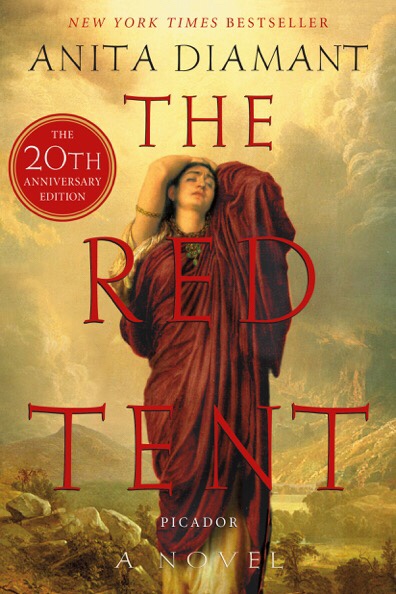
A silent Biblical character was given voice in Anita Diamant’s The Red Tent

The story of Jacob’s daughter Dinah is problematic for many Bible readers. The chapter in the book of Genesis in which she appeared is often referred to as the “rape of Dinah.”  After her abduction by the prince of Shechem and her subsequent marriage to him, her brothers Levi and Simeon carried out the murder of her husband and all the menfolk in the land, citing the dishonor done to their family.  After this narrative, Dinah was never heard of again.

Similar to most female characters in the Bible, Dinah is silent.  Other then the notation of her birth in an earlier chapter, what is written about her spans the thirty-one short verses in Genesis 34, none of which are direct quotations from her.

In The Red Tent by Anita Diamant, however, Dinah’s role, and those of the other women in the narrative, are greatly expanded.  Jacob’s wives, Leah and Rachel, evolved from sisters competing for the love of one man: they became leaders of the women in their tribe, guardians of women’s secret and sacred traditions.  Their handmaids, Bilhah and Zilpah, transformed from slave girls and concubines, to sisters and co-mothers of the Jacob’s wives.  Dinah, as the only girl among a brood of boys, became the cherished daughter of four mothers, the vessel of their hopes and dreams.

Much of the secret lives of these women took place in the red tent: it was the place where, under ancient law, women go into seclusion during menstruation or after childbirth.  It was here where their bonds are formed and strengthened, where they were bolstered by the encouragement and support of the other women in the tribe.

Dinah’s idyllic relationship with her family came to an end when she entered into her ill-fated marriage with Shalem, resulting into his murder at the hands of her brothers.

Cursing her father and brothers, she fled together with Shalem’s mother to Egypt where her mother-in-law raised her son among her family of scribes.

In the years that followed, Dinah built a life for herself: she became known for her skills in midwifery, she developed a close friendship with a fellow midwife, Meryt and was welcomed into her family, and she found new love in Benia, a woodworker in the Valley of Kings.

She would then encounter her long-lost brother, Joseph, who has risen high to become the Grand Vizier of Egypt, and who proposed to bring her back to her father’s camp to see him before he dies.

In this retelling of the Biblical tale, Diamant sheds light on the secret lives of women in ancient times. Their stories and traditions are passed down from mother to daughter, sister to sisters. Their bodies are celebrated and consecrated to their goddesses. Their roles within the tribes are shown as vital: they are caretakers, nurturers and healers, not just of their own children but of the whole community.

Diamant also calls attention to the weakness of men: how Jacob’s negligence of his sons resulted in the murder of Shalem and Joseph’s slavery in Egypt; how the malice of Simeon and Levi tore their family apart; and how Shalem’s love for Dinah made him agree to her brothers’ demands which resulted to the destruction of his people.

The novel is also one of hope: in the Bible, Dinah disappears from the narrative after the prince’s murder while in The Red Tent, she was able to forge her own path away from the protection of her family.

It also paints Egyptians, particularly the common people, in a new light, very far from depictions of oppressive slave-drivers towards Hebrews. Here, they are regular folks – midwives, scribes, carpenters and bakers – who are all simply living their lives.

The Red Tent is an important work, not just as a retelling of a Biblical tale, but as a depiction of the secret lives of women in ancient times. While Dinah, Leah, Rachel and their ilk were given minor roles in the Holy Book, in this novel, their lives and their stories are front and center.

I highly recommend this book to fans of Biblical fiction.

Click here to buy this book on Amazon.com.

In 2014, The Red Tent was adapted into a two-part miniseries starring Rebecca Ferguson (“Mission Impossible: Rogue Nation, ” “The White Queen“) as Dinah, Minnie Driver (“Sleepers,” “Grosse Pointe Blank“) as Leah, Morena Baccarin (“Deadpool,” “Gotham“) as Rachel and Iain Glenn (“Game of Thrones“) as Jacob. Click here to watch the The Red Tent on Amazon Prime.  Watch it for free when you sign up for your 30-day trial.

Love books and reading? Try Kindle Unlimited on Amazon. Get your first month FREE.

No Kindle device? Download the Kindle App for FREE to read your favorite books anytime and anywhere.

No time to read? Listen to your favorite books instead while you drive, run, shop, and more.  Try Audible for free for 30 days and get two free audiobooks.

Age of Faith Series by Tamara Leigh presents inspirational romances set in the Middle Ages

The Medieval period (which lasted from the fifth to fifteenth century), also known as the Middle Ages, were also often referred to the Age of Faith.  It was at this time that most of Europe took on a deeply religious aspect, particularly in Christianity.

This is also the setting of Tamara Leigh’s Age of Faith series.  A prime example of the historical inspirational romance genre, the series covers the struggles of siblings belonging to a noble Christian family to find and keep love amidst the upheavals of twelfth century England.

Inspirational romances (or inspies) deal with the growth of the featured characters, their relationships and their spiritual development.  While physical attraction, romantic tension and emotional connection between the hero and heroine are delved into, explicit scenes and language have no place in such stories.

I found the first five books to be compelling reads, with engaging characters and plots.  The leads have a good amount of chemistry, while side characters add variety to the narrative and are sometimes spun off into leads in their own stories in the series.

Book 1: The Unveiling

In the first book of series, Baron Garr Wulfrith takes on a new squire for training, not knowing that the squire is actually Lady Annyn Bretanne in disguise, set on avenging her brother’s death which she blames on the baron.

Book 2: The Yielding

Wulfrith’s younger sister Beatrix fell into a life-altering accident while aiding her sister Gaenor in evading marriage to their family’s enemy.  The same accident also resulted in the death of one of their pursuers, whose brother, Michael D’Arci, is bent on revenge against Beatrix.

The Kindle version of this book is currently FREE on Amazon.com so click on the title or the image above and download today!

Book 3: The Redeeming

Gaenor fled her bethrothed Christian Lavonne, a man she has never met, in fear of potential abuse and recriminations due to her family’s long enmity with the Lavonnes and her recent sin. Christian, on the other hand, wants nothing more than to tend to his lands and people, and end the destruction brought about by his family’s feud with the Wulfriths.

Book 4: The Kindling

The secret illegitimate daughter of the Wulfriths’ longtime enemy, Helene Tippet finds herself put to the task of healing Sir Abel Wulfrith.

Book 5: The Longing

For eleven years, Everard Wulfrith carried the torch for his lost love Judith and blamed her sister-in-law Susannah de Balliol for their separation. Then Susannah reappears in his life along with her nephew who could also be his son.

The next three books, which I have not yet read, expand the scope of the series beyond the original family.  They follow the Wulfriths’ friends and allies and their own search for love.

Book 6: The Vexing

Lady Beata Fauvel is much sought-after among noblemen, being a wealthy heiress. When Sir Durand Marshal is ordered to guard her and ensure she does not wed without their sovereign’s approval, he finds himself drawn to the woman known as the Vestal Widow.

Book 7: The Awakening

Baron Lothaire Soames believes wealthy Lady Laura Middleton betrayed him years ago but he now pursues her as he is need of funds.  He finds himself falling for her again, wondering if he can forgive the one he can’t forget.

Book 8: The Raveling

Sir Elias de Morville sets out to rescue an abducted boy who could be his long lost son, aided by a mysterious woman known only as Honour.

For more details or to buy any of these books on Amazon.com, simply click on the titles.

Check out my other blog posts on my favorite books:

Photo by Artem Sapegin on Unsplash

Book Review: The Legend of Sheba – Rise of a Queen by Tosca Lee

The Bible mentions a foreign queen who journeys to Solomon’s court to test him and exchange lavish gifts. In legend, she took home more than just gifts and trade agreements: she took home a baby, a child with Solomon, from whom the line of Ethiopian kings that extends to the 20th century would trace their lineage.

In The Legend of Sheba – Rise of a Queen, Tosca Lee does a great job in sifting through packets of Biblical verse and ancient lore to come up with an exquisite retelling.

Her Queen of Sheba – Bilquis also known as Makeda – was blessed and burdened with beauty. The death of her mother plunged her into suffering before taking her destiny as queen of her father’s kingdom, at great cost to her heart.

Her refusal to wed echoes a similar scene in the movie Elizabeth (starring Cate Blanchett) which illustrate the challenges faced by powerful women in a man’s world.

Her relationship with Solomon develops over distance and the course of several years. It is important to note that they met and parleyed with each other as equals. She is a queen in her own right, not a treaty wife or a consort. Despite their developing love for each other, they had to separate due to her obligations to her own kingdom and the intrigues within Solomon’s harem.

I find Bilquis very intriguing: she is haunted by her past but bravely forges on for the good of her kingdom.

I recommend The Legend of Sheba – Rise of a Queen to people who, like me, wonder about side characters in lore and history, and want to see their perspective.

Click here to buy this book on Amazon.com.  Its prequel titled Ismeni: An eShort Prelude to The Legend of Sheba is also available as a free e-book.

Other works of Tosca Lee include:

Check out my reviews of other Biblical fiction:

Image by senivpetro on Freepik 

Esther – Royal Beauty by Angela Hunt

Angela Hunt’s Dangerous Beauty series begins with Esther: Royal Beauty. It is the fourth fictional account on the biblical Queen Esther that I have read. The narrative is told from two perspectives: that of Harbonah, one of the eunuchs who served the king of Persia; and that of Hadassah, later called Esther, the beautiful Jewish orphan with a world-changing destiny.

I can’t help but compare this book to another book on Esther: Roseanna M. White’s Jewel of Persia:

  1. Both books portray Esther as growing in maturity and queenly grace. In Esther: Dangerous Beauty, however, Esther is shown to be more shallow, concerned with nice clothes and dreaming of marrying the handsome Persian brother of her friend. She found her way into the Persian royal harem when she was abducted from her Jewish fiance by slave traders seeking to profit from the search for a new queen. Guided by her devout foster father, Mordecai, and the eunuchs she befriended, she wins the heart of the king for a time.
  2. Similar to Jewel of Persia, Queen Vashti is shown to be callous and ruthless woman, capable of unspeakable crimes to achieve her ends.
  3. King Xerxes, unnamed in this novel, is enigmatic. He rarely speaks and, being the sun around which the other characters revolve, his actions are given commentary by Esther and Harbona, and interpreted through their understanding. For me, his character is not fully fleshed out; even his involvement in the infamous affair with his son’s wife was told similar to a shady rumor, not provided with enough motivation.

Esther: Royal Beauty combines the biblical stories with historical accounts (as recorded by Herodotus), and is a good book with which to pass the time. However, I would have liked the King of Kings to be more real.

Click here to buy Esther: Royal Beauty on Amazon.com.

Other books in Angela Hunt’s Dangerous Beauty Series are:

Check out my posts on other Biblical fiction:

Image by senivpetro on Freepik

Book Review: Jewel of Persia by Roseanna M. White

Roseanna M. White’s Jewel of Persia sheds light on the hidden life of one of the Bible’s most enigmatic women: Queen Esther. Unlike most books about the events that make up the origins of the Jewish holiday Purim which focused solely on Esther and her journey from Jewish orphan to Queen of Persia, Jewel of Persia, ties Esther’s life with that of her childhood friend Kasia. Also, the competition to be Xerxes’ queen is not portrayed as a series of abductions with girls taken unwillingly into the harem. Rather, it was a contract willingly entered into by the potential brides.

I find Jewel of Persia quite gripping, particular when you consider that:
1. Esther was not portrayed as the love of Xerxes’ life. Rather, it was Kasia whose chance encounter with the king sealed her fate to become his most-loved concubine. Kasia’s love for the king was big enough to forgive his many failings as a ruler and as a man, and even to welcome Esther to the harem and help her fulfill her own destiny.

2. Kasia and Esther’s faith is central to the story. It sustains them through the many trials: such as the trials Kasia faced as an outsider in the harem and Esther’s heartbreak over a childhood love. Their personal relationship with God is contrasted heavily against the religion practiced by her enemies.

3. The book also has lighter moments. A running gag is of Xerxes (as in the Bible) offering cities up to half his kingdom at different instances to the people he favors but being met with requests for something else. By the third time this happens, he wonders why no one seems to want his cities.

Jewel of Persia is a compelling sample of biblical fiction.  Check it out on Amazon.com.

Roseanna M. White’s other biblical fiction works include:

Check out my other blog posts on my favorite books:

Image by senivpetro on Freepik

Why fall in love with the Professor in the Gabriel’s Inferno Series by Sylvain Reynard

While I’m a self-proclaimed bibliophile and I absolutely devour books, it is somewhat rare for me to fall in love with a book series to the point that years after I’ve read it, I’m still raving about it to my friends.

Such is the case for Sylvain Reynard’s Gabriel’s Inferno Series which was first published in 2012. Though it began as fan-fiction of Stephenie Meyer’s Twilight series (and was released in fan-fic boards as The University of Edward Masen under the authorship of Sebastien Robichaud), this series is vastly superior (in my opinion) to its inspiration in both style and content.

Centered on its enigmatic protagonist, Professor Gabriel Emerson and his romance with his student Julia Mitchell, the series of erotic novels explores their growing passion between that transcends their pasts, secrets and fears.

Set against the backdrop of academic life in the University of Toronto where Professor Emerson teaches Dante studies and in Selinsgrove, Pennysylvania where he grew up, the first book, Gabriel’s Inferno, introduces him to his shy and unassuming student Julia, who, without his knowledge, actually shares a deep connection with him and has fostered feelings for him for the past six years.  The next book, Gabriel’s Rapture, sees the two lovers torn apart by academic politics and vindictive rivals.  The last book in the series, Gabriel’s Redemption, chronicles his married life with Julia and his efforts to make peace with his past to build a future with her.

Throughout the three books and six years later, my interest in the series never waned; I find myself re-reading the books cover to cover from time to time. Aside from the story and the quality of writing, much of the credit can be laid at Gabriel Emerson’s character.

But why is The Professor so compelling?  Here are my thoughts as to why:

  • From the descriptions in the book, he is H-O-T as H-E-L-L!  The Professor is tall, dark-haired with piercing blue eyes and has a great physique (having gone “ten rounds with a few Southies in Boston and lived to brag about it”).  Apparently, he can rock the suit and bowtie and still be all alpha male.
  • The man has brains. Being a university professor whose credentials include a graduate degree from Harvard, the man sure has the smarts.  Plus, he can give a lecture about Renaissance literature and art and still have his audience at full attention.  (Check out this part of his lecture titled “Lust in Dante’s Inferno: The Deadly Sin Against the Self”: “Sex is properly understood to be not only physical, but spiritual—an ecstatic union of two bodies and two souls, meant to mimic the joy and ecstasy of union with the Divine in Paradise. Two bodies joined together in pleasure. Two souls joined through the connection between two bodies and the whole-hearted, enthusiastic, selfless giving of the entire self.” Now, that’s just brainy and sexy in one dose.)
  • His mystery is part of his charm. The Professor has inner demons that he grapples with and how he works through them with Julia and helps Julia deal with her own, makes this a deeper romance story than usual.
  • The guy sure knows romance.  Aside from his “moves” in bed, he is also an attentive lover outside of it. Despite the (surprisingly) few love scenes in the books, Gabriel demonstrates time and again what an attentive lover he is: he brings fine food to Julia’s dorm so she can dine in comfort and pleasure while doing her schoolwork. For their first time together, he takes her on a romantic trip to Florence. Plus, he prepared a soundtrack for his seduction (which includes “Lying in the Hands of God” by Dave Matthews Band)!

Gabriel Emerson is an intriguing and irresistible romantic hero. And I don’t mind sharing him with other romance readers who appreciate a strong and sensitive alpha male.

Click here to buy this book series on Amazon.com.

Guess what! Sylvain Reynard recently confirmed that he is working on a fourth novel in the Gabriel’s Inferno series. I’ll be counting the days until it’s released!

You might also like these other works by Sylvain Reynard:

Check out my other blog posts about my favorite fiction books:

Reimagining Pride and Prejudice – Pemberley Variations by Abigail Reynolds

Author Jane Austen produced a timeless masterpiece in her novel Pride and Prejudice.  Initially titled First Impressions, the novel set in Georgian Era England depicts the courtships, manners and concerns of the landed gentry through the romantic developments between protagonists Elizabeth Bennett and Fitzwilliam Darcy.  Through their exciting repartee and their dealings with other characters, the readers see the development of their feelings for each other to overcome their differences and get the happily-ever-after ending of marital bliss.

As with all fiction that truly engages with their audience, Pride and Prejudice inspired works from its fans that expands upon the original.  One such fan is Abigail Reynolds, a Massachussetts-based physician who started writing P&P fan fiction, posting her work in Jane Austen fan sites and later expanding her reach through self-publishing. Her works explore different plot elements that deviate from the course of Jane Austen’s original, the “what-ifs” that builds upon the situations and motivations of the protagonists, but will inevitably conclude with a happily-ever-after ending of Elizabeth and Darcy getting married. She even adapts some of P&P’s popular lines to new situations. She later titled this series as Pemberley Variations.

Most of the elements that readers love about P&P remain: the Elizabeth’s initial dislike of Mr. Darcy, his reticence misconstrued as arrogance by Elizabeth and the Meryton folks, his termagant of an aunt in Lady Catherine DeBourgh and the role played by Elizabeth’s relatives, the Gardiners, in bringing them together.

The combinations of familiar and new elements make the Variations, as a whole, very compelling reads.

To Conquer Mr. Darcy (republished from Impulse and Initiative)

What if, instead of disappearing from her life after his disastrous proposal, Darcy was persuaded to return to Hertfordshire and change her mind about him?

This novel introduced me to the Pemberley Variations and got me hooked to the series. After a short period wallowing in misery in his London home, Darcy was talked by his cousin Richard into going back to Longbourn, assist in Charles Bingley’s courtship of Elizabeth’s sister Jane, and basically show Elizabeth that he is worthy of love.

I found the unfolding of their love story irresistible and Elizabeth’s awakening at Darcy’s touch quite steamy. My misgiving about this book is the Pemberley staff’s overly solicitous management of Darcy’s reaction to a “certain happy event.” It may illustrate how beloved a master Darcy is but it comes across as babying him.

Click here to buy this book on Amazon.com.

Mr. Fitzwilliam Darcy: The Last Man in The World (republished from The Last Man in the World)

What if Darcy, the man Elizabeth thought is the last man in the world she could be prevailed upon to marry is her husband?

Forced to accept his proposal because she was caught in a compromising situation with him, Elizabeth did not have the benefit of knowing the kind of man he really was. Darcy found himself wondering where his dutiful wife’s arch humor and feistiness had gone until the time came when her bottled-up resentments were revealed.

This book is my favorite among the Variations; it got me teary-eyed a more than couple of times. Elizabeth and Darcy’s reunion in the end is made all the sweeter by the all the suffering caused by their earlier misunderstandings.

Click here to buy this book on Amazon.com.

Mr. Darcy’s Obsession

What if Elizabeth was even more unsuitable for Mr. Darcy?

Elizabeth and her sisters are left in dire straits by the untimely death of her father.  Darcy can’t still get memories of her out of his mind even years after his unsuccessful proposal. When he encounters her again, he finds himself constantly seeking her out.

In this novel, we see Elizabeth in surroundings unfamiliar to us: her uncle and aunt’s abode in Gracechurch Street (near Cheapside), in London.  We also see more of Darcy’s relations aside from the ones introduced in Austen’s original: he has a snotty earl uncle, a reprobate cousin and a termagant aunt who all figure into his romance with Elizabeth.

I found this novel an entertaining read, although Georgiana Darcy’s backstory in this book is a bit out of character.

Click here to buy this book on Amazon.com.

What Would Mr. Darcy Do? (republished from From Lambton to Longbourn)

What if instead of parting ways at the brink of the scandal involving Elizabeth’s sister, she and Darcy were able to reveal their feelings for each other?

At the Lambton inn just after Elizabeth received the news that Lydia has run off with Wickham, Darcy expressed his continued feelings for her.  Thus began an ardent courtship which also involved Elizabeth’s growing closeness with Darcy’s sister Georgiana.

This novel is a straightforward read with few, if any, bumps in the plot. The pranks and teasing that Darcy endured from Elizabeth and Georgiana as the two women exchanged letters from Lambton and Derbyshire were quite entertaining.

Click here to buy this book on Amazon.com.

Mr Darcy’s Letter

What if Elizabeth chose not to read Darcy’s letter after she refused his proposal?

Since Elizabeth didn’t find out about Wickham’s misdeeds against his family, and her view of the two men remain unchanged, she put herself and Darcy in danger of falling into Wickham’s schemes.

The story elements in this novel are a bit more outlandish which include Darcy fighting a duel with Wickham and his solution to finding Lydia a husband.  Still, it’s a good way to while away some time reading.

Click here to buy this book on Amazon.com.

Mr. Darcy’s Refuge

What if Elizabeth’s reputation is in jeopardy because she is forced to spend time alone with Mr. Darcy?

In this version of events, Elizabeth is forced into close quarters with Mr. Darcy by the flooding that isolates them from other people.  Forced to work and live together, they discover new facets about each other that allow their feelings to develop.  That is, until the world intrudes on them again.

In contrast to the other novels in the series, this one explores pairing Elizabeth’s sister Jane with someone else.  I found the dynamics of the new couple, and how their love story wove in to Elizabeth and Darcy’s, quite an absorbing read.

Click here to buy this book on Amazon.com.

Without Reserve

What if when Mr. Darcy returns to Hertfordshire he is faced with a true rival for Elizabeth’s affections?

This book, also among my favorites in the series, explores how Elizabeth and Mr. Darcy’s romance would have developed had Elizabeth already accepted the proposal of a childhood friend prior to Darcy’s return. Darcy sets about changing Elizabeth’s negative perception of him without the hope that he will be able to win her.

I found the change in circumstance between Darcy and Elizabeth intriguing, how their attraction, sense of mutual respect and shared humor continued to develop despite Elizabeth’s engagement.  Darcy decided to leave to escape the pain of seeing Elizabeth marry another man but, upon his return, gains hope in the knowledge that she broke off her engagement.

Mr. Darcy’s Noble Connections

What if Elizabeth and Mr. Darcy find themselves away from Meryton and mingling with the denizens of the ton in a posh house party? What if Darcy’s cousin makes a bet that he can seduce Elizabeth during their stay?

This book’s plot is quite hard to follow – with the various twists and turns and inconsistencies – that frankly, I just tuned out.  This is probably the weakest among the books in the series.

Click here to buy this book on Amazon.com.

Alone with Mr. Darcy

What if Elizabeth and an injured Mr. Darcy are stranded in an isolated cottage by a snowstorm? 

Similar to Mr. Darcy’s Refuge, the protagonists are secluded together by an act of nature, this time by a snowstorm.  Here, they iron out their differences while wrestling with the possibility that Elizabeth’s reputation may be tainted by their unchaperoned seclusion.

Elizabeth’s father, Mr. Bennett, played a more active role in hindering the two lovers; his motivations is still unclear to me.  The objections of Darcy’s snootier connections also come into play.

Click here to buy this book on Amazon.com.

Mr. Darcy’s Journey

What if Elizabeth and Mr. Darcy find themselves in the middle of Luddite revolts, with his colorful noble relations, the Fitzwilliams, added to the fray?

Fresh from her disappointment over the transfer of Wickham’s attentions to another woman, Elizabeth journeys to London to escape the Meryton gossip and be with her sister, Jane.  There, she encounters Mr. Darcy and overhears him insulting her family.

The couple finds themselves traveling to northern England with bickering Fitzwilliams.  The breakout character in this novel is Lady Matlock, the Fitzwilliam matriarch, who proves to have quite progressive views as well as leadership skills that help resolve the conflicts that surround their group.

Click here to buy this book on Amazon.com.

Conceit and Concealment

What if Elizabeth and Mr. Darcy have to contend with, not just the Meryton gossips and the rules of the ton, but the French occupation of England as well?

The unthinkable has happened: England is under French rule. Aside from objections to his seeming arrogance and pride, Mr. Darcy is considered a traitor to England, since he appears to be consorting with the hated French officials and still has his wealth. At first, Elizabeth joins in on the near-universal disdain towards him. However, Mr. Darcy hides a secret that holds the key to England’s liberation.

This is the most ambitious of Reynolds’ Variations to date: applying an alternate history to P&P and showing how these new circumstances bring out the characters’ traits and motivations. The ending is a bit anti-climactic, but props to the author for a truly unusual retelling.

Click here to buy this book on Amazon.com.

The Pemberley Variations series is an astounding feat for Ms. Reynolds.  She was able to reimagine the characters in new situations yet still, for the most part, keep to the heart of the original. While some of her later works fell short of the bar set by her earlier novels, I’m hopeful that she will be able to regain her momentum and keep producing new twists to Elizabeth and Darcy’s story that her readers will enjoy unraveling.

For more details on her books and other projects, visit Abigail Reynolds website, where you can also  download some P&P variation novellas for free as a sampling of her work.

Check out my other blog posts on my favorite books:

Origin stories in the Marvel Super Heroes Storybook Collection

Yesterday, I arrived at National Bookstore’s #BookBingeBazaar at SM Megatrade Hall 3 even before gates opened, ready to binge on books.

While I didn’t find any of my favorite genres (Regency and Highlander romances or Biblical fiction) as most of the books on display are for teens and kids, I chanced upon some gems such as this Marvel Super Heroes Storybook Collection priced at only Php275.

Being a #MarvelCinematicUniverse geek, I just knew I had to get it, either as a gift for my son (in whom I want to encourage a love of reading) or as the start of my Marvel memorabilia collection.

It’s a hardbound, 300-page tome that contains 20 origin stories of popular Marvel comic book super heroes: individual members of the Avengers and the X-men, as well as of the Fantastic Four and the Silver Surfer.

The stories are presented with colorful illustrations and in large font and language style suitable for preschool age kids. I can see myself holding storytelling sessions with this book.

The storybook is published by Marvel Press under the Disney Book Group. It helps to expand the Marvel experience outside of the comic books and movies and introduce the Marvel characters and their universe to new audiences and future fans.

For kids who are outgrowing fairytales, this is a great book to read. For adults who are also Marvel fans, it’s a great piece to have as a part of your collection: a touchstone to the stories that have shaped much of today’s popular culture and a link to the stories you grew up with.

Today is the last day of National Bookstore’s #BookBingeBazaar which is part of the book chain’s 75th anniversary activities. It features books priced at Php75, Php175 and Php275 each. Held at SM Megatrade Hall 3 at SM Megamall, the bazaar is open from 10am to 10pm.

Missed the book bazaar? Click here to buy The Marvel Superheroes Storybook Collection on Amazon.com.