Mitsuyado Ramen Shokudo Gives You More Delicious Options at Budget-Friendly Prices

Just when you thought you’ve experienced all there is to it when it comes to ramen dining, in comes another concept from the same company that gave you the Tsukemen experience.

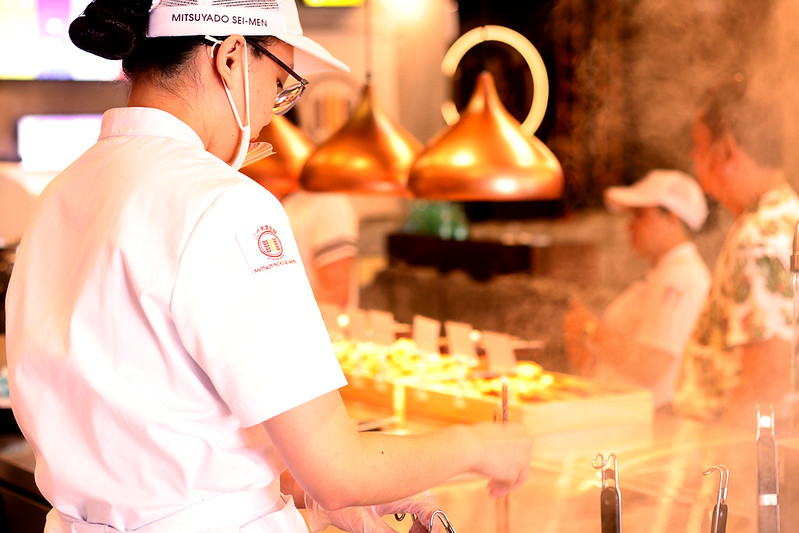
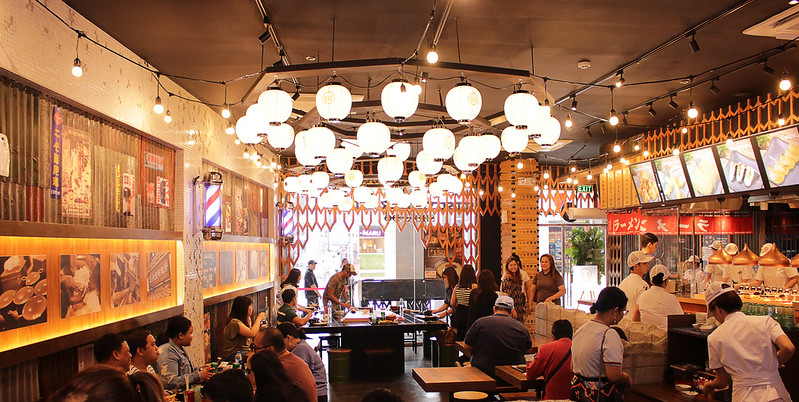
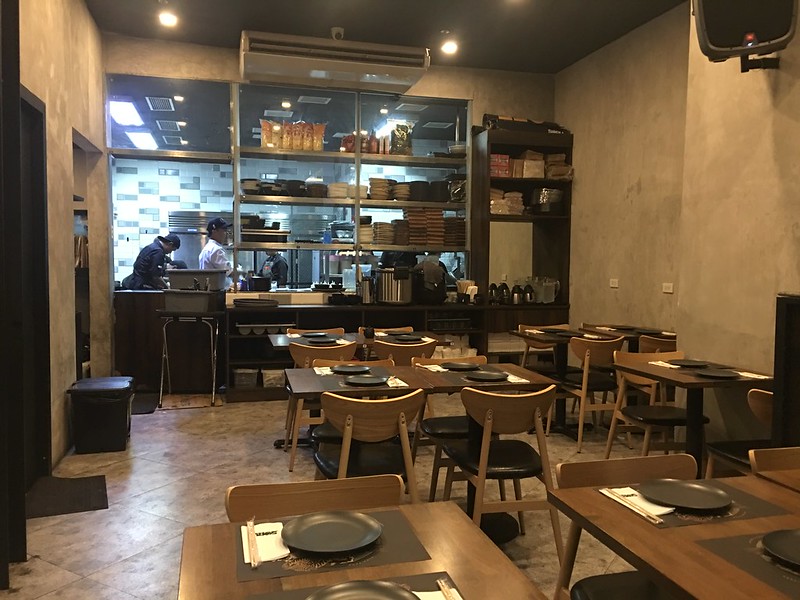
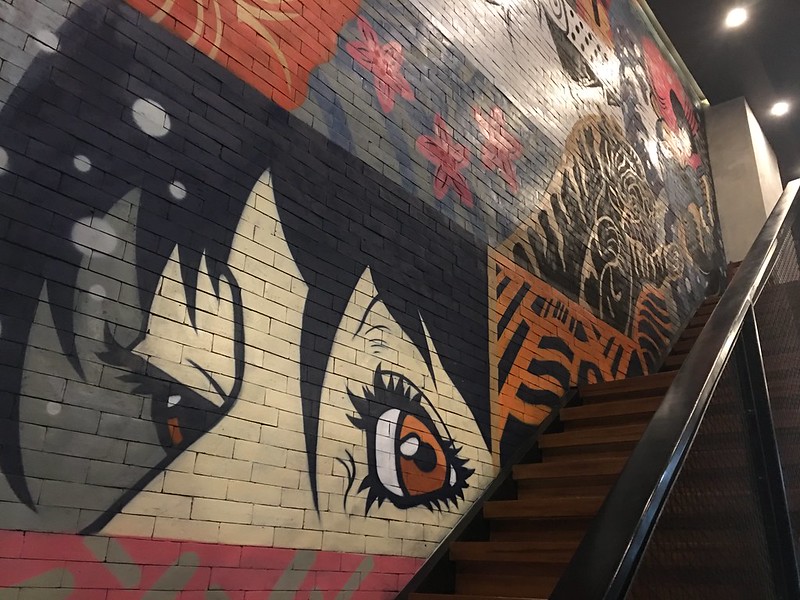
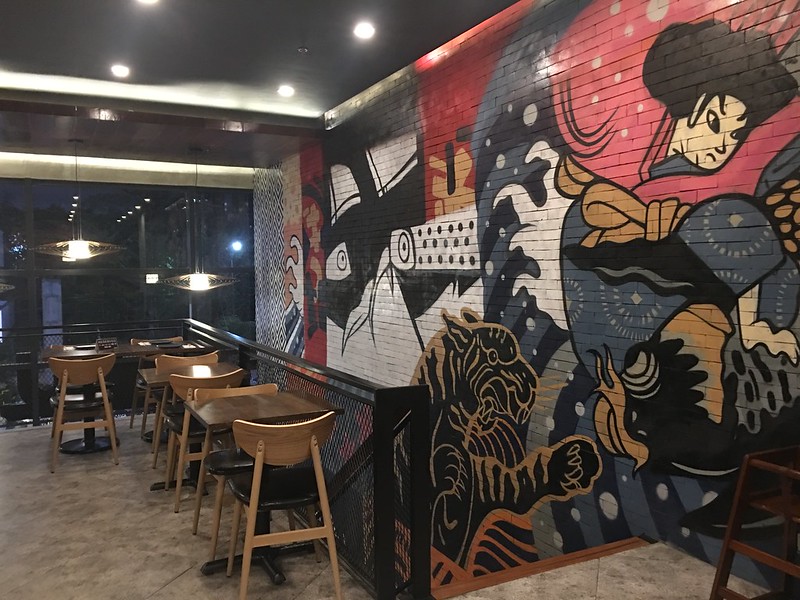
Infinity Foods Alliance, the firm behind Mitsuyado Sei-men: The House of Tsukemen, recently opened a cafeteria-style ramen shop at the Japan Town of Top of the Glo in Glorietta 2 that is reminiscent of the noodle houses in Japan.

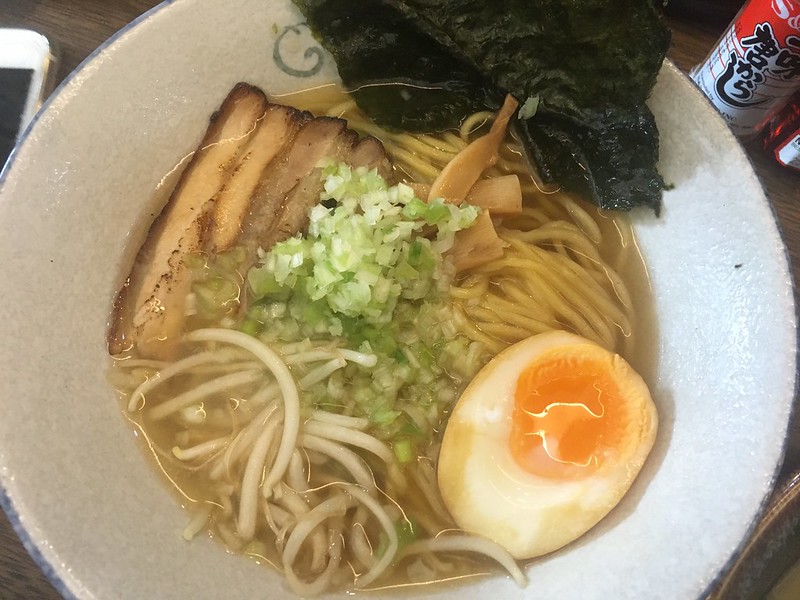
IMG_2815

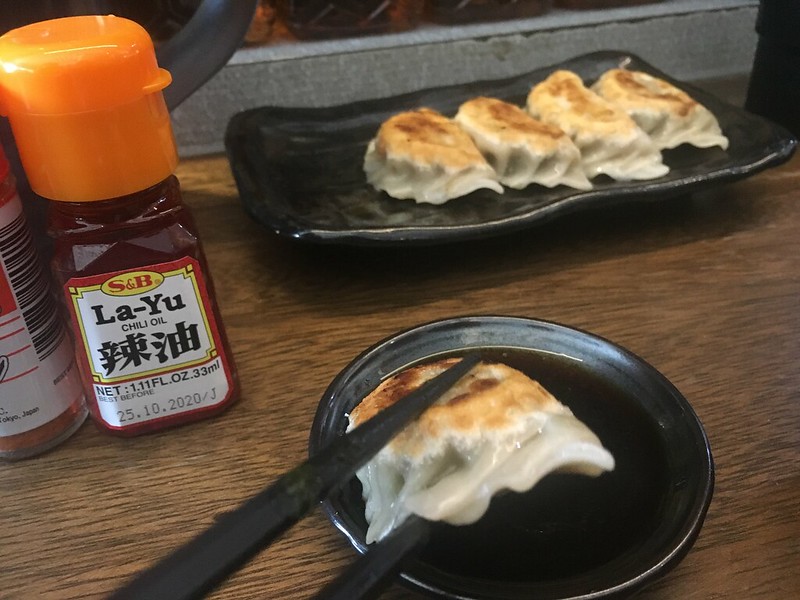
IMG_2851

IMG_2887

IMG_3414

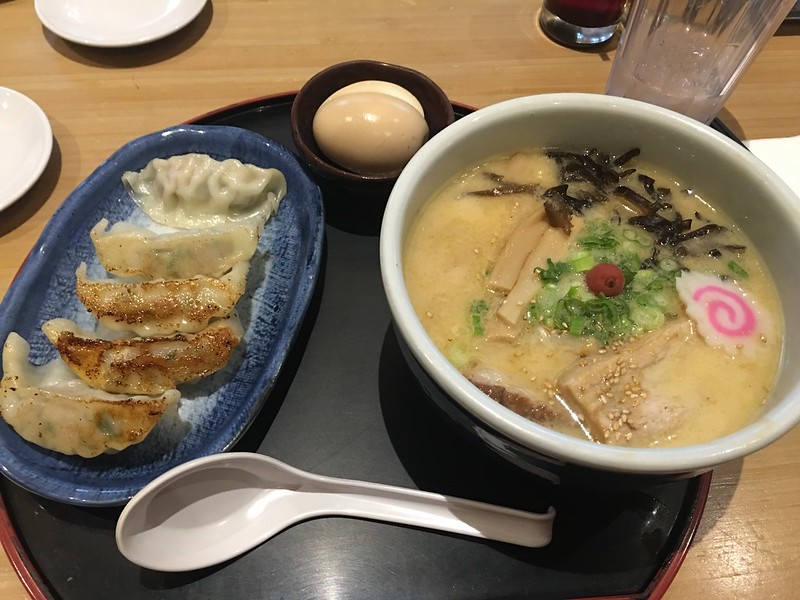
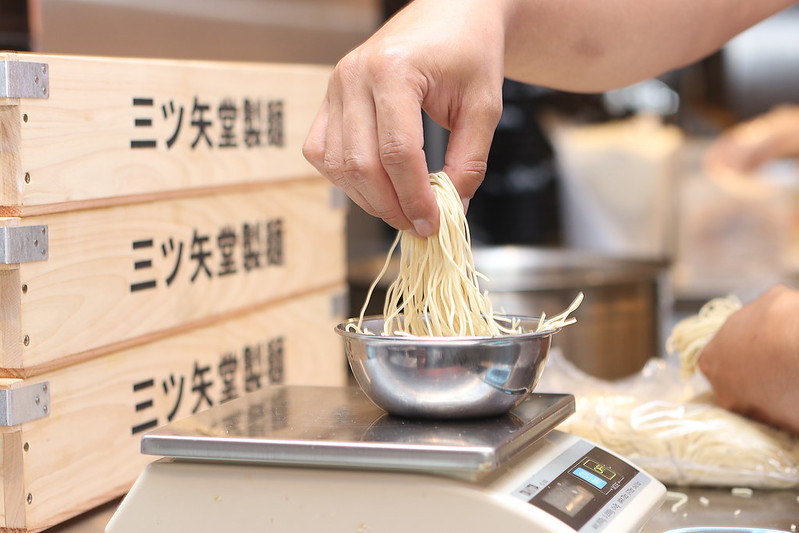
Mitsuyado Seimen is a concept that originated from Tokyo, Japan. It specializes in Tsukemen (dipping noodle). This is what it has been known for in the Philippines for the past six to seven years. It is known for making good quality thick noodles for Tsukemen. For Mitsuyado Ramen Shokudo, meanwhile, uses good quality thin noodles.

“Mitsuyado Ramen Shokudo is a ramen house where you can choose your own ramen and pair it with your preferred topping,” explained Judy Kay C. Ang, representative of Infinity Food Alliance.

Mitsuyado Ramen Shokudo was born because the company wanted to offer a fast-paced restaurant to satisfy the ramen cravings of Filipinos. In the Philippines, ramen has been priced on the average of P400-P500 per bowl. Through Mitsuyado Ramen Shokudo, it wants to bring ramen appreciation to a price level that is more affordable, which is about only P180 per bowl.

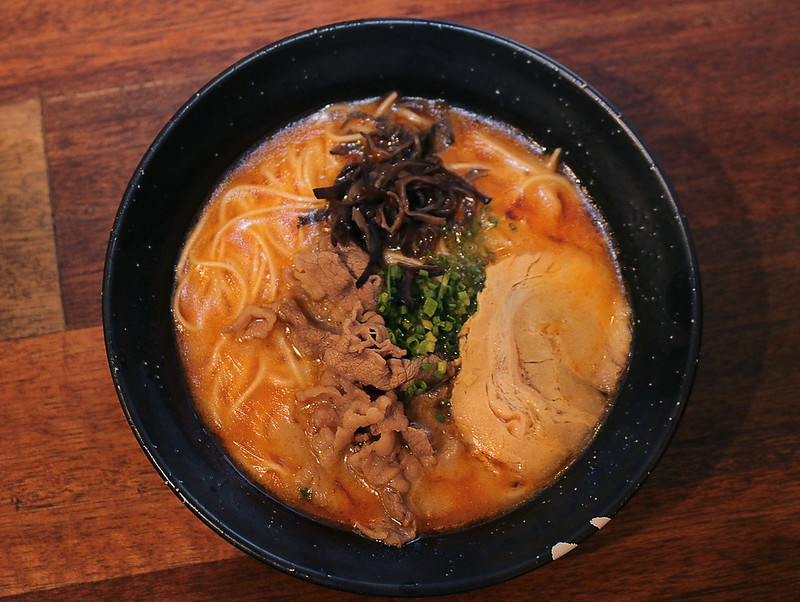
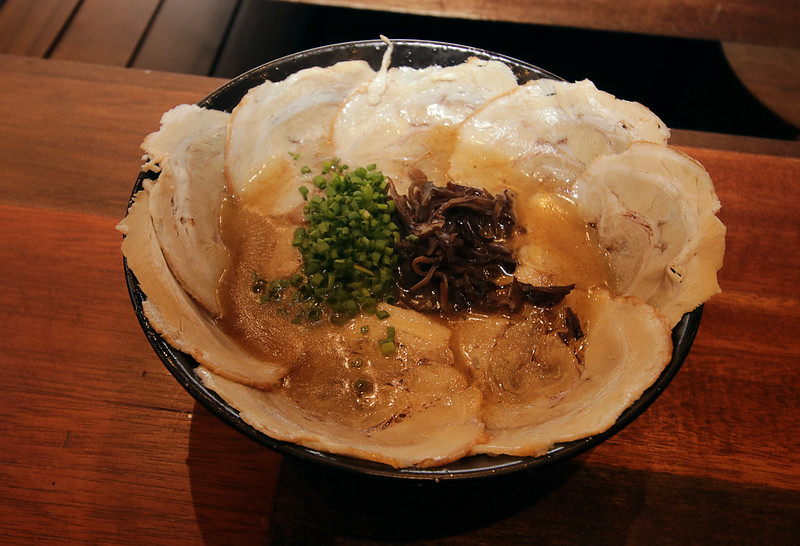
Their ramen offerings include the Hakata Ramen, a pork-based broth that originated from the Hakata District of Fukuoka in Kyushu in southern Japan. They also have the white original Hakata Tonkotsu Ramen, Red Spicy Ramen (which makes use of the Japanese spice, karashi), Black Garlic, and Green Matcha.

IMG_2940

IMG_3050

IMG_3104

IMG_3248

IMG_3439

IMG_3550

IMG_3553

To add variety to the ramen they ordered, customers are encouraged to customize it by selecting from various favorite Japanese toppings. Choices include the Charsiu, Sukiyaki, Ajitama, and Boneless Pork Chop, among others. Ang said that there are currently 10 to 12 toppings, and this number can increase in the coming months.

“We want to offer something different to the popular ramen, and we want it to be very affordable. At Mitsuyado Ramen Shokudo, customers can enjoy good quality noodles at very budget-friendly prices,” said the company’s Marketing and Customer Care Specialist April Faith Alquiroz.

Now, if you want to enjoy your ramen with other popular Japanese food on the side, you can do, too! For Filipinos who love rice, meanwhile, there are donburi options available. There are the Pork Cutlet Rice Bowl Don, Ebi Tempura Don, Chicken Karaage Don, Boneless Porkchop Don, and Gyoza to choose from.

Ang said that after their Glorietta ramen shop, they will be opening another Mitsuyado Ramen Shokudo in Vertis North. In the coming months, they will also be unveiling a CoCo ICHIBANYA Curry House in Top of the Glo before the end of the year.

Infinity Foods Alliance is among the many companies focusing on Japanese concept restaurants by entrepreneur Hubert Young, who has been credited for growing the UCC Coffee chain in the Philippines. He is also set to open the biggest Japanese fast food burger chain Mos Burger in the last quarter of the year.

Mitsuysado Ramen Shokudo is located at Top of the Glo, Roofdeck, Glorietta 1, Ayala Center, Glorietta Complex, Makati City, open Sundays to Thursdays from 10am to 9pm and Fridays to Saturdays from 10am to 10pm.

Restaurant details and images provided by Mitsuyado Ramen Shokudo in a recent press release.

Yummy and healthy eats at Nomi Cafe, BGC

Being a foodie, I find that when given a choice between what is flavorful and what is healthy, I would usually go for flavor. For me, eating is not just something I do to nourish my body; it is also something I do to calm my mind, soothe my soul or warm my heart.

The thing is: sometimes, there doesn’t have to be a line between flavor and health. At Nomi Cafe, for instance, Japanese food are prepared using fresh produce and premium ingredients to present diners with a meal that whets their appetite while helping them keep themselves healthy.

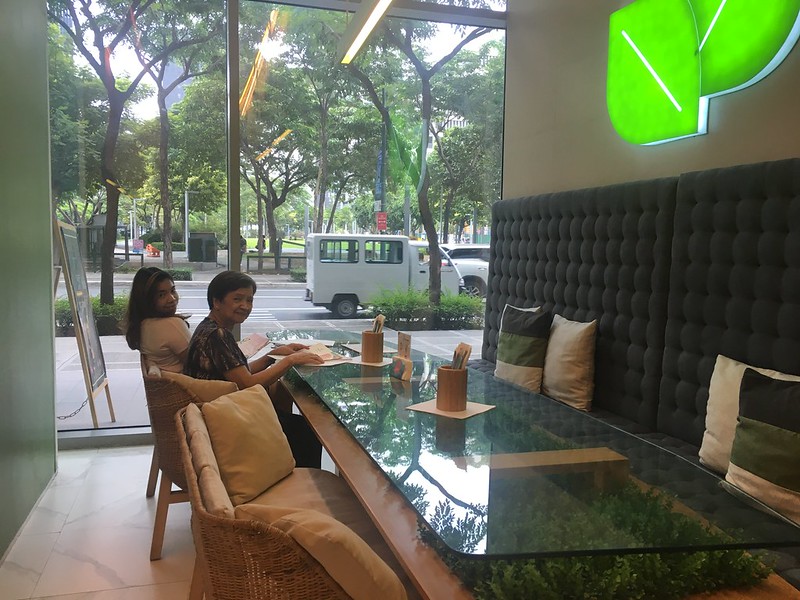
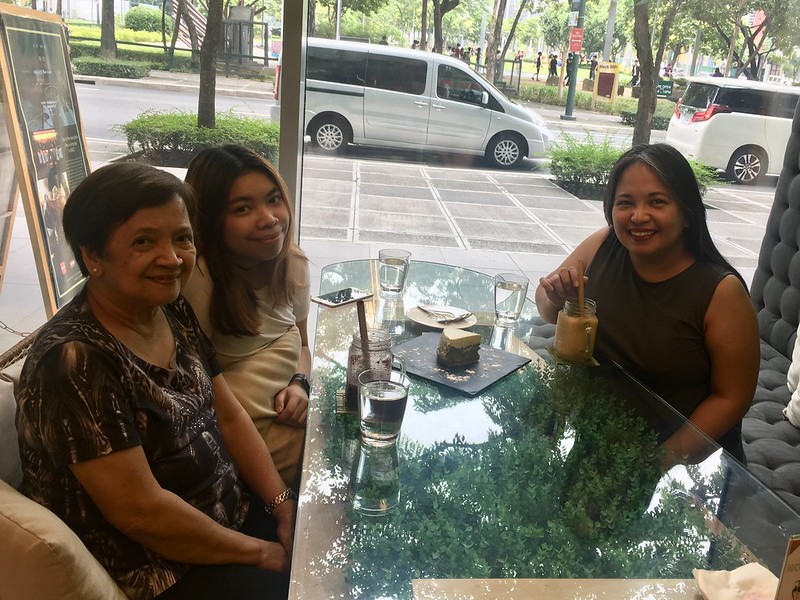
On our way to our staycation, I took my mom and my daughter to Nomi Cafe in Bonifacio Global City. (Yes, we’re three generations of women out for good food and good vibes!)

We liked the chill, casual and relaxing vibe of the place, from the use of pastel colors, the fun sayings on the walls, to the faux greens under the glass tables that give diners a feeling of nature and freshness.

Nomi Cafe, BGC

Nomi Cafe, BGC

Nomi Cafe, BGC

Nomi Cafe, BGC

Nomi Cafe, BGC

Nomi Cafe, BGC

One of Nomi’s founding partners, Take, was there to tell us more about the cafe’s origins. Take and his friends synergized what they like about their favorite modern Japanese cafes in Kyoto, Osaka and Kyoto, and brought about Nomi Cafe in Bonifacio Global City to a receptive Filipino dining public.

Nomi Cafe, BGC

Nomi Cafe, BGC

Nomi Caf, BGC

We were able to enjoy some of Nomi Cafe’s yummy and healthy offerings such as:

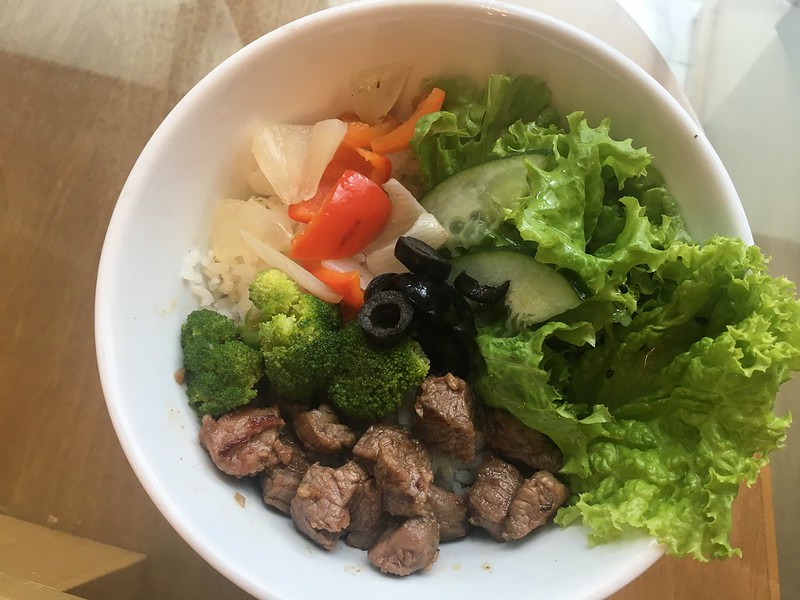
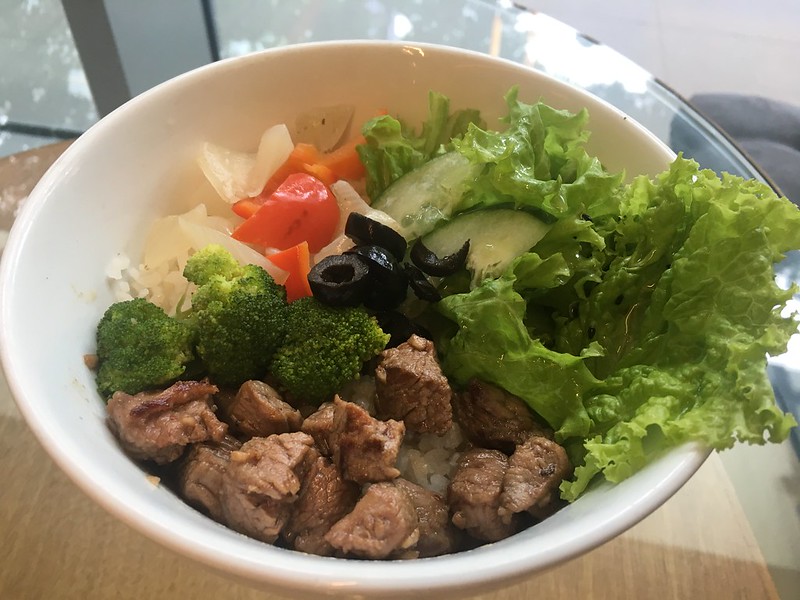
Beef Me Up (Php350). A balanced bowl of sauteed beef tenderloin, roasted garlic, broccoli, bell peppers, mixed greens, olives and soy garlic dressing on top of steamed Japanese rice, this is perfect for my mom who’s into getting more veggies in her meals. If she wanted to, she could have opted to replace the rice with brown rice or cauliflower rice.

Nomi Cafe, BGC

Nomi Cafe, BGC

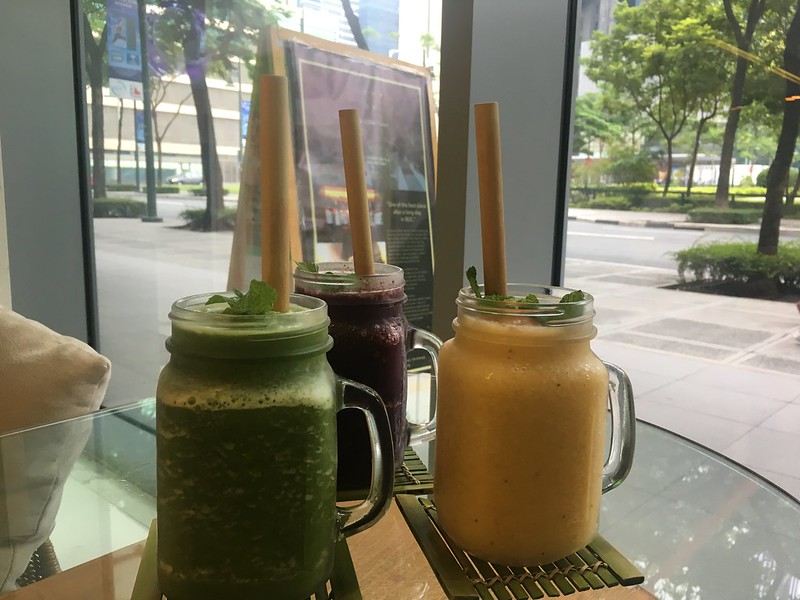
My mom paired this rice bowl with a Berry Power Up (Php180), one of Nomi Cafe’s low-fat smoothies. This drink is made of strawberry, blueberry and acai shipped from Brazil which are then blended with coconut water and yoghurt. This, and the other drinks we ordered, also make use of earth-friendly bamboo straws which makes my environmentally aware daughter very happy.

Nomi Cafe, BGC

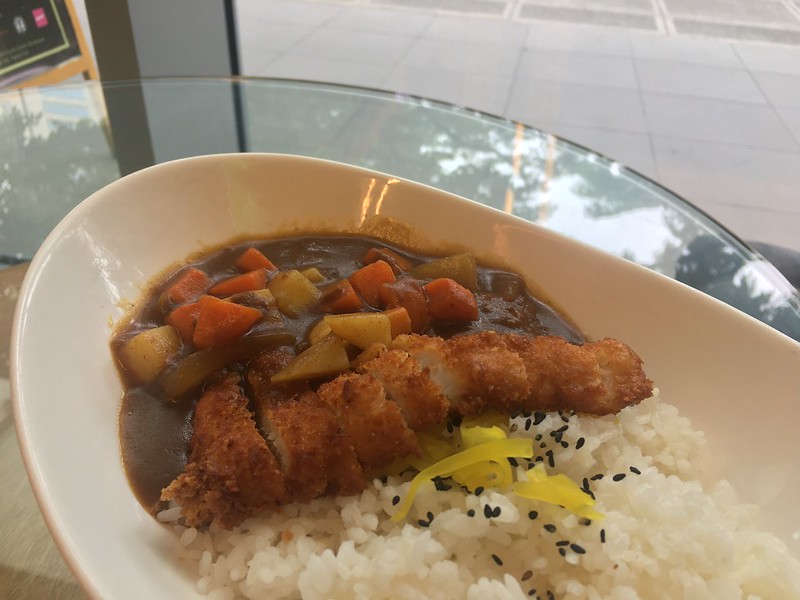
Pork Katsu Curry Rice (Php330). My daughter has been craving for Japanese curry for some time now, so it’s fortunate that she chanced upon this dish. The katsu pieces were tender and tasty and well complemented by the potato, carrots and curry sauce.

Nomi Cafe, BGC

Nomi Cafe, BGC

My baby girl, who also happens to be a matcha connoisseur, opted for a Matcha Weight Loss Smoothie (Php190), a banana smoothie infused with organic match flown in from Japan, to enjoy with her rice meal.

Nomi Caf, BGC

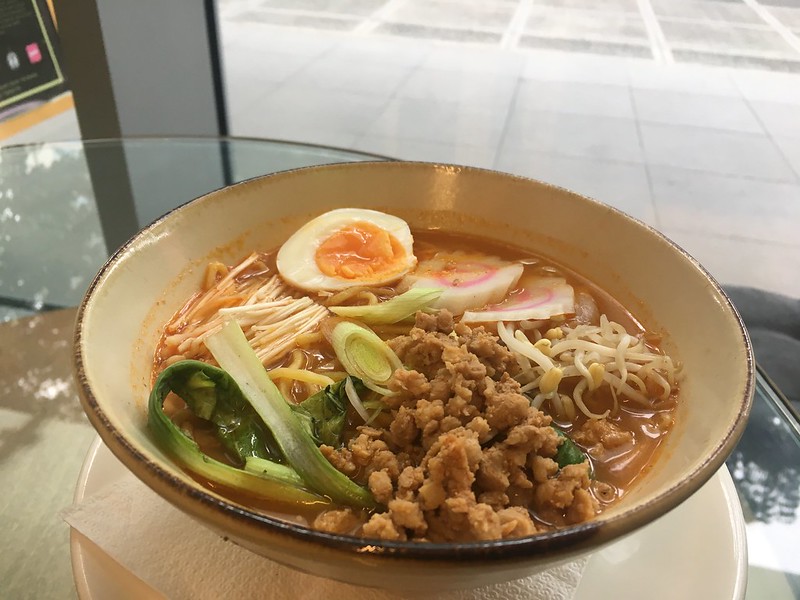
Tantanmen (Php395). In yet another instance that proves my #RamenPhase is here to stay, I opted for this spicy and hearty ramen given the day’s sudden burst of rainfall (which, thanks to the inconstant weather deities, dried up by the end of our meal). Tantanmen gets its richness from the sesame seeds and paste incorporated in the soup flavored with ginger, spring onions and other aromatics. Together with the bits of ground pork and tamago, it presents a complex flavor that I just can’t resist.

Nomi Cafe, BGC

Nomi Cafe, BGC

I got myself a Mango Madness (Php180), made with fresh mangoes mixed with bananas, coconut water and cinnamon to cool and refresh my palate after the Tantanmen.

Nomi Caf, BGC

Nomi Cafe, BGC

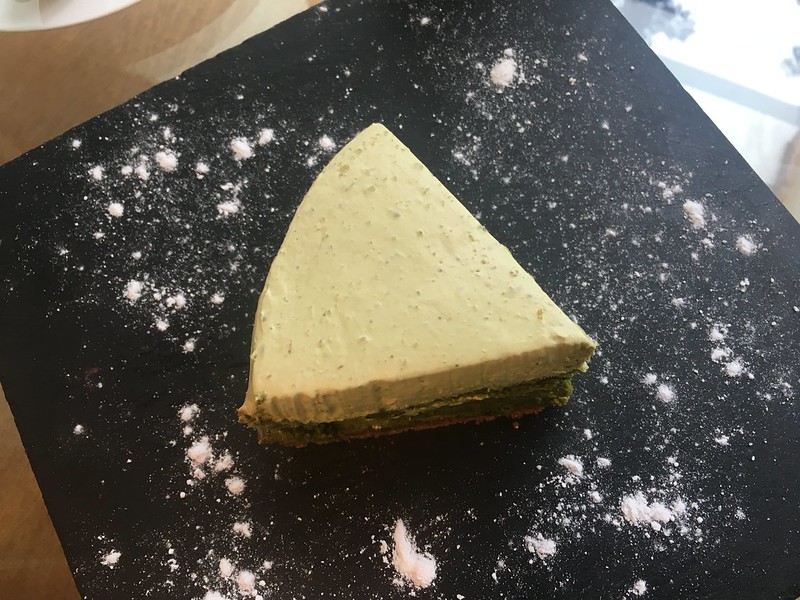
Nomi Style Cheesecake (Php250/slice). For dessert, we treated ourselves with this confection composed of matcha cheesecake on a graham cracker crust topped with a rich matcha-flavored mousse.

Nomi Cafe, BGC

Nomi Cafe, BGC

Thanks to the wonderful folks of Nomi Cafe for this fun foodie adventure with my favorite girls!

Nomi Cafe, BGC

Nomi Cafe, BGC

Nomi Cafe is located at Ground Floor, W City Center, 30th Street corner 7th Avenue, Bonifacio Global City, Taguig, open Mondays to Saturdays from 11am to 12 midnight and Sundays from 12 noon to 8pm.

Disclosure: Our meal was sponsored by Nomi Cafe as a way for us to sample the fare in exchange for an honest review.

A new foodie haven: Shizuka Cafe, Little Baguio

With all the frenetic activity at work and at home, don’t you sometimes for a place where you can just relax and enjoy your time alone or with a few close friends?

Well, look no further than this relatively new cafe located a few minutes’ ride away from Greenhills.

Shizuka Cafe, San Juan

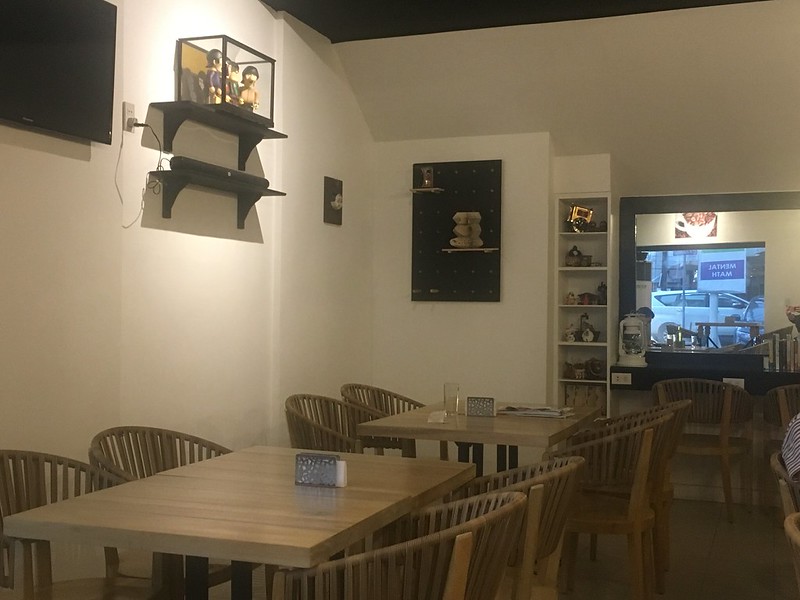
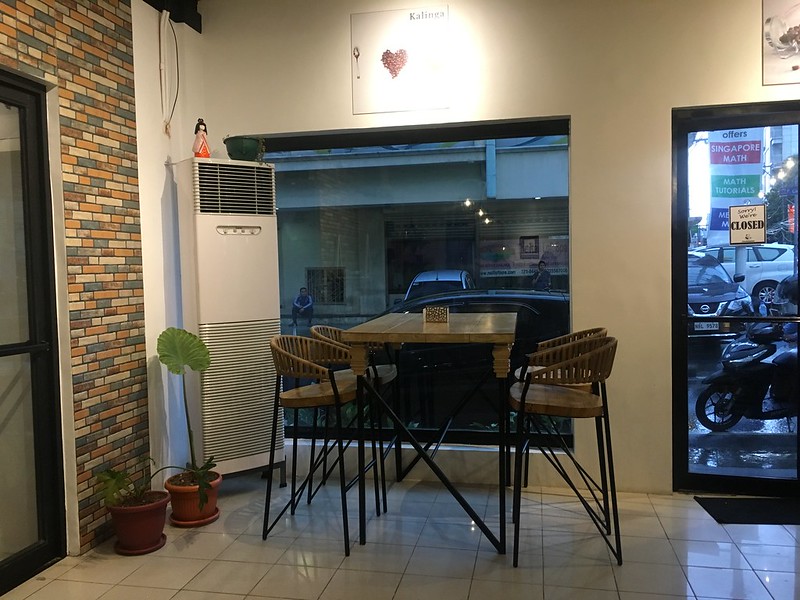
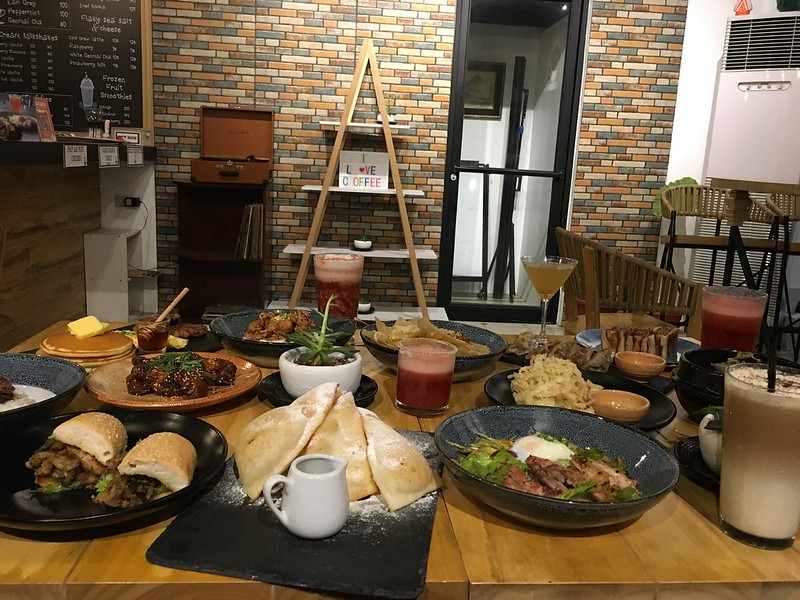
From the outside, Shizuka Cafe may blend in among the many dining establishments in Little Baguio, but inside is a welcoming and cozy haven. Muted lighting and artfully displayed Japanese-themed bric-a-bracs make it a comfy and relaxing place, in line with the meaning of its name – shizuka, which means calm, peaceful, silent and quiet.

Shizuka Cafe, San Juan

Shizuka Cafe, San Juan

Shizuka Cafe, San Juan

Shizuka Cafe, San Juan

Shizuka Cafe, San Juan

Shizuka’s Chef Paul Tan and his partners introduced quite a lot of innovations and advocacies to the local dining scene which include Shitzuka’s drives for artisanship (by carefully crafting its food and beverage offering), sustainability (through minimizing the use of plastic in its operations), local commerce (by sourcing its ingredients for its homey Japanese cuisine and finely craft coffee beverages from local merchants) and diversity (by employing differently abled staff).

Shizuka Cafe, San Juan

Shizuka Cafe, San Juan

Shizuka Cafe, San Juan

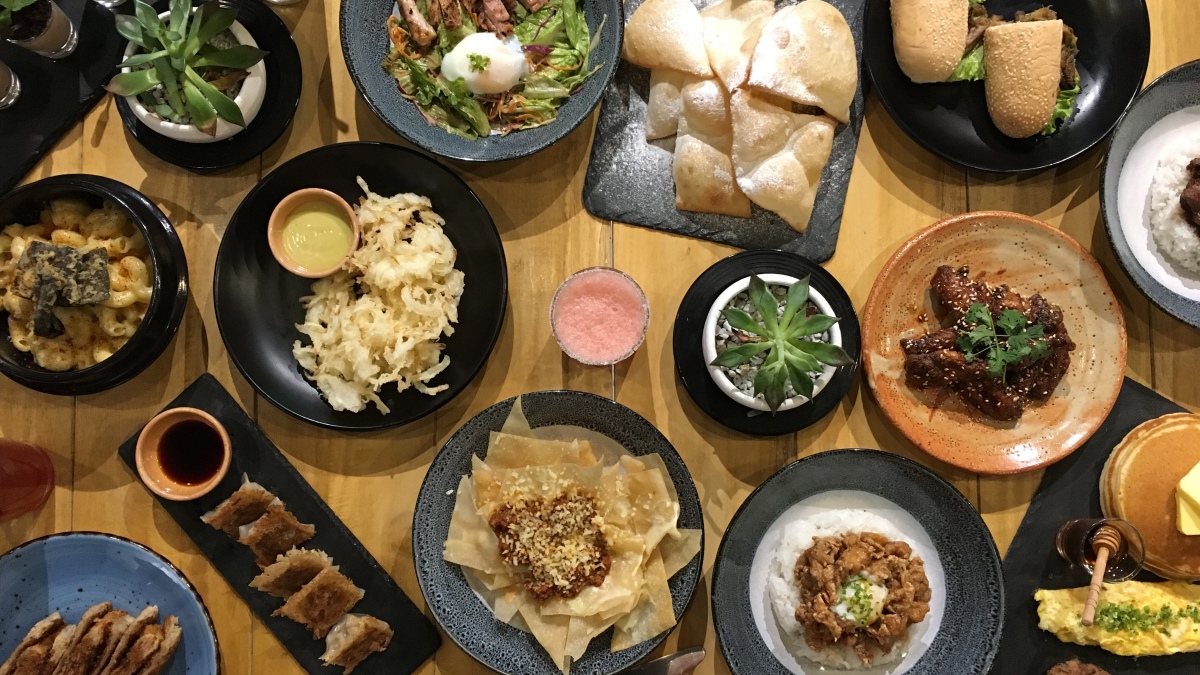
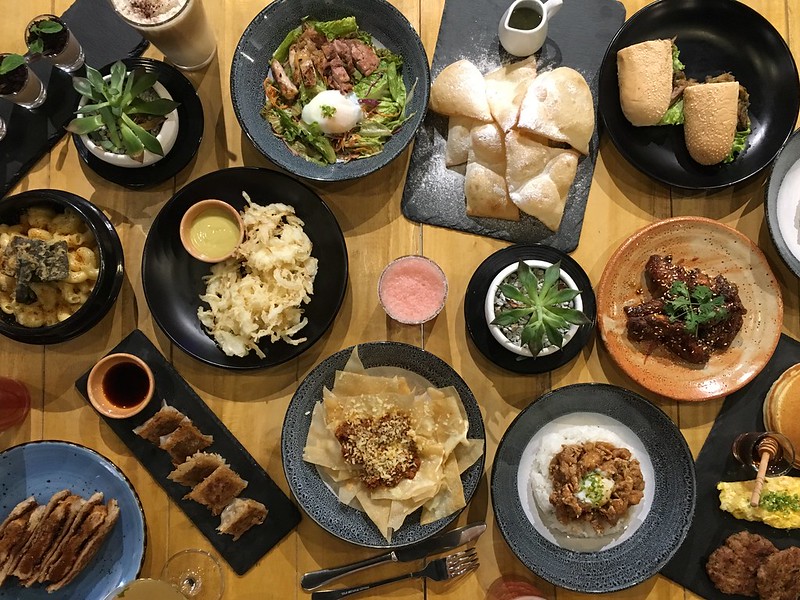
Together with my foodie friends from #WeLoveToEatPH and #SaanSaPH, I was able to sample some of the well-crafted dishes that Shizuka brings to the table.  Check them out:

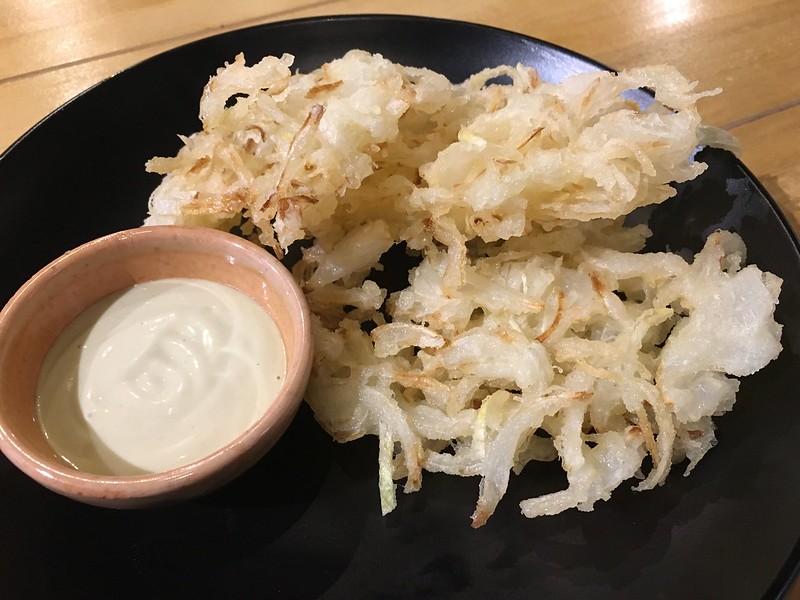
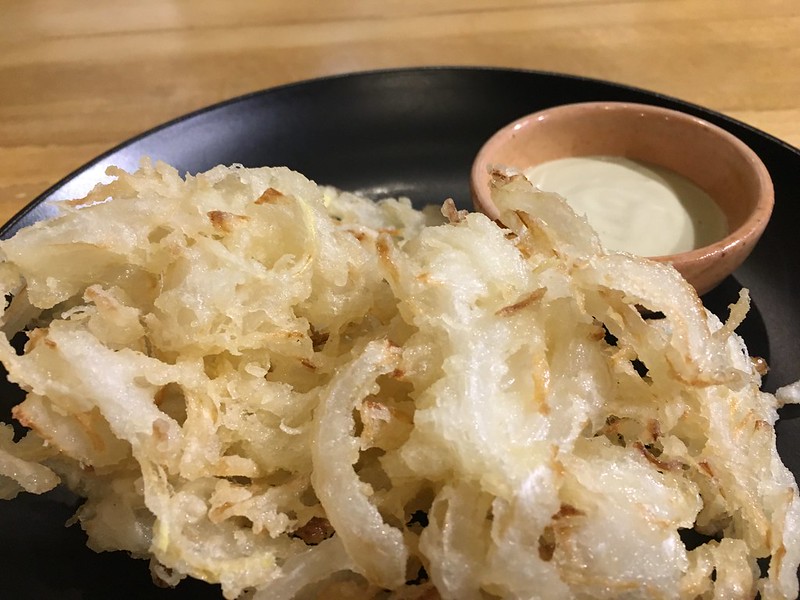
Onion Tempura (Php125). Onions coated in tempura batter then deep-friend and served with wasabi aioli.  I love how texture of the onions and the flavor complexity that the wasabi aioli adds to the dish.

Shizuka Cafe, San Juan

Shizuka Cafe, San Juan

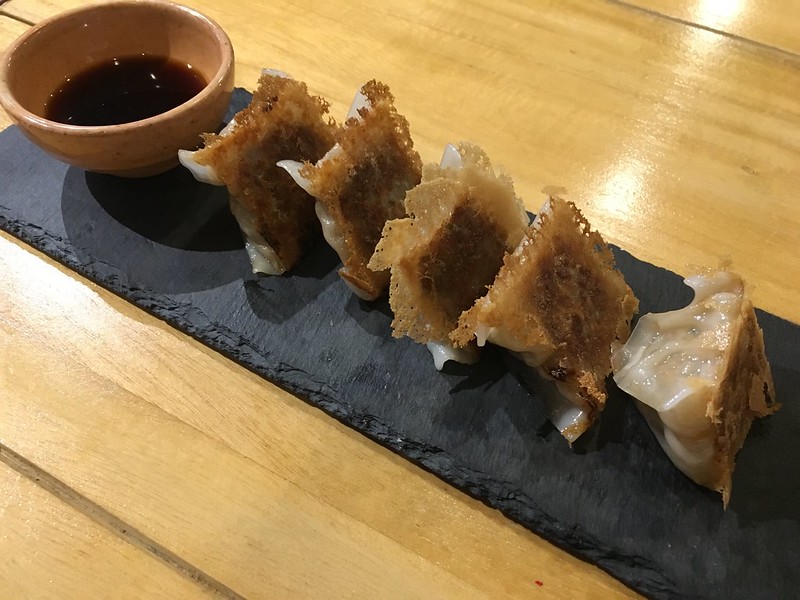
Pork Gyoza (Php150).  Five pieces of the popular pork and vegetable pot stickers.  In contrast to the usual gyoza from other restaurants, these come in pretty square shapes.

Shizuka Cafe, San Juan

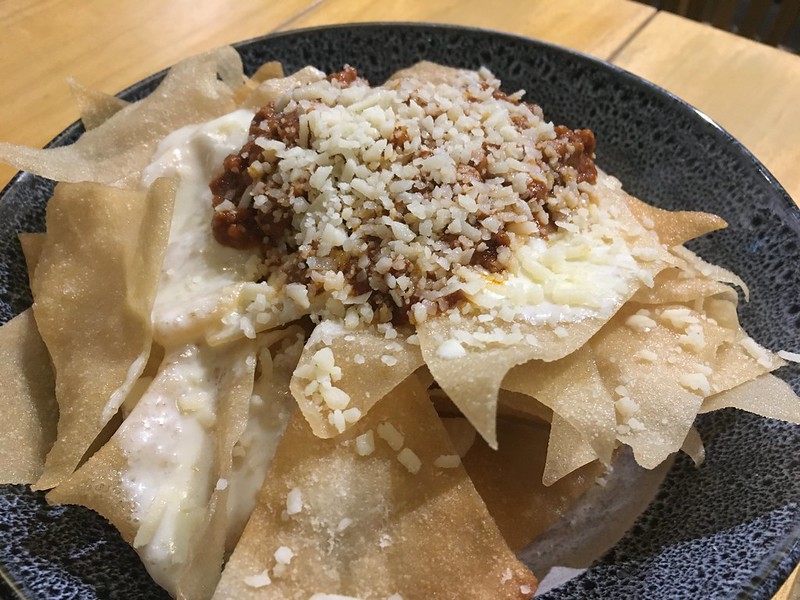
Nachos (Pho180).  Crispy wonton wrappers doused with a sauce made from three cheeses and topped with soy Bolognese and parmesan cheese. I found myself reaching into this bowl and popping those nachos into my mouth again and again.

Shizuka Cafe, San Juan

Tori Tebasaki (Php155).  Tender chicken wings glazed with a sambal sauce, an exotic take on the chicken wings dish.

Shizuka Cafe, San Juan

Shizuka Cafe, San Juan

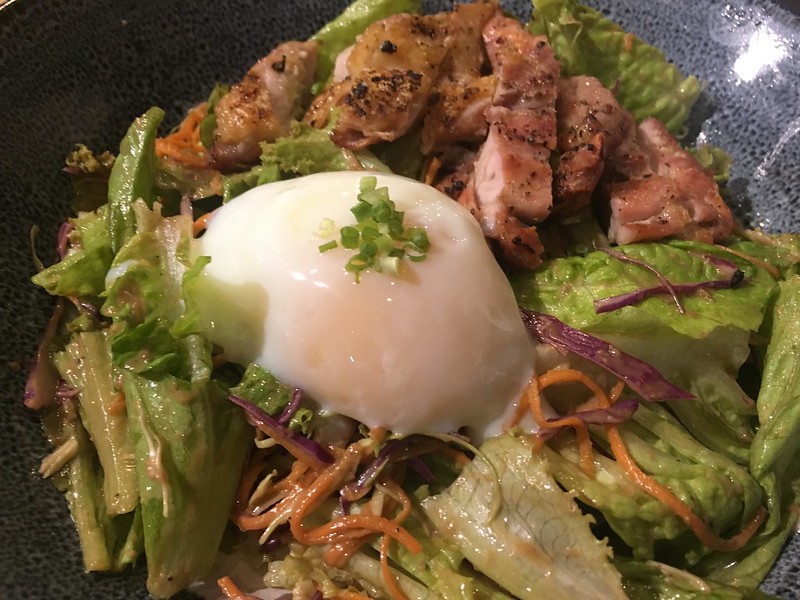
Tori Salad (Php180). Mixed greens with grilled chicken and miso balsamic vinaigrette.

Shizuka Cafe, San Juan

Katsu Sando (Php190).  Breaded ground pork katsu sandwiches coated with house-made tonkatsu sauce.

Shizuka Cafe, San Juan

Shizuka Cafe, San Juan

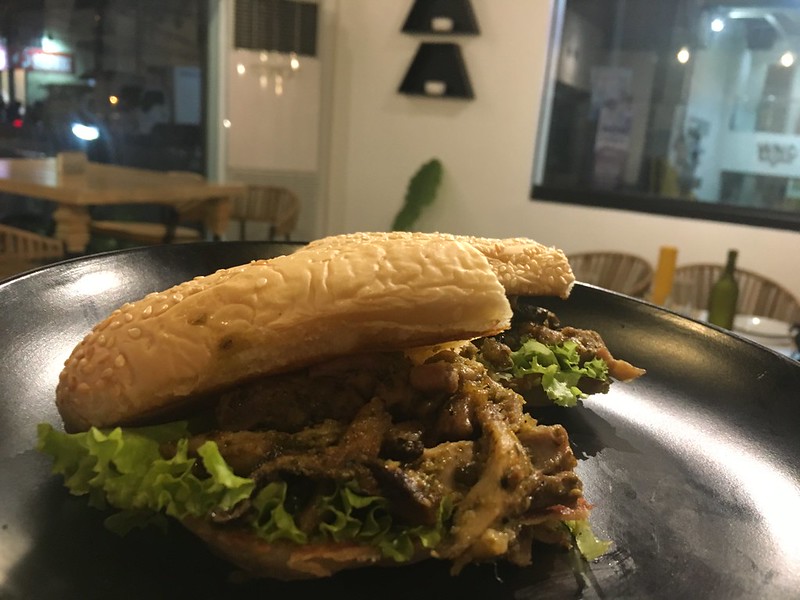
Tori Pesto (Php165). Sandwich with freshly grilled chicken and shiitake tossed in pesto sauce.

Shizuka Cafe, San Juan

Shizuka Cafe, San Juan

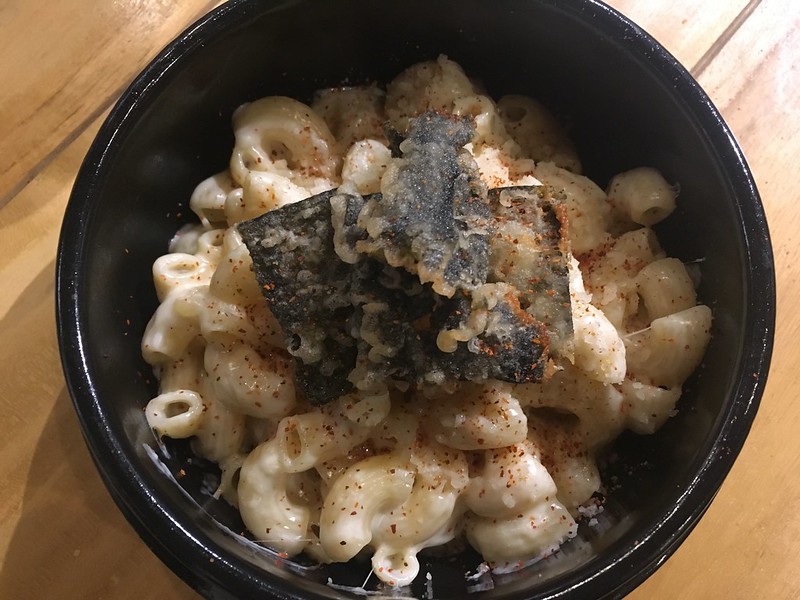
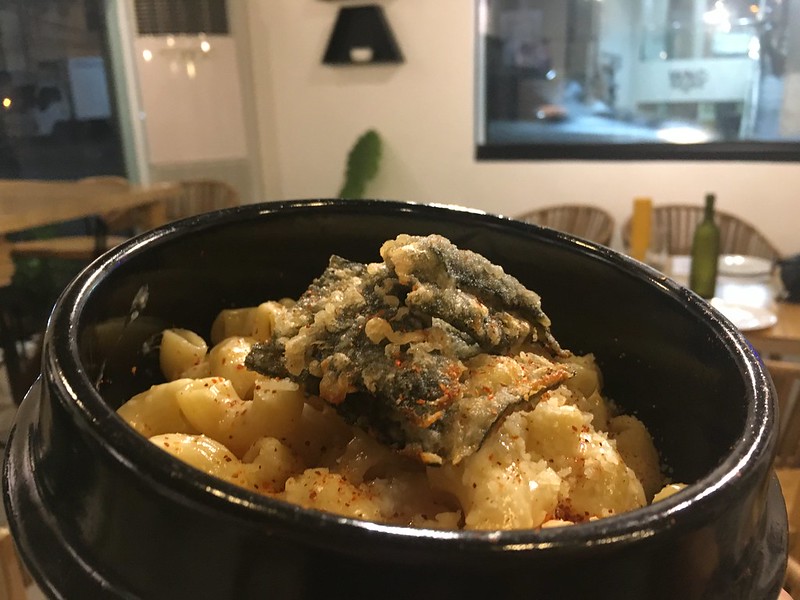
Nori Mac and Cheese (Php190).  Shell macaroni in a cream sauce made of mozzarella, cheddar and parmesan served a crispy nori. I tried this hearty pasta dish with both with a touch of seven spices and without and I like it better without the spice.

Shizuka Cafe, San Juan

Shizuka Cafe, San Juan

Gyu Salpicao (Php290). Flavorful tenderloin in garlicky salpicao sauce over rice served with a sous vide egg. Salpicao is oftentimes a hit or miss with me: any excess in salty, sweet or spicy flavors tends to detract from my enjoyment. I’m happy to discover that this version of the dish is very well-balanced with added richness from the sous vide egg.

Shizuka Cafe, San Juan

Shizuka Cafe, San Juan

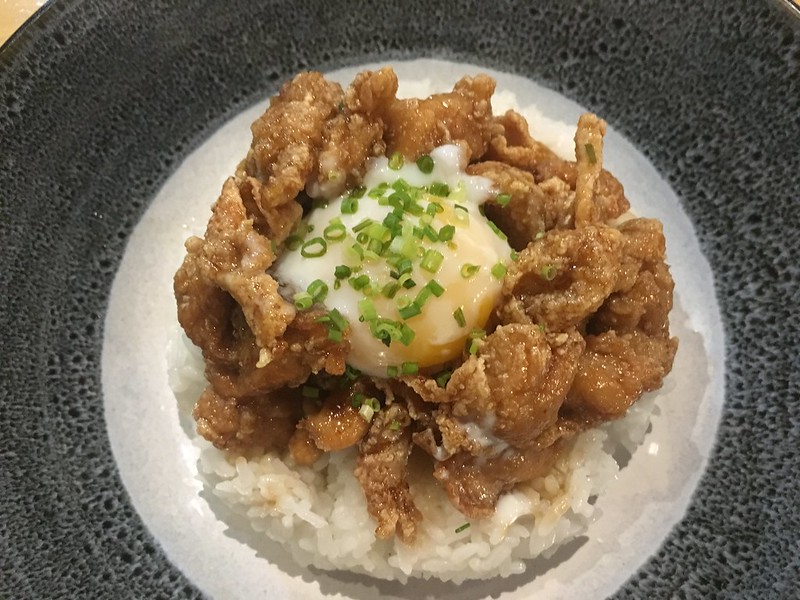
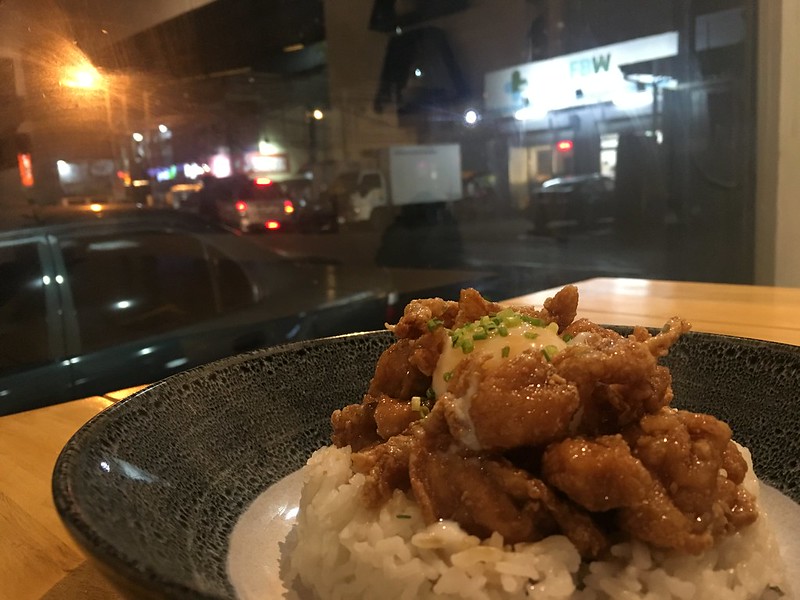
Tori HBS (Php210). Crispy fried chicken tossed in honey butter glaze over rice, also served with sous vide egg. What makes the Gyu Salpicao a standout also applies in this dish.

Shizuka Cafe, San Juan

Shizuka Cafe, San Juan

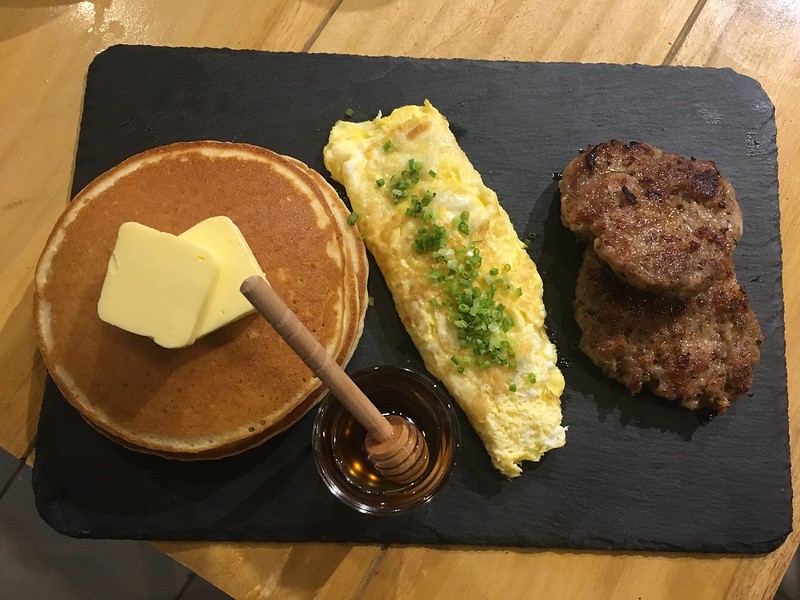
Big Breakfast (Php230). Imagine waking up to a hearty breakfast of hefty pancakes smothered in premium butter, generous slices of Italian sausage and fluffy scrambled eggs. Heck, fill yourself up with this meal any time of the day.

Shizuka Cafe, San Juan

Shizuka Cafe, San Juan

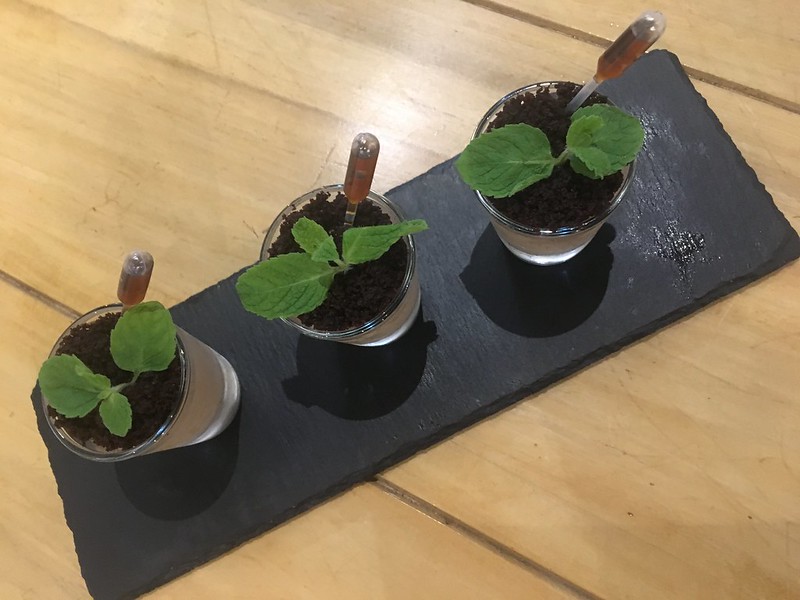
The Nursery (Php115). Peanut butter cream cheese with chocolate soil. A real treat for a sweet tooth like me.

Shizuka Cafe, San Juan

Shizuka Cafe, San Juan

Better than Doughnuts (Php100). My first taste of freshly made Southern American-style beignets more than met my expectations. Fluffy and chewy and perfectly complemented by matcha or chocolate ganache, this serves as a wonderful cap to the meal.

Shizuka Cafe, San Juan

Shizuka Cafe also brings imaginatively crafted beverages to the table. These include:

White Genmaicha Cha (Php108 for 16oz | Php128 for 22oz). One of the Flaky Sea Salt and Cheese series, this features a not-too-sweet earthy rice and green tea flavor. I would have loved it sweeter but this would be good for those who are managing their sugar intake.

Shizuka Cafe, San Juan

Strawberry Milk (Php118 for 16oz | Php138 for 22oz). Fresh strawberries blended with milk and also topped with Flaky Sea Salt and Cheese. I wish it could have maintained its consistency (we took a long time taking pictures) but it is sweetly refreshing just the same.

Shizuka Cafe, San Juan

Cold Brew Latte (Php108 for 16oz | Php128 for 22oz). The more caffeinated among the Flaky Sea Salt and Cheese series, this is good for those looking for a pick-me-up.

Shizuka Cafe, San Juan

Strawberry Chamomile (Php145). Refreshing loose-leaf chamomile tea and strawberries.

Shizuka Cafe, San Juan

Sparkling Yuzu Mojito (Php220). This refreshing citrusy drink is made with yuzu and lime fruit juice, tonic water and white rhum.

Shizuka Cafe, San Juan

Strawberry Sakerita (Php230). Loose-leaf chamomile tea blended with fresh strawberries and sake served in a glass with salted rim. A sweeter and milder Japanese version of the margarita, one I can imagine myself enjoying again and again.

Shizuka Cafe, San Juan

So when you’re feeling overwhelmed or just want to unwind in a relaxing and welcoming environment, head off to Shizuka Cafe. Bring your friends with you for an extra good time!

Shizuka Cafe, San Juan

Shizuka Cafe, San Juan

Shizuka Cafe is located at 709 Jose Abad Santos Corner F. Calderon, Little Baguio, San Juan City, open daily from 8am to 10pm.  For inquiries, reservations and pick up arrangements, call +63 926 0792964.

No time to drop by Shizuka Cafe? Order what your craving for via Grab Food and have it delivered right to your doorstep.
Disclosure: Together with other food bloggers, I attended a foodie meet-up held in this restaurant.  All the food items mentioned here were served to allow us to sample the fare and were not paid for by the attendees, including myself.

Ramen time with Tongara Ramen, Lamp Quarters

My #RamenPhase has been going on for years now and is showing no sign of waning.

And with the metro just entering the season of ramen weather, it’s only fitting that I start looking for new ramen places to try.

Friends who reside in Marikina have been giving me rave reviews about Tongara Ramen for some time now. Located in foodie haven Lamp Quarters, this new ramen spot is lauded for its special broth which is also its namesake: tongara – a mixture of tonkotsu, broth made from pork bones, and torigara, broth made from chicken bones. The resulting broth has an additional layer of sweet-savory flavor to it that differentiates Tongara Ramen’s offerings from those of other ramen places in the metro.

Tongara Ramen, Lamp Quarters

During a recent foray to Lamp Quarters with my daughter #ExhibitA, we decided to have lunch at Tongara Ramen to taste its celebrated ramen for ourselves.

Our meal included:

Tongara Ramen Junior Bowl (Php220). Don’t let its junior size fool you. We each had a Junior Bowl of Tongara’s famed ramen and it was filling enough to sate our hunger. We loved its flavorful broth and firm noodles which are well complemented by the torched tender slice of chashu (seasoned pork belly), ajitama (seasoned soft-boiled egg) and crisp bamboo shoots.

Tongara Ramen, Lamp Quarters

Tongara Ramen, Lamp Quarters

Chicken Karaage (Php200). Tender and flavorful bite-size pieces of marinated chicken covered in seasoned what flour and deep-fried to a beautiful golden brown. These are best sprinkled with a bit of lemon juice upon serving and dipped in Japanese mayo.

Tongara Ramen, Lamp Quarters

Gyoza (Php200). Japan’s famous pot sticker made of minced pork, shredded cabbage and aromatics wrapped in thinly rolled dough skins which are first steamed then lightly fried on one side to achieve a slightly crisp texture that complements the dish’s garlicky flavor. Any meal at a Japanese resto with #ExhibitA will not be complete without this dish.

Tongara Ramen, Lamp Quarters

Tongara Ramen, Lamp Quarters

So, thanks to Tongara Ramen for another mother-daughter foodie adventure unlocked!

Tongara Ramen, Lamp Quarters

Tongara Ramen is located at Lamp Quarters, Gil Fernando Avenue, Santo Nino, Marikina, open Sundays to Fridays from 11am to 11pm and Saturdays from 11am to 8pm. For reservations and inquiries, call +63 2 3903773 or +63 917 1794718.

Get ready for unli ramen at Yummy Tokyo, Maginhawa!

The rainy season is upon us. With those rain clouds come a bit of cooler weather, giving us Metro Manila denizens a much-welcome break from the heat.

But with those rainshowers and cool breezes come the craving for something hot and hearty that will warm the stomach and soothe the soul.

What better way to enjoy the rainy season than to sit down and slurp on some tasty ramen?

How about taking on Yummy Tokyo’s Unli Ramen offer?

Yummy Tokyo, Maginhawa

But first, let’s get to know Yummy Tokyo and its ramen offerings.

After meticulously developed his ramen recipes, self-taught ramen master Jin Chiba left his corporate research job, found a partner who helped him launch his own brand of ramen in the Philippines, and thus, Yummy Tokyo came to be.

Yummy Tokyo, Maginhawa

Yummy Tokyo, Maginhawa

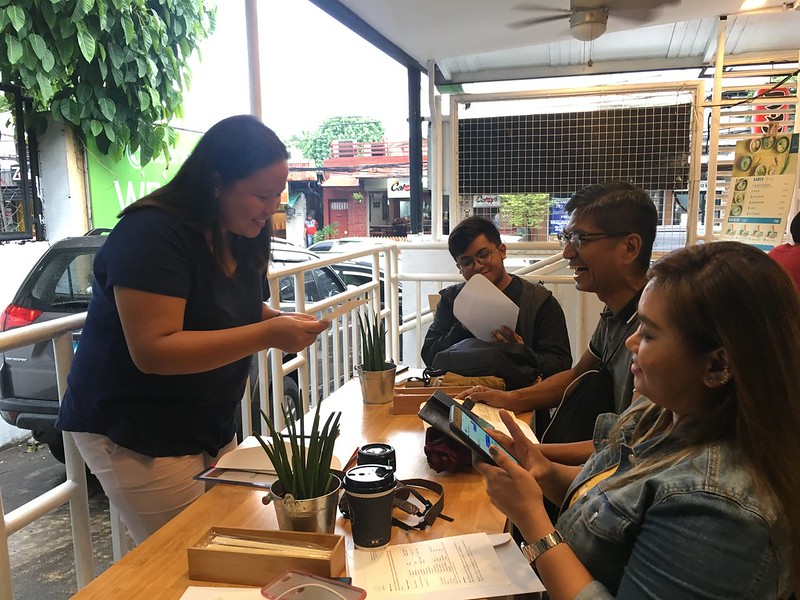
My friends from #SaanSaPH recently visited its store along Maginhawa Street and sampled some of its dishes, which include:

Tantanmen (Php189). Did you know that this ramen dish originated from China where it was known as “Dandanmen?” It became popular in Japan’s northern prefectures where its miso, peanut and sesame base was perfected. I like the peanutty taste, its flavorful ground pork topping and its slightly spicy kick.

Tummy Tokyo, Maginhawa

Miso Ramen (Php149). Initially having gained foothold in the Sapporo and Hokkaido prefectures, it is made by incorporating lots of miso (soybean paste) with meat stock, resulting to a hearty and slightly sweet soup. Topped with a slice of tender chashu, it is quite a filling meal.

Tummy Tokyo, Maginhawa

Seafood Ramen (Php149). Originating from Nagasaki, this ramen dish with a scallop base and topped with shredded cabbage, kani sticks and narutomaki, it is lighter than the other ramen dishes.

Tummy Tokyo, Maginhawa

Tonkotsu (Php129). One of my all-time favorites, the soup for this ramen dish originating from the Fukuoka and Kyushu prefectures is made by boiling pork bones, fat and collagen for hours, resulting in a creamy and flavor-filled broth.

Tummy Tokyo, Maginhawa

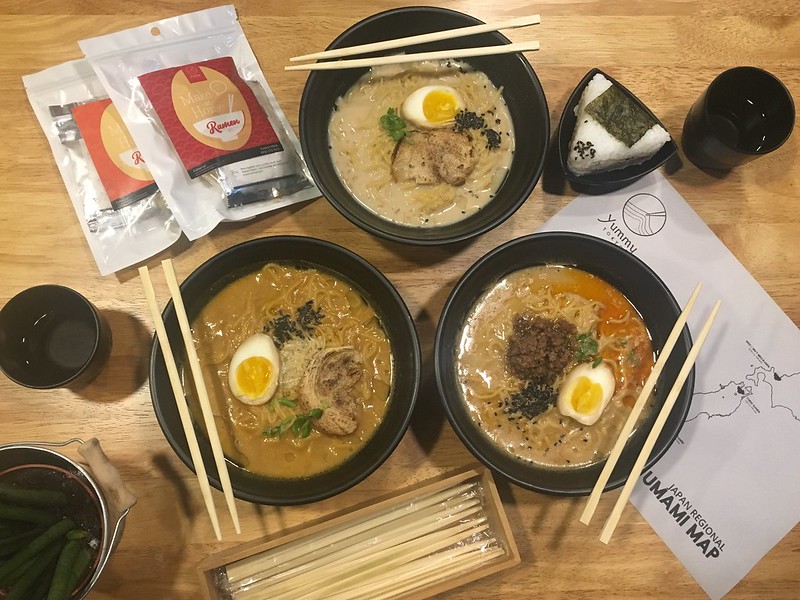
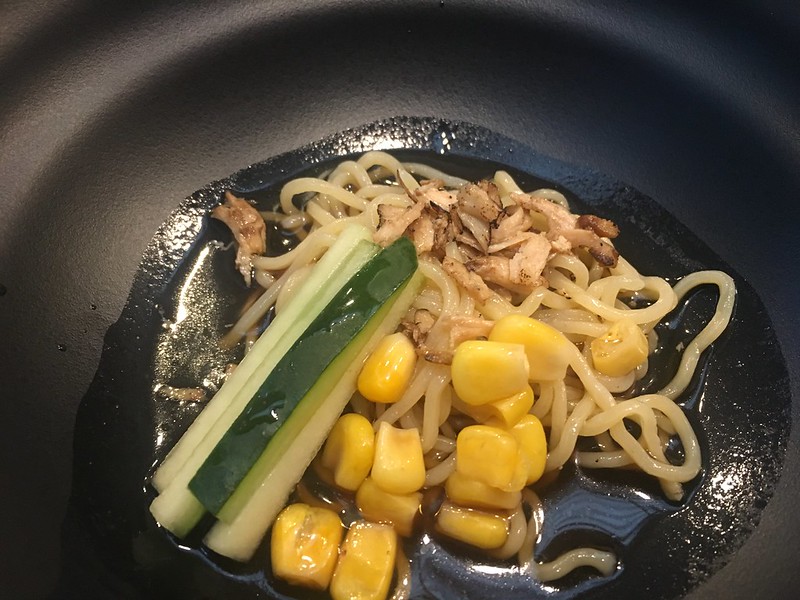
Cold Ramen (Php149). The idea behind this ramen dish originating from the Tokyo and Honshu prefectures is to top cold ramen noodles with assorted vegetables and meat then toss them in a vinegary dressing which makes for a refreshing meal.

Yummy Tokyo, Maginhawa

Now, about that Unli Ramen. For only Php399, you can stuff yourself with all the broth, noodles and toppings your heart and tummy can hold.

Rainy days don’t seem so sad now, do they?

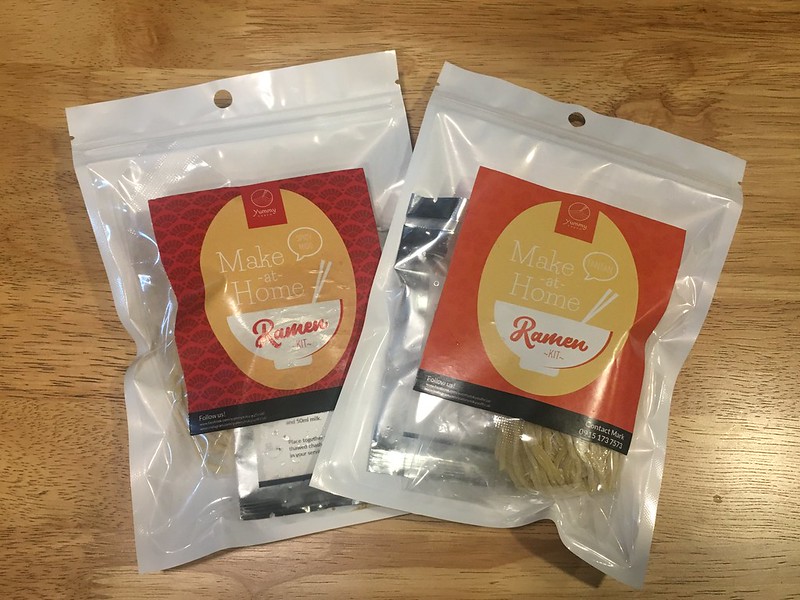
Want to take your ramen experience home with you? Why not bring home some of Yummy Tokyo’s Ramen Kits (prices range from Php149 to Php169) to enjoy the store’s tasty and authentic ramen dishes at home.

Yummy Tokyo, Maginhawa

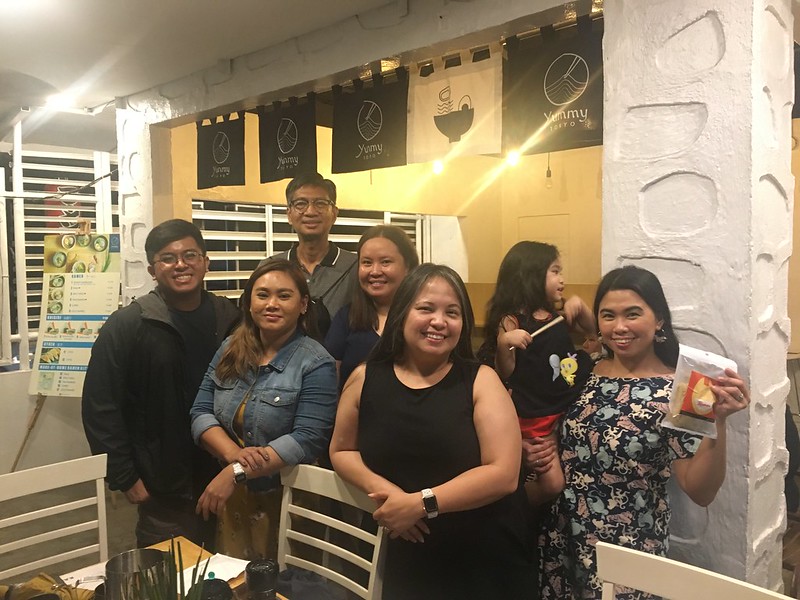
Many thanks to the folks of Yummy Tokyo for having us!

Yummy Tokyo, Maginhawa

Yummy Tokyo, Maginhawa

This Yummy Tokyo branch is located at 103 Maginhawa Street, Teacher’s Village East, Quezon City (inside Moonleaf Tea Shop Compound), open daily from 4pm to 12 midnight.

Another branch is located at the Fourth Floor, East Tower, Philippine Stock Exchange, Ortigas Center (inside Moonleaf Tea Shop), open weekdays from 11am to 6pm.

Disclosure: Together with other food bloggers of #SaanSaPH, I was invited to attend a foodie meetup held here wherein in food items were served to allow us to sample the fare. These were not paid for by the attendees, including myself.

Feel free to get cheesy at Tori Chizu, UP Town Center

Did you know that while the doria, or the Japanese version of the baked rice casserole, did originate in Japan, it was actually invented by a Swiss chef who worked in a hotel restaurant in Japan in the 1930s?

It is considered an example of yoshoku – Western food in Nihonggo – which take the form of Japanized Western dishes.

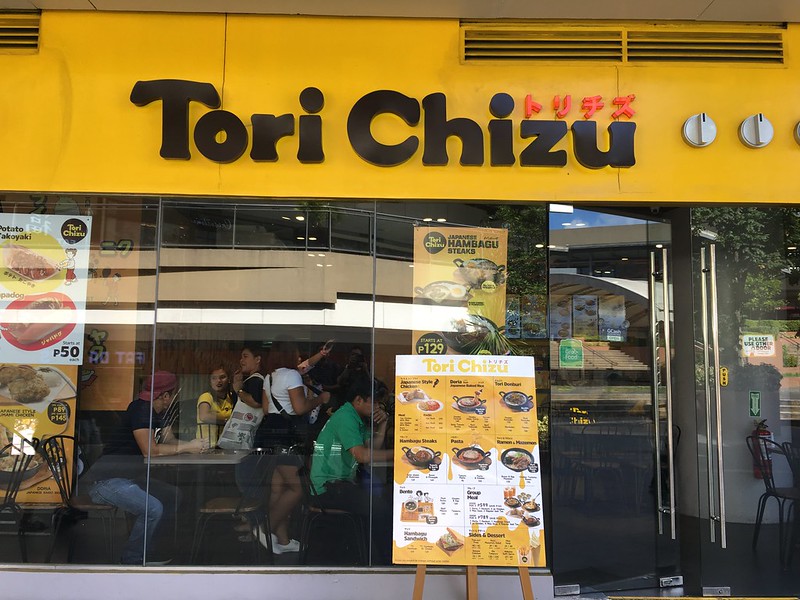
Today, Tori Chizu, a new restaurant brand under the same company that manages Korean fastfood chain Bon Chon, brings this Japanese dish and more to foodies the metro, with most of its dishes served with its signature cheesy chizu sauce.

Tori Chizu, UP Town

(This got me all excited because, as most of my friends know, I’m an avid cheese lover. Yeah, cheesy talaga!)

Together with my fellow foodies from #SaanSaPH, I visited its UP Town Center branch to get a taste of its offerings.

Tori Chizu, UP Town

Tori Chizu, UP Town

Tori Chizu, UP Town

Tori Chizu, UP Town

Our meal included:

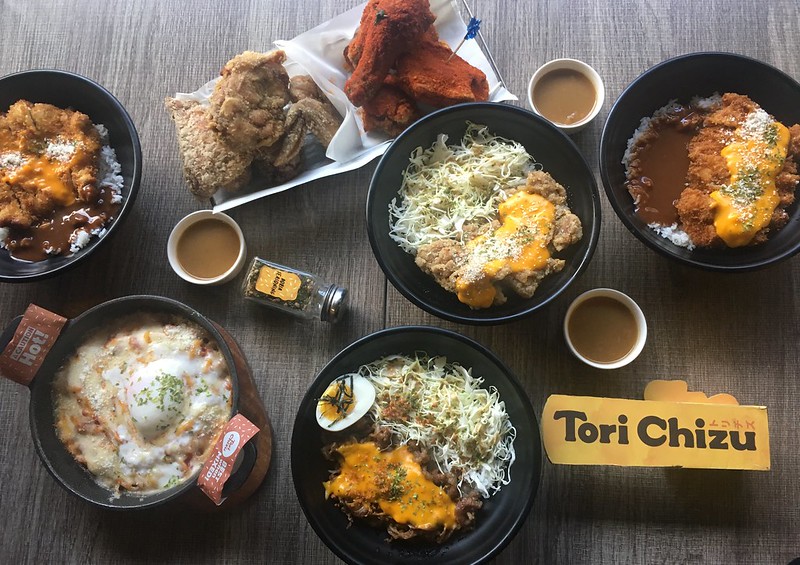
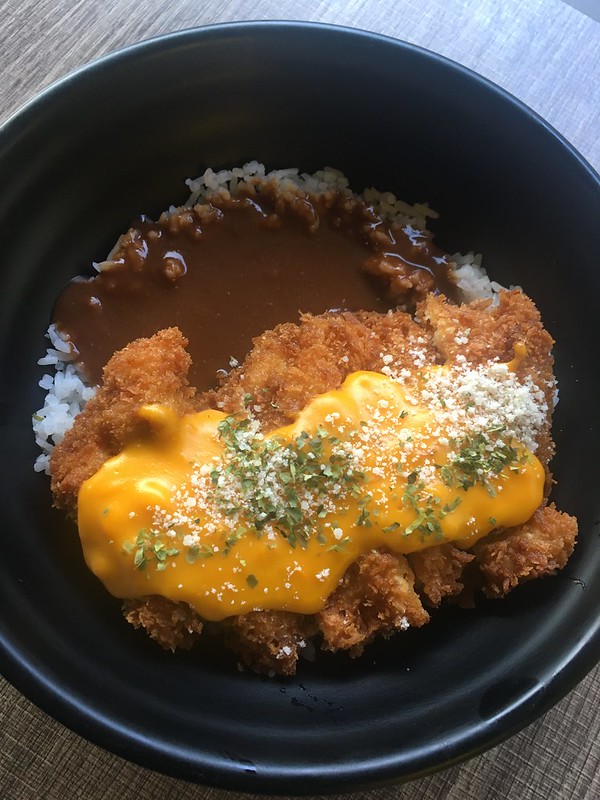
Chicken Katsu Curry Chizu Bowl (Php139). I never developed a liking for curry but, at least, the Japanese versions leans more towards sweet rather than spicy. Still, when taken together with chizu sauce, I found the combination to be quite overwhelming. The chicken katsu, however, is well-seasoned with a crisp batter covering and tender meat.

Tori Chizu, UP Town

Chicken Karaage Chizu Bowl (Php129). Karaage is a way of lightly coating meats – most often chicken pieces – in seasoned flour or potato starch then deep-frying them in oil. Today, it is one of the most popular Japanese chicken dishes, no doubt due to its versatility and near-universal appeal. The addition of the chizu sauce to the rice bowl adds a layer of decadence to the dish.

Tori Chizu, UP Town

Beef Chizu Bowl (Php149). This is another dish with wide appeal which feature strips of sauteed sukiyaki-cut beef, whose relatively mild flavor is complemented by the chizu sauce.

Tori Chizu, UP Town

Baked Pasta with Egg (Php135). The tomato-based sauce does not conform to the expectations of the Pinoy palette. If you don’t like pasta sauce that tends towards the sour rather than the spicy-sweet we’ve grown used to, this pasta dish might not be for you.

Tori Chizu, UP Town

Tori Chizu, UP Town

Chicken Racks (Php554 for 8-piece combination of Umami and Spicy). I got intimidated by the color and presentation of the spicy chicken pieces so I just took a bite of the umami chicken. Thankfully, it was juicy and tender: just well-seasoned enough to go well with rice.

Tori Chizu, UP Town

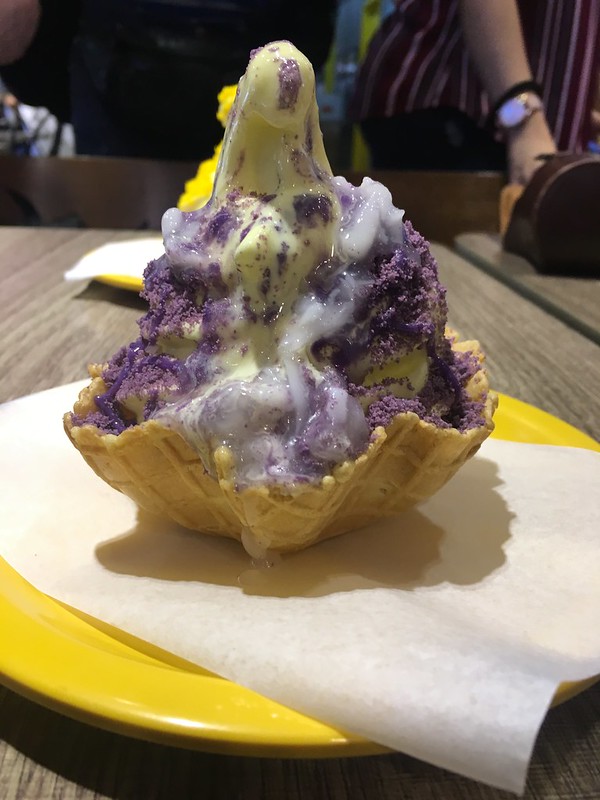
Desserts: Double Cheese (Php55) and Ube Macapuno Soft (Php62). We capped our meal with soft-serve ice cream: one was topped with lots of cheese powder resulting in an appetizing mixture of sweet and salty flavors while the other features the local flavors of ube (purple yam) and macapuno (soft and chewy coconut flesh), adding a very Pinoy spin to this dessert.

Tori Chizu, UP Town

Tori Chizu, UP Town

Tori Chizu, UP Town

I found Tori Chizu’s menu to have quite a lot of variety so you can definitely come back several times to have a taste of something new while you’re deciding on which dish is your favorite. Its offerings are also quite affordably priced, making its dishes accessible to more people.

Tori Chizu, UP Town

Tori Chizu, UP Town

Tori Chizu is well worth a visit for cheese lovers and those on the lookout a new take on Japanese cuisine.

(And also those who are feeling a bit cheesy…)

Thanks to Shishi of Shi’s A Mom for extending the invitation!

This Tori Chizu branch is located at the Ground Floor, UP Town Center, Diliman, Quezon City, open daily from 11am to 10pm.

Other branches may be found at:

  • Upper Ground Floor, Outside Building A, SM Megamall, Ortigas, Mandaluyong City
  • Second Floor, Trinoma Mall, Bagong Pag-asa, Quezon City
  • Ground Floor, Security Land Center, VA Rufino corner Ayala Avenue, Salcedo Village, Makati

Disclosure: Together with other #SaanSaPH foodies, I was invited to attend a foodie meetup held in this restaurant. Food items mentioned here were served to allow us to sample the fare and were not paid for by the attendees, including myself.

Ramen dinner at Hokkaido Ramen Santouka, Bellevue

I’ve been going through my #RamenPhase for several years now and it shows no sign of abating.

And why should it?

Slurping on some tasty, steaming-hot ramen is one of the most comforting things to do, specially on a chilly spring evening in the first week of my family’s visit to the Pacific Northwest.

That night, we ventured out to the beautiful city of Bellevue for dinner after a round of malling. From the mall, we walked across the Bellevue Downtown Park to the local branch of Hokkaido Ramen Santouka to enjoy the crisp spring air and to work up our appetites.

This ramen restaurant is quite familiar to us as it has several outlets in the Metro Manila.   It has become one of go-to ramen places because of its tasty ramen and katsu dishes that fave become family favorites.

The restaurant was founded in Asahikawa, Hokkaido in Japan by Hitoshi Hatanaka when he produced the tonkotsu (pork bone) soup, the flavorful base of the restaurant’s ramen dishes.  The soup is made by hand in all of the chain’s outlets in Japan and abroad; the process involves simmering the pork bones for twenty hours, then adding in vegetables, dried fish, kelp and other savory ingredients as well as seasonings, resulting in a mild but tasty broth. Hokkaido Ramen Santouka’s bowls are also specially made, with a specific thickness that slows the cooling down of the broth, allowing diners to enjoy their ramen in steaming-hot soup for as long as possible.  

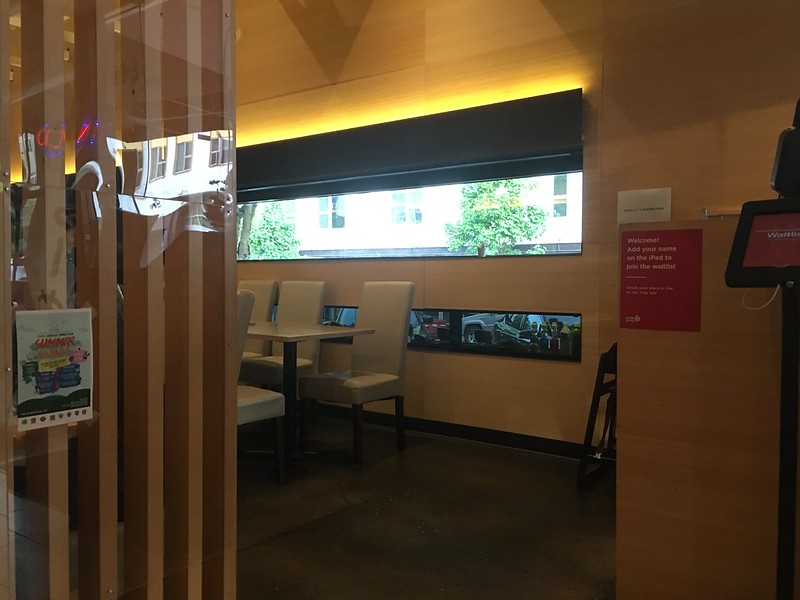
Upon arriving, we entered our name in the tablet provided so that we can be part of the wait list, one of the innovations that we haven’t yet encountered back home.

The place was cozy and frenetic with activity, from new customers being ushered in and the orders and requests being called out.

Hokkaido Ramen Santouka, Bellevue

Hokkaido Ramen Santouka, Bellevue

For tonight’s meal, our group got for ourselves several orders of our favorites:

Shio Ramen.  The restaurant’s signature dish featuring a milky white salt-based broth, firm hand-pulled noodles, slices of marinated chashu pork belly and more.

Hokkaido Ramen Santouka, Bellevue

Neginanban Ramen.  The resto’s spiciest ramen variant topped with chashu, fried onions, onions and jalapenos.

Hokkaido Ramen Santouka, Bellevue

Karamiso Ramen.  A miso-based ramen with bit of red chilis to spice it up.

Hokkaido Ramen Santouka, Bellevue

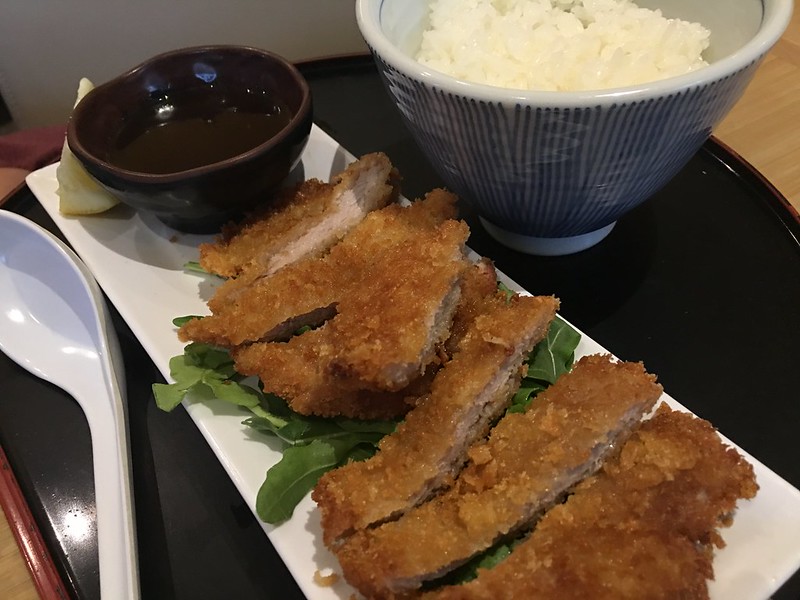
Tonkatsu. Deep-fried pork cutlet covered in crispy panko breadcrumbs and served with a tangy katsu sauce.

Hokkaido Ramen Santouka, Bellevue

With our ramen and katsu orders, we also availed of sides such as the aji-tama (soft-boiled egg marinated in a soy-based sauce) and gyoza (pan-fried dumplings filled with minced pork).

Hokkaido Ramen Santouka, Bellevue

With our dinner at Hokkaido Ramen Santouka, the fam was able to enjoy some of the flavors we love back home right here in Bellevue.

This Hokkaido Ramen Santouka branch is located at 103 Bellevue Way, NE, Suite 3, Bellevue, WA 98004, open daily from 11am to 9pm.  For inquiries or reservations, call +1 425 4620141.

For more details, visit www.santouka-usa.com.

Hokkaido Ramen Santouka Menu, Reviews, Photos, Location and Info - Zomato

Check out the other restos I’ve tried in the Washington State area:

Birthday dinner at Soru Izakaya, Ugong

As a foodie that has been exposed to various cuisines, restaurant concepts and cooking styles, of course I would want an extraordinary meal at an extraordinary restaurant for my birthday dinner with the family.

For some time now, I’ve been wanting to dine at Soru Izakaya ever since I caught sight of pictures showing its colorful and creatively presented makis. Add the fact that the resto chain is currently a Zomato Gold partner where I can get free dishes as a Zomato Gold member, and that sealed the deal.

An izakaya is a type of informal pub originating from Japan, where small and inexpensive dishes and snacks are served to accompany alcoholic drinks. This kind of dining establishment has proved perfect for afterwork de-stressing with friends through drinks and good food.

Soru Izakaya’s visually arresting aesthetic also adds to the relaxing vibe. It takes inspiration from bishoujo (pretty girl) manga, traditional Japanese art, the colorful Tokyo night life and the emergence of speakeasies.

Soru Izakaya, Ugong

Soru Izakaya, Ugong

Soru Izakaya, Ugong

Soru Izakaya, Ugong

For my birthday celebration, the place proved to be an awesome venue where the extended family came together for a great meal, which included:

Miso Soup (Php45). A staple among Japanese soups wherein softened miso paste is mixed into a savory dashi stock with tofu cubes.

Soru Izakaya, Ugong

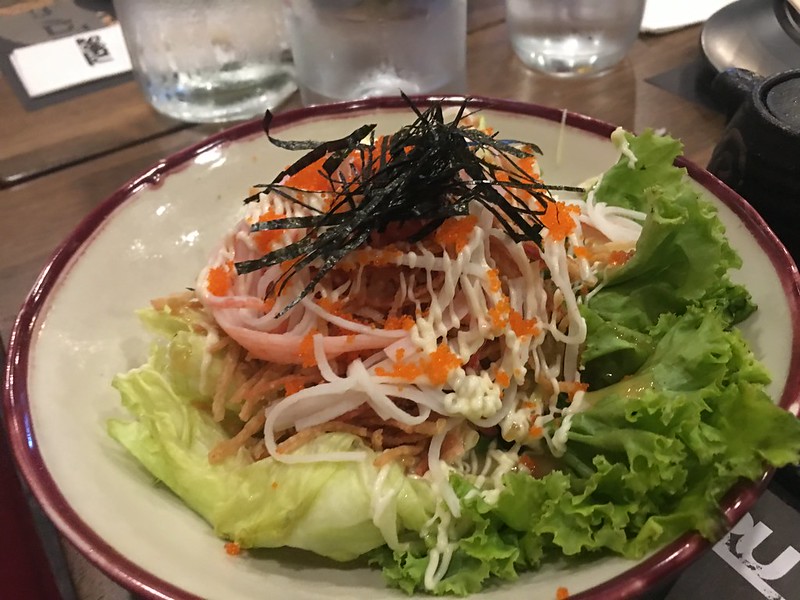
Kani Salad (Php240). Shredded crabsticks tossed in salad greens dressed in a mixture of miso and Japanese mayo. Toppings of crunchy kani, ebiko and nori strips add to the flavors and textures.

Soru Izakaya, Ugong

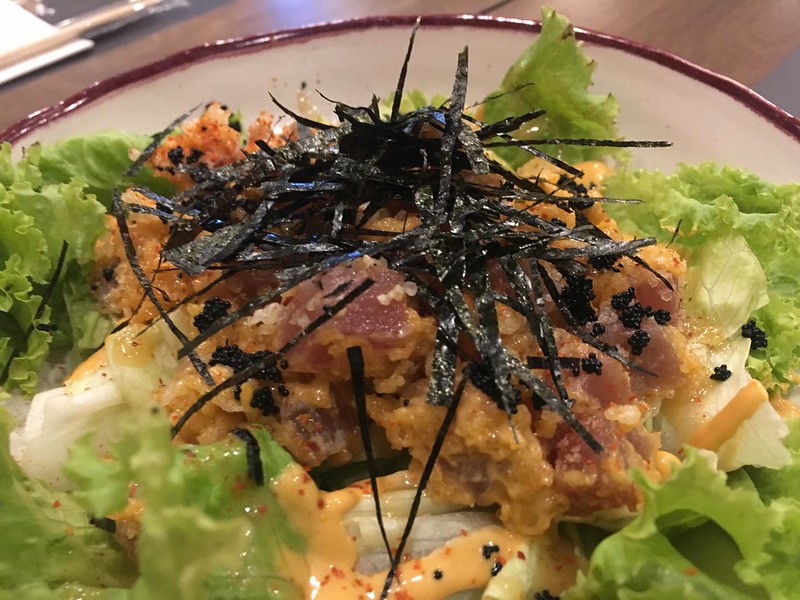
Spicy Maguro Salad (Php300). Tempura flakes and cubes of fresh tuna top salad greens dressed in miso and spicy mayo.

Soru Izakaya, Ugong

Wagyu Steak Teppan (Php990). Iron-grilled wagyu steak served with mixed vegetables.

Soru Izakaya, Ugong

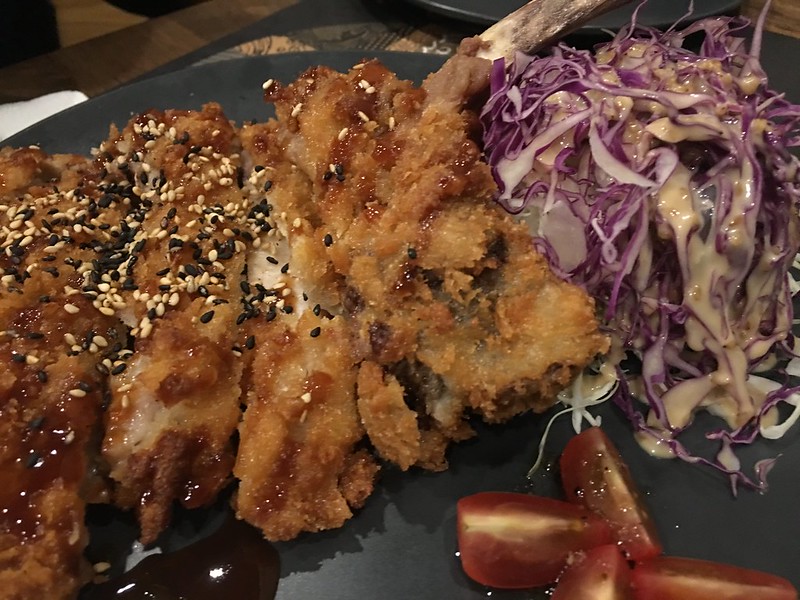
Tomahawk Katsu (Php320). Deep-fried breaded pork tomahawk cutlet served with sweet and savory katsu sauce and shredded cabbage in roasted sesame dressing.

Soru Izakaya, Ugong

Unaguro Aburi (Php390). Tempura rice topped with torched tuna and unagi with teriyaki sauce and a bit of truffle oil.

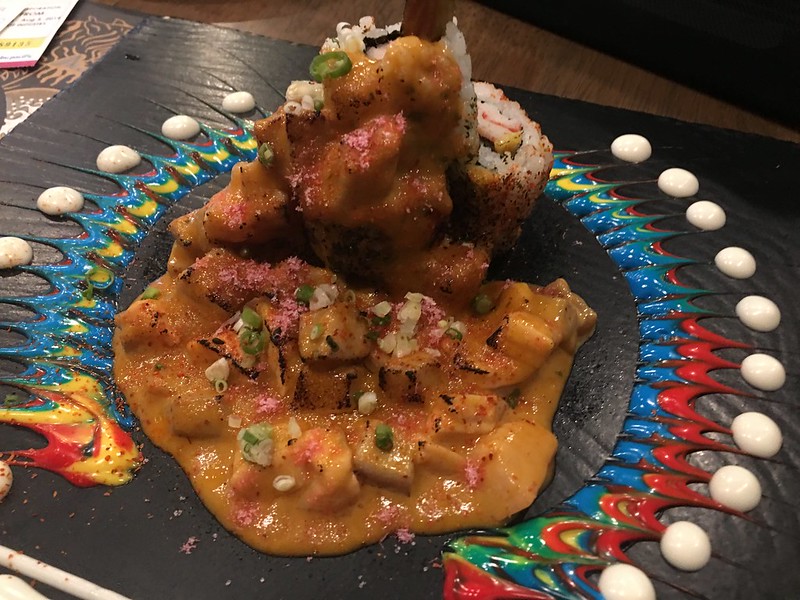
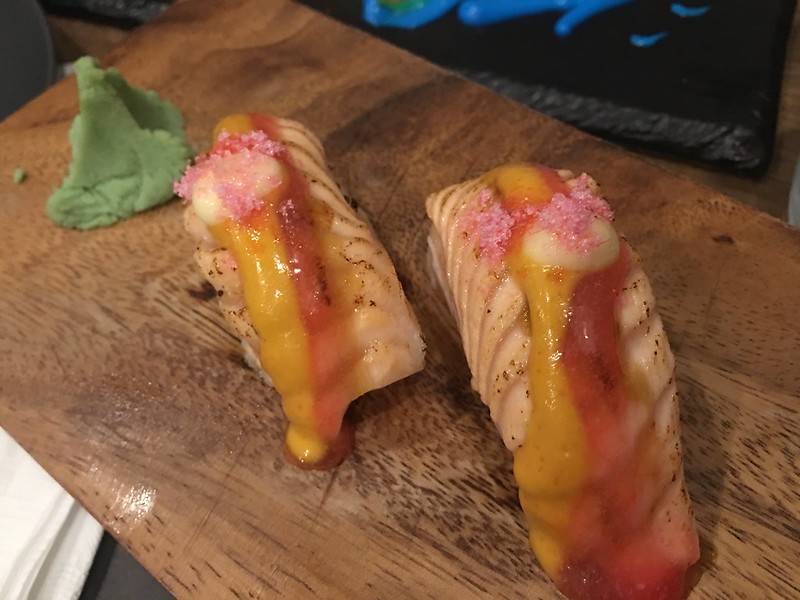
Lava Maki (Php390). Salmon skin, crabsticks and tamago topped with cubes of fresh tuna and salmon in a spicy mayo and teriyaki sauce.

Soru Izakaya, Ugong

Soru Izakaya, Ugong

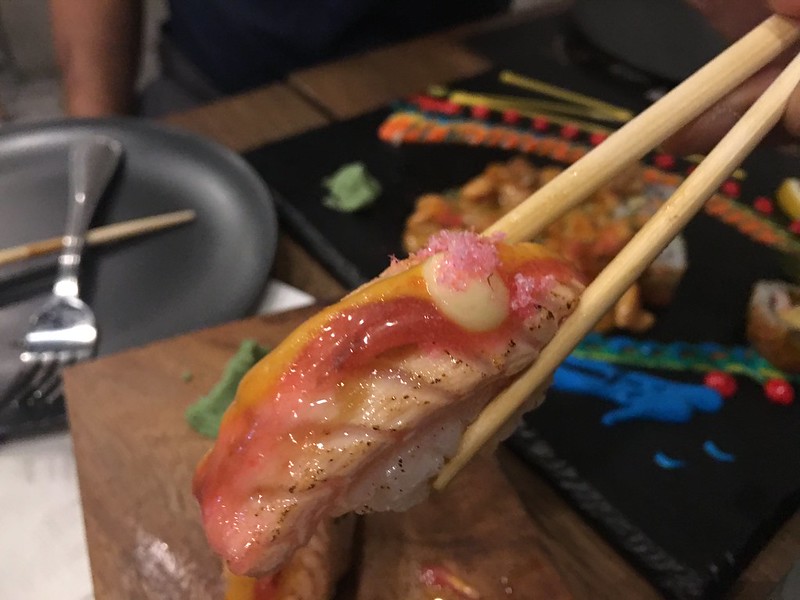
Shake Belly Aburi (Php230). Torched salmon belly with wasabi teriyaki sauce, finished with wasabi mayo, oborro mayo and Japanese mayo.

Soru Izakaya, Ugong

Soru Izakaya, Ugong

Nori Tempura Nami (Php330 for 5 pieces). Deep-fried tiger prawns in nori flavored batter.

Soru Izakaya, Ugong

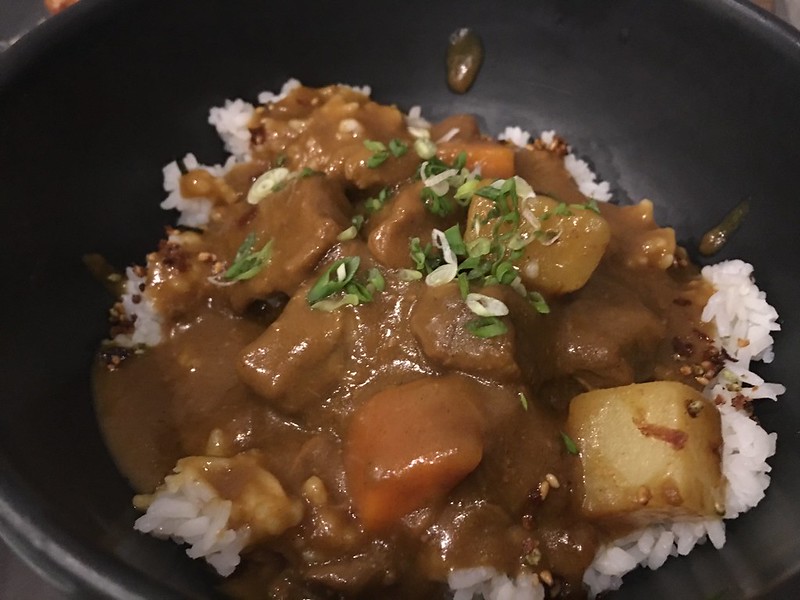
Meiji Kare (Php260). Japanese-style beef curry with potatoes and carrots on rice.

Soru Izakaya, Ugong

Shoyu Ramen (Php290). Tender chasyu pork slices, boiled egg and mixed vegetables in a steaming hot shoyu broth.

Soru Izakaya, Ugong

It was a fun birthday dinner in a new place for the fam.

Soru Izakaya, Ugong

On my next visit, I would love to try the Tantanmen ramen and one of Soru Izakaya’s desserts.

This Soru Izakaya branch is located at Techno Point Building, Julia Vargas Avenue, Ugong, Pasig City, open Sundays to Thursdays from 11am to 12 midnight and Fridays to Saturdays from 11am to 2am.

Other branches are located at:

  • Ground Floor, 140 Maginhawa Street, Sikatuna Village, Quezon City
  • Burgos Circle, Bonifacio Global City, Taguig City

Authentic taste of Japan at Ramen Daisho, Mandaluyong

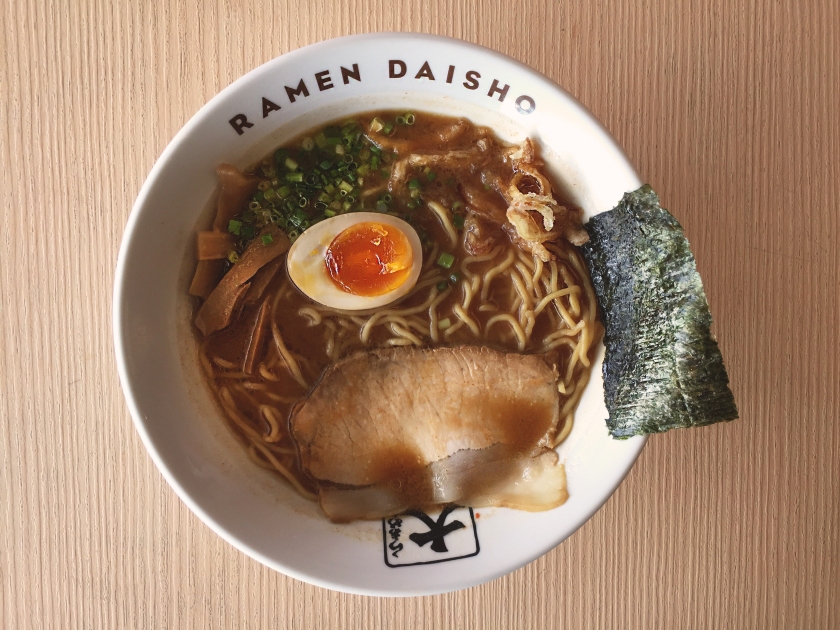
Ramen Daisho, a quaint Japanese restaurant located in Sunshine Center, Shaw Boulevard, offers delicious dishes with ingredients imported from Japan to give you the most authentic taste and experience possible.

This Lenten season, they’ll be offering specials to satisfy your Japanese cravings.

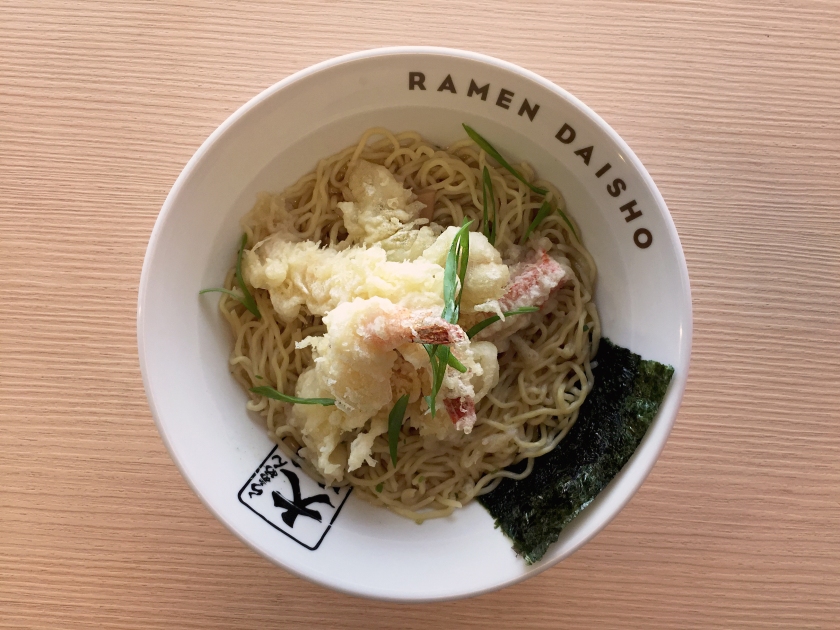
lenten noods main 2.JPGSeafood Tempuramen (Php399). Firm Ramen noodles in seafood broth, topped with Tempura and a side of Nori. Although I’m not a fan of anything seafood, this dish was a pleasant surprise as the dish offered a fresh taste of the sea.

lenten noods close 2.JPG


Other than Ramen, Ramen Daisho also offers bentos in their Lenten Special.

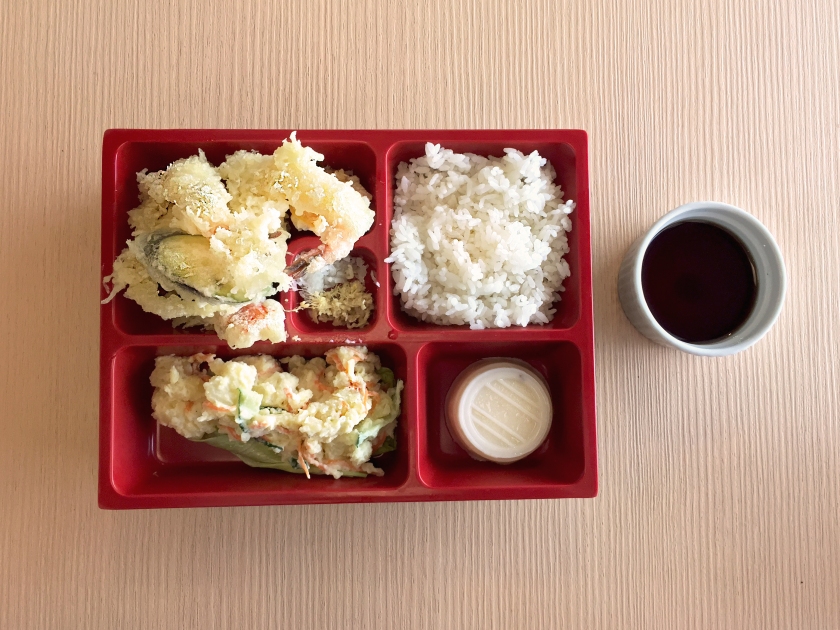
tempura bento.JPG

Mixed Tempura Bento (Php305). This Bento includes Ebi Tempura, Kani Tempura, and Mixed Veggie Tempura with a side of potato salad, rice, and almond jelly for dessert.

tempura bento up close


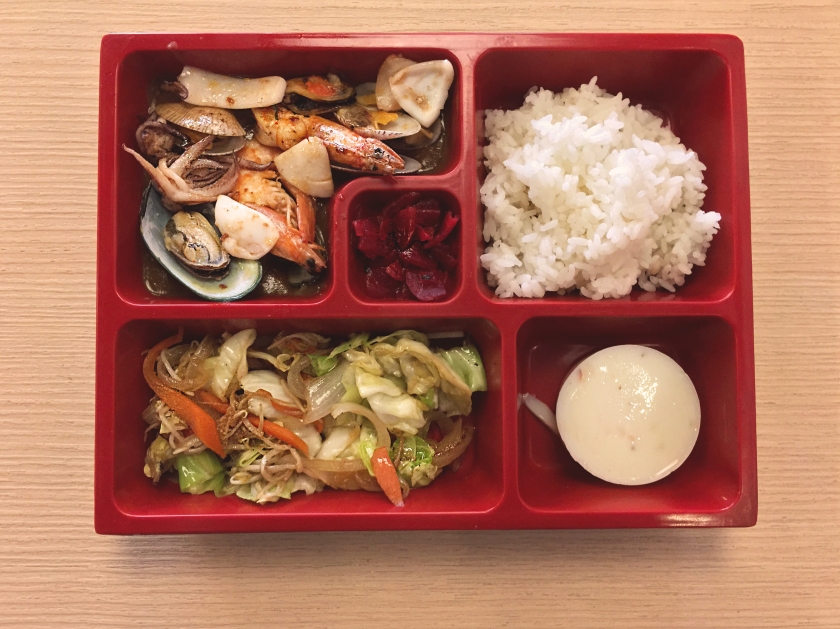
curry

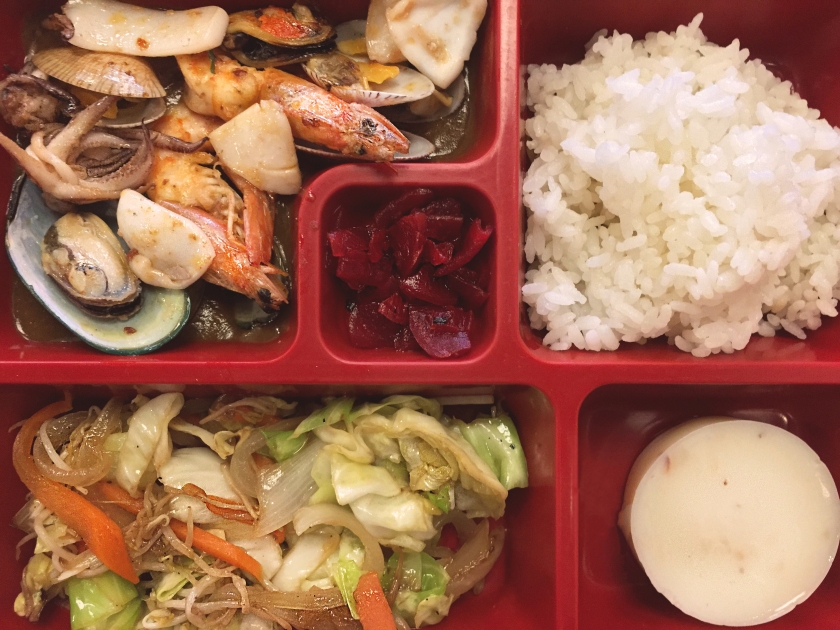
Seafood Curry Bento (Php305). Seafood curry with mixed veggie salad, rice, and almond jelly. Shrimp, clam, and squid come together with the savory curry sauce in this dish, rich in flavor. The flavors in this bento taste great together and is definitely filling.

curry close

Other than the Lenten Special, Ramen Daisho offers more mouthwatering dishes.

appetizers.JPG

I started with appetizers such as Gyoza and California Maki (Php255). Gyoza is a customer favorite as it is soft, juicy, and full of flavor.

tonkotsu ramen

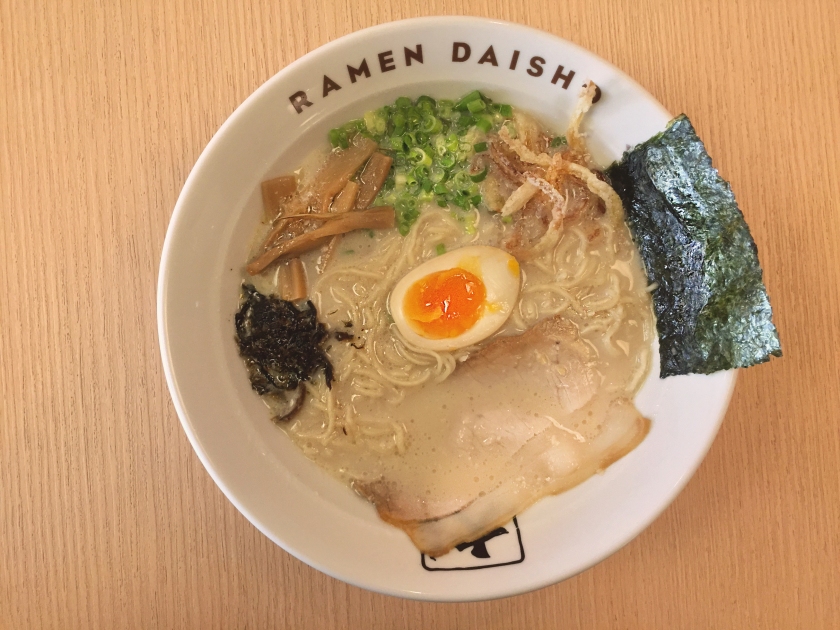
Tonkotsu Ramen (Php380 regular | Php670 large). Ramen noodles in rich and creamy Tonkotsu broth, with topped with slices of pork, bamboo shoots, scallions, and a soft boiled egg. Ramen Daisho’s Tonkotsu Ramen is full of flavor and delicious down to the last spoonful of broth.

shoyo ramen close 1

shoyo ramen

Miso Ramen (Php380 regular | Php670 large). Ramen noodles in Miso broth, with pork slices, nori, bamboo shoots, and a soft boiled egg. This dish is rich and fragrant, and is Ramen Daisho’s specialty.

dip noods

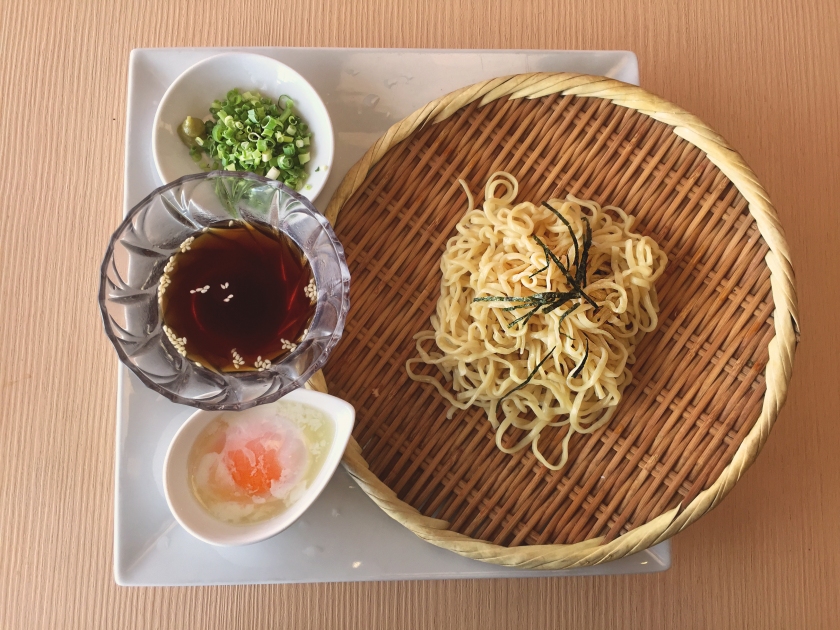
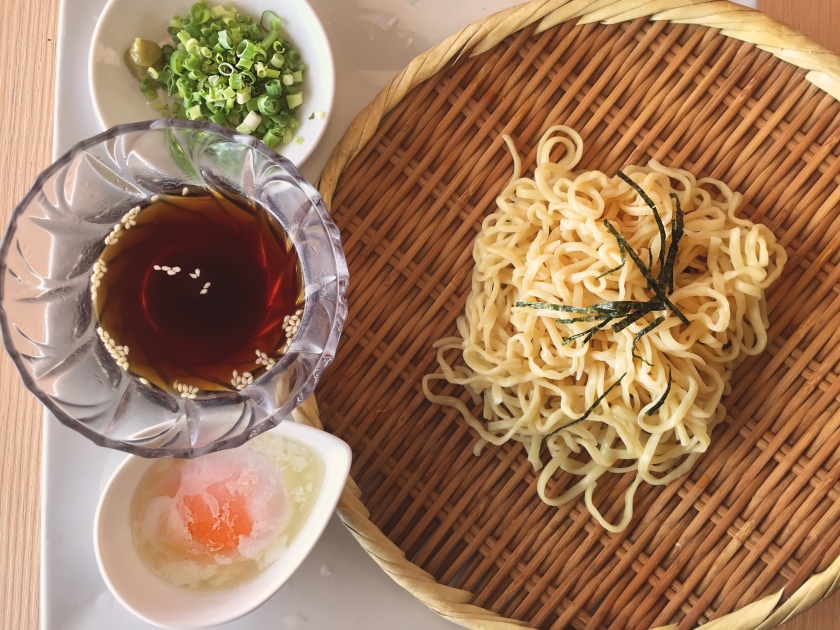
Dipping Ramen. Firm Noodles with a semi-poached egg, scallions and Zaru Tare sauce. This light and refreshing ramen is a summer must-try, as this ramen is cold rather than your normal steaming hot ramen. This is something I would order again.

dip noods closer

For authentic Japanese food, you can eat at Ramen Daisho, located at Unit 2, Sunshine Square, Shaw Blvd, Pleasant Hills, Mandaluyong City. It is open daily from 10am to 10p. For reservations and inquiries, contact them at (02) 7740036 and (02) 6332280.

Ramen Daisho was founded in the country in 2013 by Mr. Katsuyuki Nakata. Daisho Global, Inc. is the holding company that oversees the franchise of Ukokkei Ramen in terms of cooking methods and supplies from Fukuoka, Japan.

The restaurant prides itself on the authentic taste of its dishes and experience of dining within its walls. Guided by Mr. Yasuhiko Funatsu, the Ramen Master of Ukokkei Ramen, it served authentic ramen with an ukokkei soup base.
Since 2017, it has been under the management of Ureshi Fudo Corporation.

Sake-tasting at Dohtonbori, Greenhills

Sake, an alcoholic beverage made of fermented rice, is a long standing tradition in Japanese cuisine. It can be served chilled, at room temperature or heated, depending on the drinker’s preferences, the quality of the sake and the season.
Sake Masterclass, Dohtonbori

During a recent Sake Masterclass held in Dohtonbori’s first-ever store in Greenhills, my fellow foodies and I were treated to different kinds of sake produced by Japan’s premier sake brewer Kubota, paired with the resto’s okonomiyaki and other dishes. With the help Kubota’s Sake Master Keichi Nagatsuka, our group traced the history and traditions surrounding the production of sake.
Sake Masterclass, Dohtonbori

Sake Masterclass, Dohtonbori

Sake Masterclass, Dohtonbori

Kubota Sake are produced in the Niigata prefecture, one of Japan’s quality rice producing areas, where various factors come into play to bring about Japan’s celebrated sake. From the premium Gohyakumangoku rice grown in the area, the water from melted snow to the cold snowy climate that limits bacteria growth during the brewing process, Niigata is home to many sake breweries.

Kubota is also guided by the principle of Jizake – the brewing of sake with the natural resources of the region. This ensures that the production of sake also protects the land, the natural environment and the local community. Even washi, the paper used to label the sake bottles, are handmade by a local artisan.

The sake we sampled during the event include:

Kubota Senjyu. Characterized by its moderate aroma, a delicate palate and clean and crisp finish, it can be served chilled or slightly warmed. Paired with Butatama (Pork) Okonomiyaki and Chicken Karaage.

Sake Masterclass, Dohtonbori

Kubota Junmai Daiginjo. With a hint of pear and melon, its elegant aroma, and the blend of acidic and fruity flavors, it can be served chilled for diners to enjoy the clean and crisp aftertaste or at room temperature to savor its unique aroma. Paired with Veggie Supreme Okonomiyaki and Chicken Shio.

Sake Masterclass, Dohtonbori

Kubota Manjyu. Kubota’s flagship premium sake with a complex yet pleasant flavor, floral aroma and smooth texture, it can be served served slightly chilled or warmed. Paired with Kalbi (Beef) Yakiniku and Four Cheese (Mozarella, Cheddar, Parmesan and Gouda) Okonomiyaki.

Sake Masterclass, Dohtonbori

Sake Masterclass, Dohtonbori

Sake Masterclass, Dohtonbori

The pairings of Kubota sake with Dohtonbori’s okonomiyaki and other signature dishes helped to bring out their complementing flavors, with sake supporting the tastes and textures of the viands.

Sake Masterclass, Dohtonbori

Sake Masterclass, Dohtonbori

Dontonbori is named after one of Osaka’s principal tourist destinations known for its myriad of food choice and vibrant nightlife. The restaurant is driven by “Teppan Communication,” the philosophy that seeks to make the environment surrounding the teppan enjoyable and fun, where diners experience a sense of connection to each other as they share a meal. (Teppan is the iron plate on which the restaurant’s signature dishes are cooked in front of the diner.).

Sake Masterclass, Dohtonbori

The resto’s signature dish is the okomiyaki, the Japanese savory pancake comprised of various ingredients. Its name is derived from “okonomi,” which means “how you like” and “yaki,” which means “cooked.” Dohtonbori’s okonomiyaki is made with okonomiyaki flour imported from Japan, eggs, cabbage, green onions, tempura bits, and other ingredients.

This Dohtonbori branch is located at Cullinan Prime Building, 8 Missouri Street, Greenhills, San Juan City open daily from 11am to 10pm). For reservations and inquiries, call +63 2 5702765.

Other branches are located at:

  • Third Floor, Mega Fashion Hall, SM Megamall, Ortigas, Mandaluyong City (open daily from 11am to 10pm)
  • Second Floor, UP Town Center, Katipunan Avenue, Diliman, Quezon City (open Sundays to Thursdays from 10am to 9pm and Fridays to Saturdays from 10am to 10pm)
  • Upper Ground Floor, Main Building, SM City North EDSA, Bago Bantay, Quezon City (open daily from 10am to 10pm)
  • Second Floor, Entertainment Mall, SM Mall of Asia, Mall of Asia Complex (MOA), Pasay City (open daily from 10am to 9pm)
  • Upper Ground Floor, SM City Fairview, Novaliches, Quezon City (open Sundays to Thursdays from 10am to 9pm and Fridays to Saturdays from 10am to 10pm)
  • Pacific Star Building, Buendia Corner Makati Avenue, Salcedo Village, Makati City (open daily from 10am to 10pm)

Disclosure: Together with other foodies, I was invited to join a Sake Masterclass held at this restaurant. Food items mentioned here were served to allow us to sample the fare and were not paid for by the attendees, including myself.