Wine pairing class explores tasty combinations of wine and pizza

In vino, veritas.

In wine, there is truth.

Well, the truth is, I didn’t have much appreciation for wines. Similar to most Filipinos who reached adulthood without any exposure to wine culture, I have decided that wine just isn’t for me. What few sips I’ve had of the stuff were, for some reason, not pleasurable for me.

However, after joining a Food and Wine Pairing class organized by Wine Story Academy, I realized that maybe, similar to many things in life, I just haven’t found the right wine for me. Also, by partnering wine with one of my favorite kinds of food – pizza, supplied by Pasto Cafe and Bar – I was able to explore how the right combination of food and wine brings out the best in each other.

Food and Wine Pairing, Wine Story

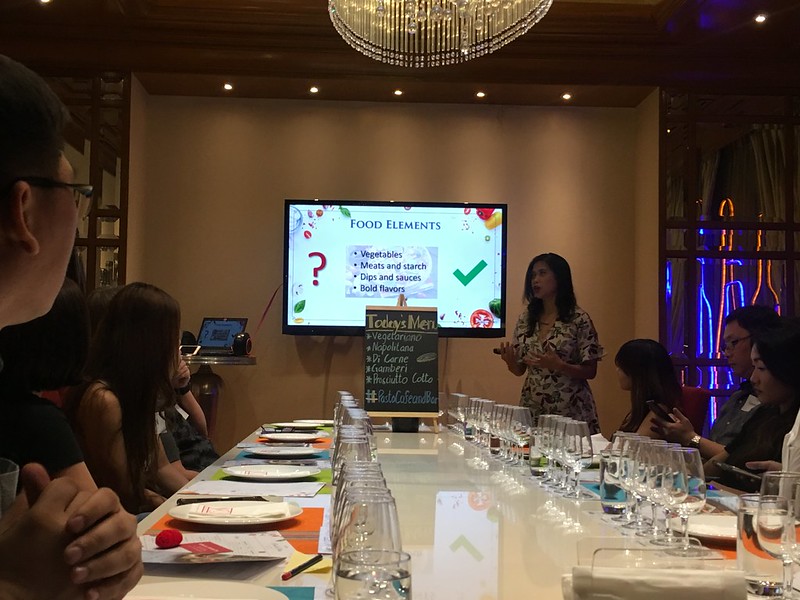
The class was held at the Wine Story outlet in EDSA Shangri-la Mall, an upscale retailer of fine and rare wines. Wine Story Academy’s Wine Education Manager Carla Santos guided our group through a set of five different wines to be tasted together with five different pizza flavors.
Food and Wine Pairing, Wine Story

Basic Principles in Food and Wine Pairing

The conventional wisdom in food and wine pairing is to pair red wines with red meat and white wines with white meat. However, according to Carla, there are more factors to consider, not the least of which is your own preference.

To find the perfect food and wine pairing, we need to strike a balance among the following characteristics of the food served:

Weight. How heavy (or filling) does the food feel in your mouth? It is a good idea to pair a filling kind of food with a fuller-bodied kind of wine.

Intensity.  How strong does are the food’s flavors?  You would want to taste both the food and the wine’s flavors so take care that one does not overpower the other.

Flavor.  The ingredients and method of cooking, as well as dips and sauces incorporated to the dish also contribute to the flavor of the food which needs to be considered.

In choosing the perfect wine for the dishes, one must consider the following wine profiles:

Sweetness. It is the first sensation – it may not necessarily be a sugary kind of sweetness but more of a fruity kind – as the wine hits the tip of your tongue. All but the very driest of wines will have some sensation of sweetness.

Acidity.  This is what makes the wine crisp and refreshing.  You will feel it as it makes your mouth water.  A wine with too much acidity will be unpleasantly tart while one with too little will feel flabby or flat.

Tannin.  This is the mouth-drying  substance found in wine.  Too much tannin will make the wine taste hard and bitter while too little will make it seem soft and innocuous as fruit juice.

The Tasting

The evening’s featured wines, curated by Wine Story Academy, include:

Tenuta Sant’Anna Goccia Pinot Grigio 2017 (Veneto, Italy; Php1,000).  It smells of acacia flowers and exotic fruits.  The taste is marked by a total absence of tannin, resulting to a fresh and floral flavor.

Sand Point Chardonnay 2015 (California, USA; Php1,300). Possesses an aroma with peach and pear notes.  It is a soft wine with low acidity and fruity flavor.

Urban Riesling 2015 (Mosel, Germany; Php1,350). It has a clean, fresh and flinty bouquet and smells of tangerines.  It is off-dry, with a crisp and semi-sweet taste.

The Winery of Good Hope Bush Vine Pinotage 2018 (Stellenbosch, South Africa; Php1,050).  Its aroma is one of blackberry and plums accented by hints of oak and mocha.  It tastes ripe and juicy.

Food and Wine Pairing, Wine Story

Cardinalices Rouge Grande Reserve 2015 (Rhone Valley, France; Php1,000).  It has a fruity aroma with some spicy notes and marked by a strong and complex flavor.

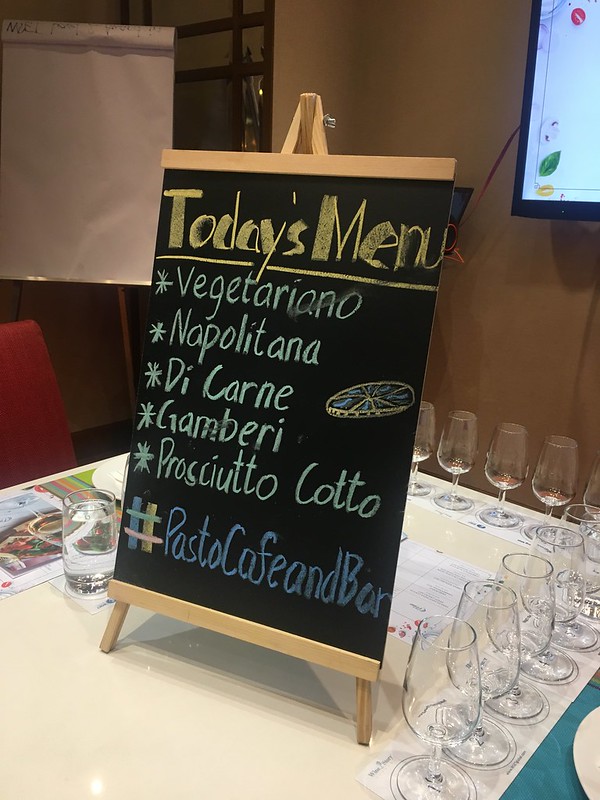
Pizzas paired with the featured wines were provided by Pasto’s EDSA Shangri-la Mall branch and presented interesting flavors that we mixed and matched with the wine.
Food and Wine Pairing, Wine Story

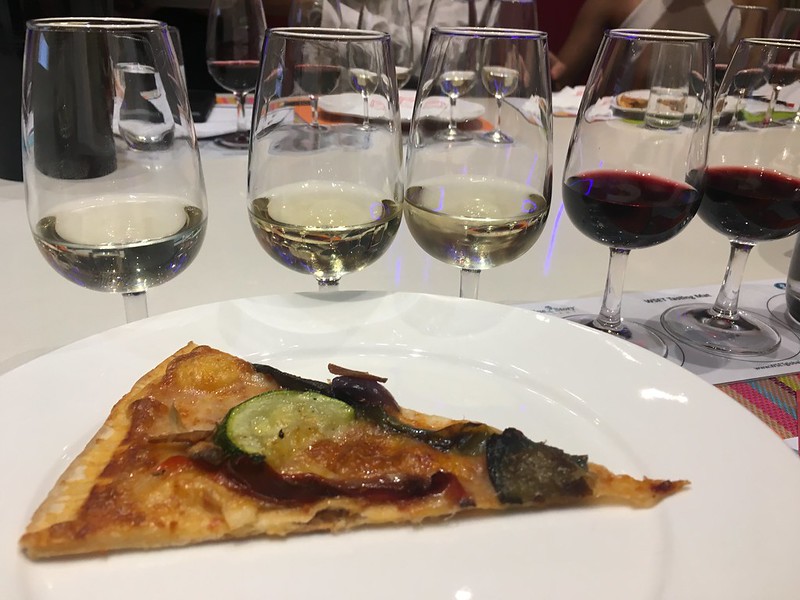
Vegetariano. This pizza is marked by the earthy smokey flavor of assorted roasted vegetables such as eggplant, zucchini, bell peppers and garlic. I find that the light and fresh Pinot Grigio works well with this pizza.
Food and Wine Pairing, Wine Story

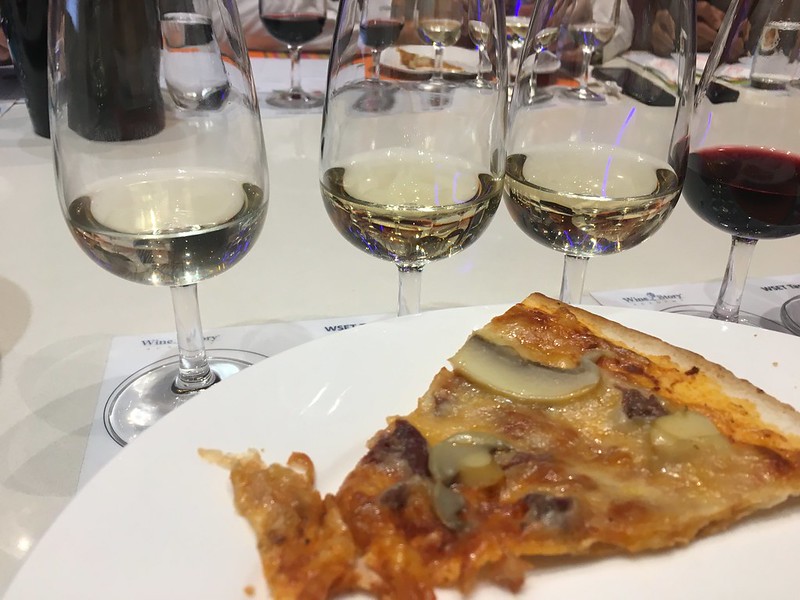
Napolitana. Sliced button mushrooms and savory achovies make this a strongly flavored pizza. For me, the Pinotage’s acidity stands up well to its saltiness.
Food and Wine Pairing, Wine Story

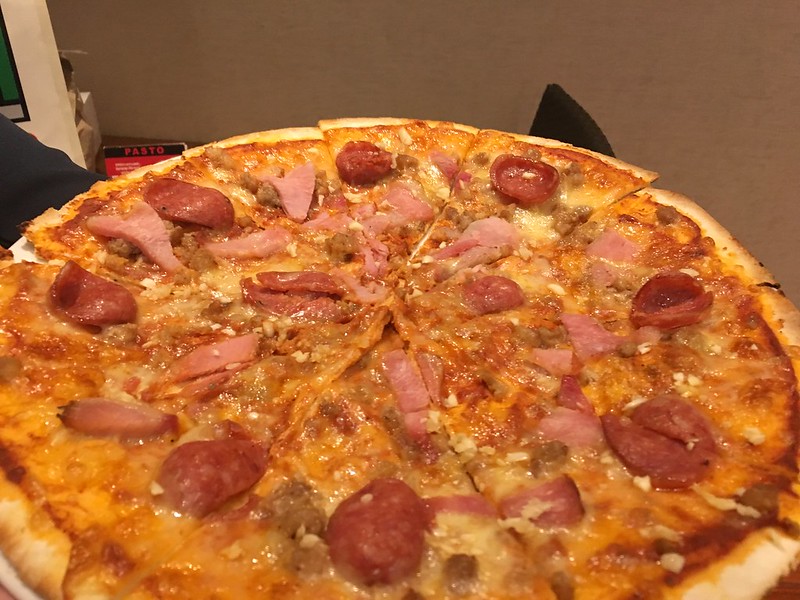
Di Carne. This is an all-meat extravaganza with Italian sausage, smoked ham and pepperoni. The Cardinalices’ bold and strong flavors complement the meats in this pizza.
Food and Wine Pairing, Wine Story

Gamberi Fritti. A crispy battered shrimp tops the artichoke salsa and lemon aioli in this pizza, with spicy chili flakes. The low alcohol and the refreshing acidity of the Riesling manages the heat from this spicy pizza.

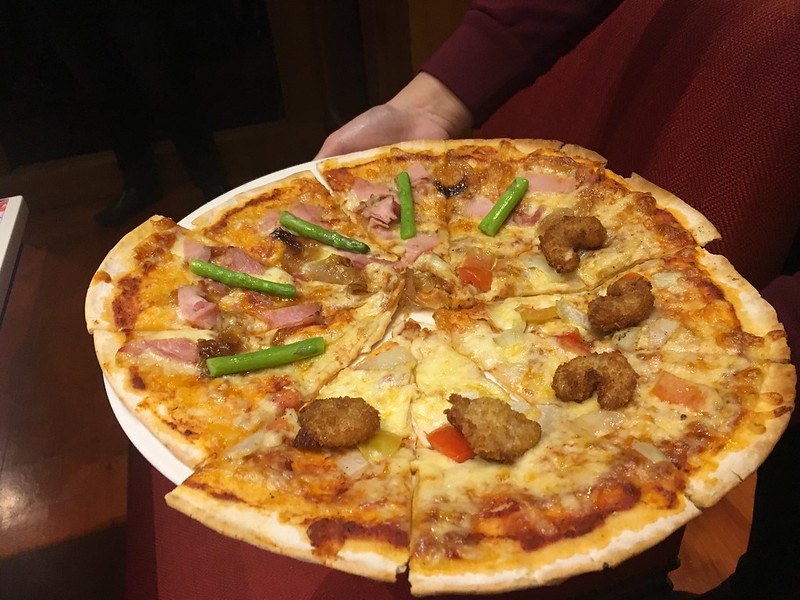
Prosciutto Cotto. Caramelized onions added some sweetness to the pizza along with the earthy smoked ham, asparagus and mozzarella. The soft and fruity Chardonnay complements the pizza’s flavors.
Food and Wine Pairing, Wine Story

Wine tasting tips

This food and wine pairing class is an eye-opener for me. Not only did it show me the versatility and variety of wines but it also helped grow my appreciation for how they can enrich the dining experience. For those who are planning to go to a similar wine tasting affair, here are some things to remember:

  • No brushing of teeth or smoking right before class. Tobacco and mint will affect your sense of taste.
  • Avoid wearing heavy scents such as perfume, cologne or scented hair spray. These will affect your sense of smell.
  • Hold the wine glass by the stem. This keeps fingerprints off the bowl (so you can see and appreciate the liquid in all its splendor) and prevents your hand from heating the wine.
  • Prior to tasting, take a sniff to get an initial impression of the wine’s aroma, then swirl for a bit to bring out some more of its scent. This will contribute to your fuller appreciation of the wine’s flavor.

Many thanks to Mike Lord Raymundo of the Pasto Group and Bar Craft Concepts for extending the invitation!

Food and Wine Pairing, Wine Story

Food and Wine Pairing, Wine Story

For more details about the wines and pizzas featured in this wine class, visit their respective social media sites:

Pasto Menu, Reviews, Photos, Location and Info - Zomato

To help develop the Filipino palate for wine, the Wine Story Academy offers the following classes next month:

  • April 6: Intro to Bordeaux (Php3,000 per person)
  • April 13: Wine 101 (Php2,000 per person) and Sushi and Wine Pairing (Php2,500 per person)

Say hello to a great summer with Ombu Kusina’s Flavored Ice Halo-Halo

Summers are for great times with great food, and spent with great friends.

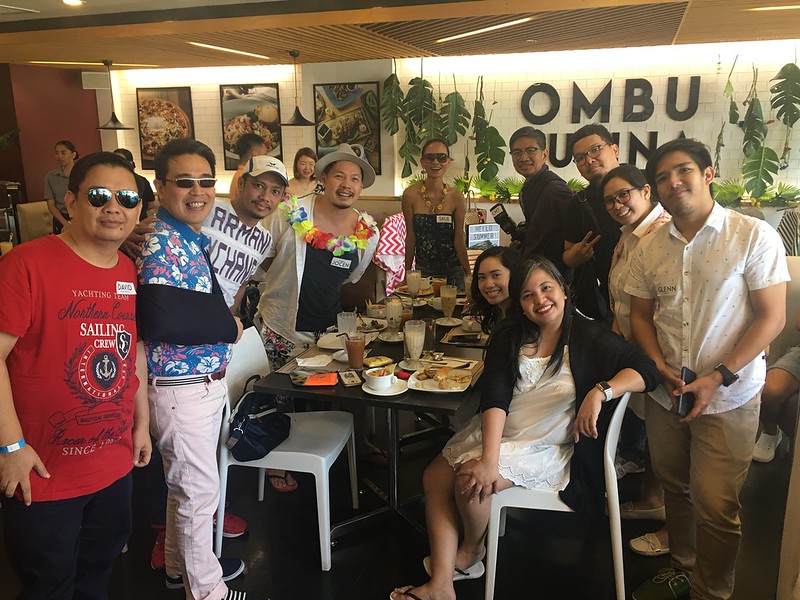
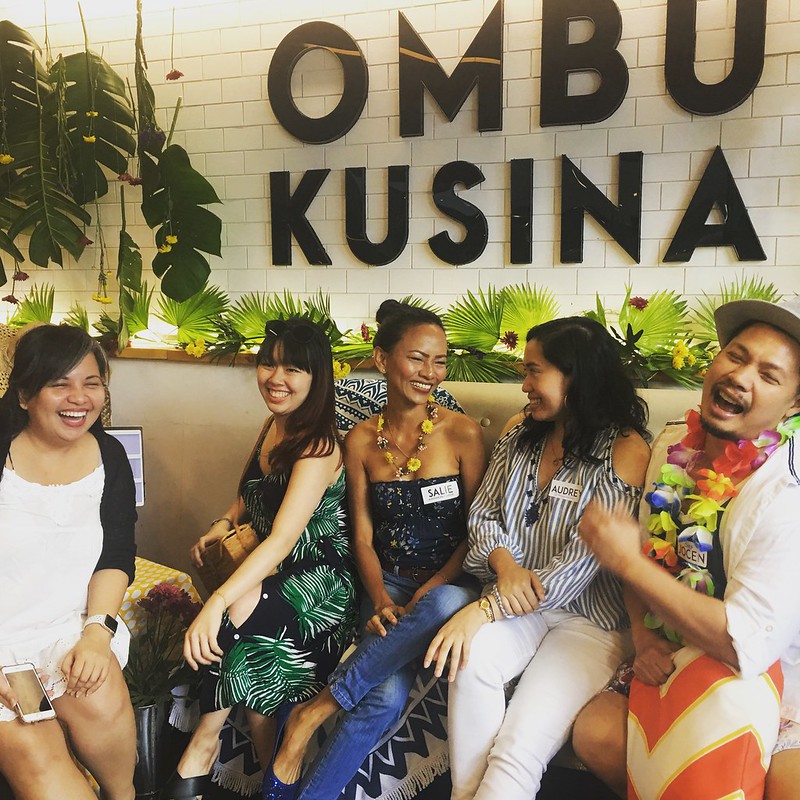
Together with my fellow foodies, I experienced what certainly seems to be the start of a great summer.

Ombu Kusina, Tomas Morato

Ombu Kusina, Tomas Morato

Ombu Kusina, Tomas Morato

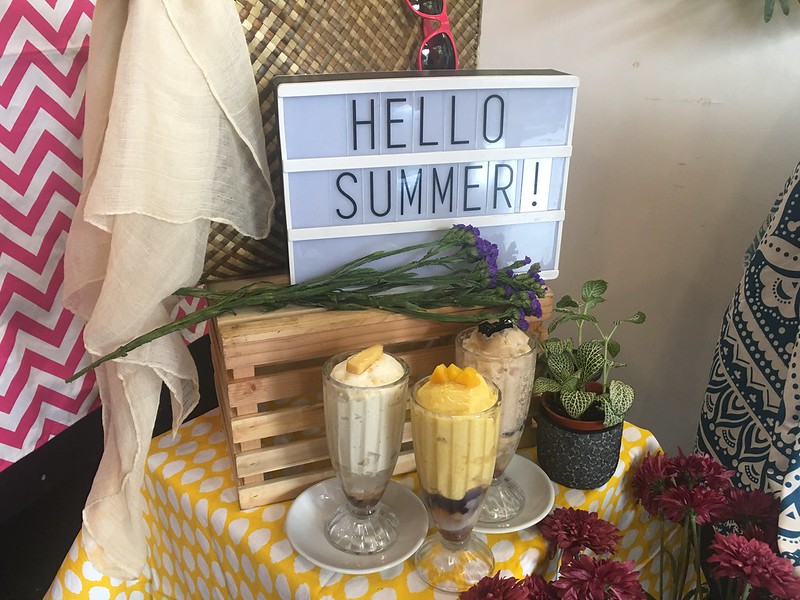
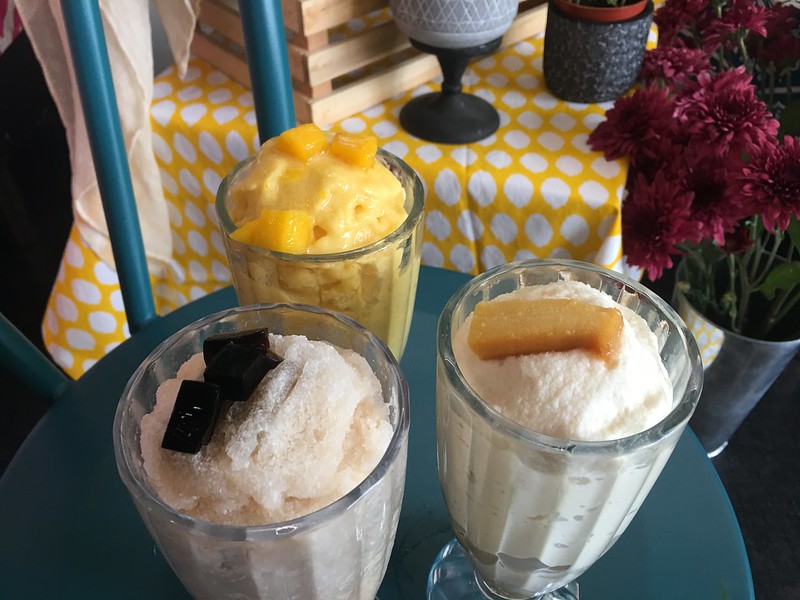
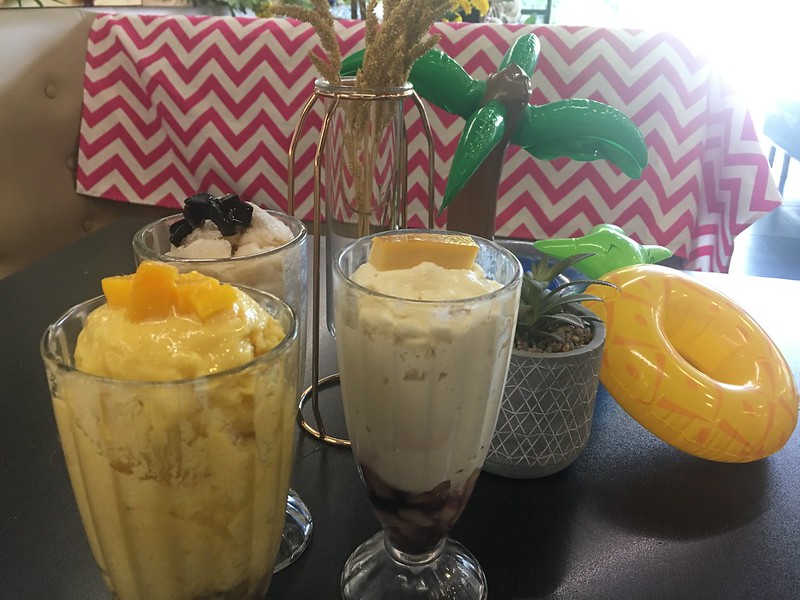
In a recent Foodie Event hosted by Ombu Kusina, it launched its newest and coolest offerings: three new scrumptious halo-halo flavors!

Ombu Kusina, Tomas Morato

Ombu Kusina, Tomas Morato

The halo-halo is a favorite Pinoy dessert made of crushed ice, evaporated milk and other sweet ingredients such as nata de coco, beans and coconut strips, served layered on top of each other, but then mixed together so that each spoonful is a mixture of sweet ingredients and the crushed ice. Ombu does its own take on this classic icy treat, with three flavors, available only during the summer, at only Php160 each. These include:

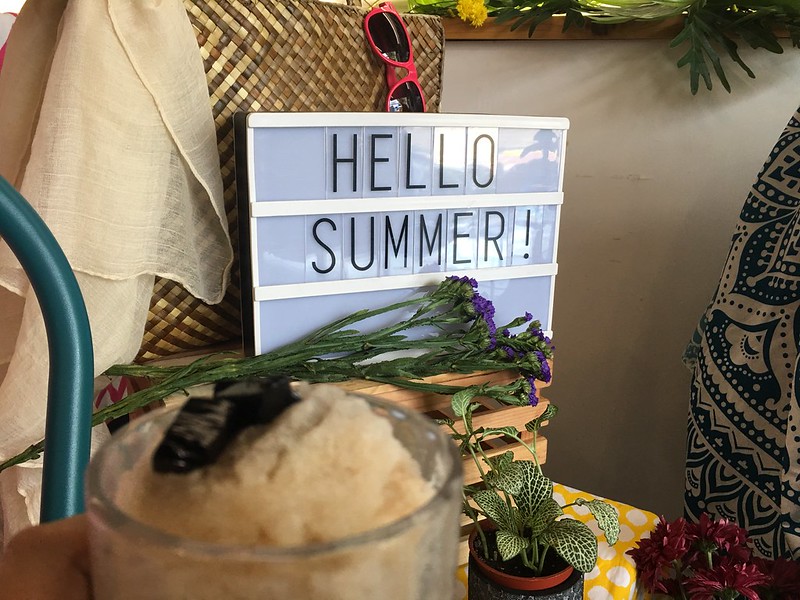
Milk Tea. The milk tea craze has surely hit the country and how! Now this exotic drink which originated from Taiwan flavors the Pinoy halo-halo through the use of brewed Earl Grey black tea.

Ombu Kusina, Tomas Morato

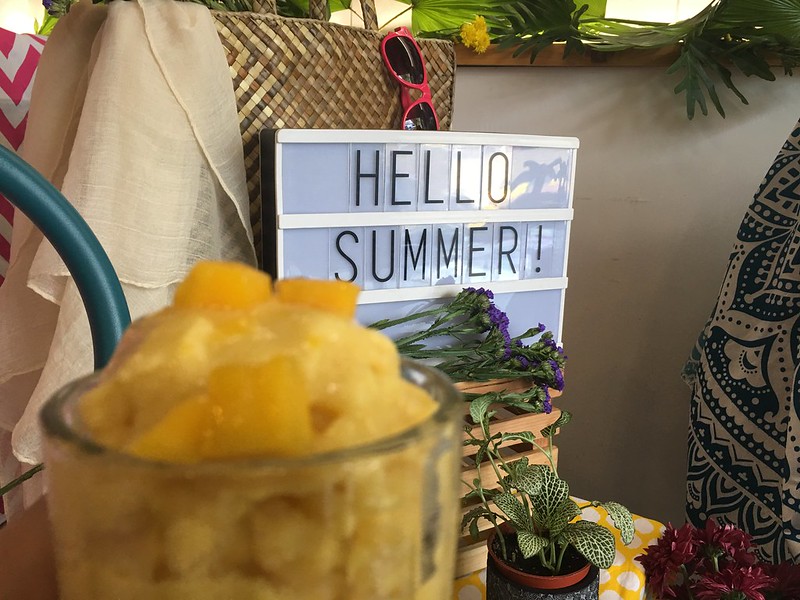
Mango. Fresh ripe mango are pureed, mixed with milk then frozen to create mango-flavored crushed ice, served with the usual halo-halo ingredients and toppped with succulent mango cubes.

Ombu Kusina, Tomas Morato

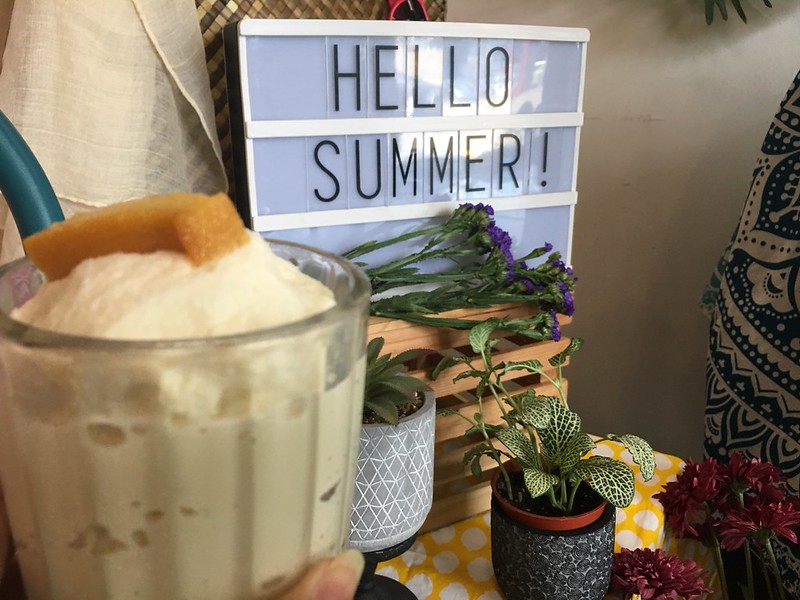
Tres Leches. As the name implies, the crushed ice is flavored with three kinds of milk and topped with creamy leche flan. This is my favorite among the new halo-halo variants.

Ombu Kusina, Tomas Morato

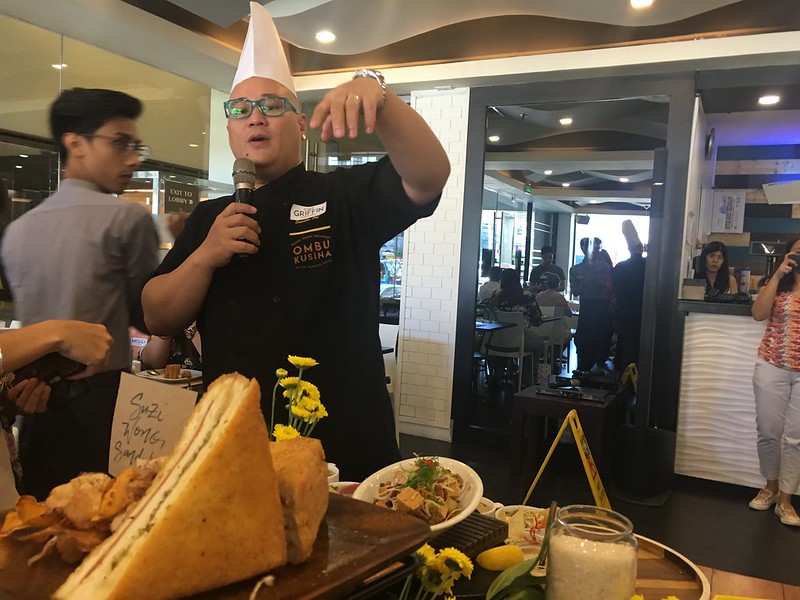
Ombu’s Chef Griffin Oraiz explained that what sets Ombu’s halo-halo treats apart from similar offerings from other restaurants is the use of flavored ice: the flavors are infused into the ice, resulting to a more intense taste and creamier mouthfeel.

Ombu Kusina, Tomas Morato

Ombu Kusina, Tomas Morato

Ombu Kusina, Tomas Morato

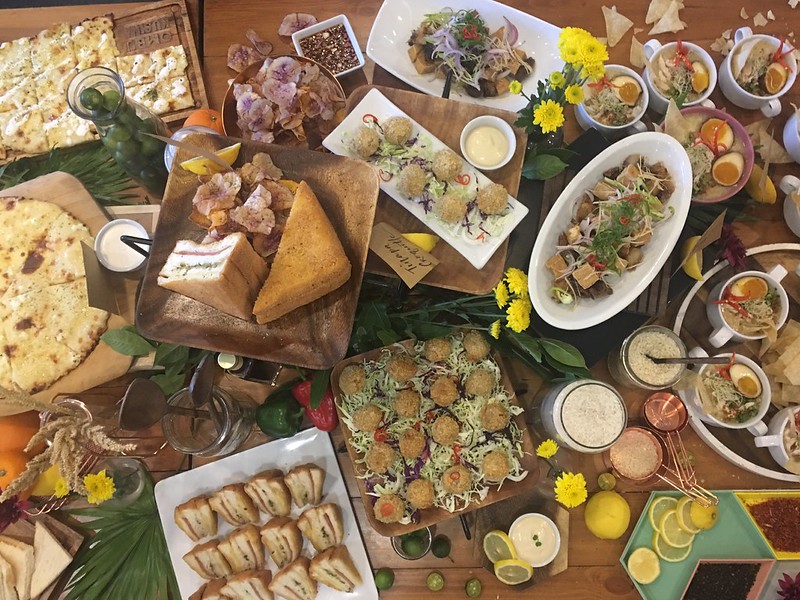
Ombu also showcased some its signature dishes which are well-suited for the summer, such as:

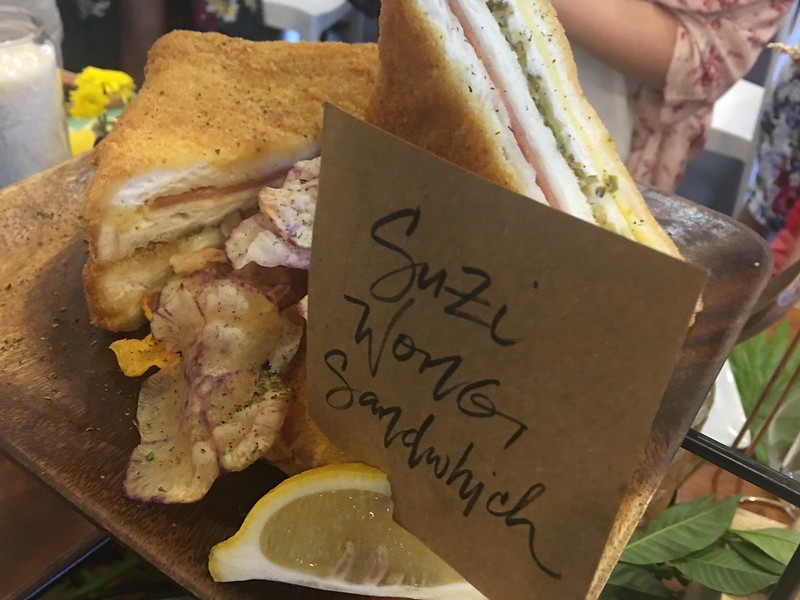
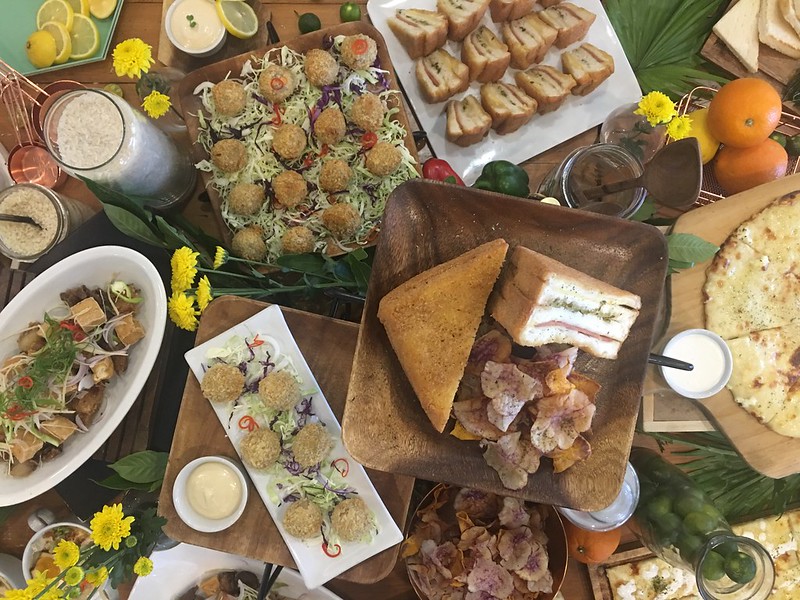
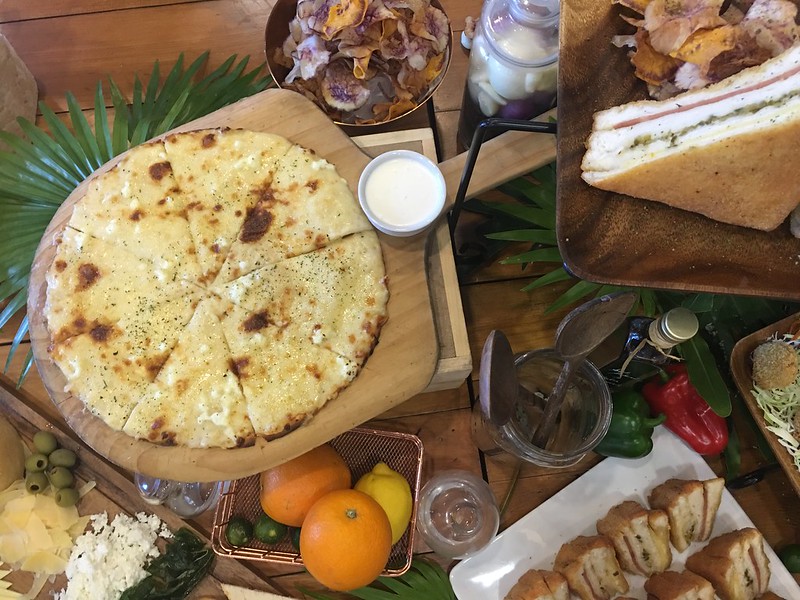
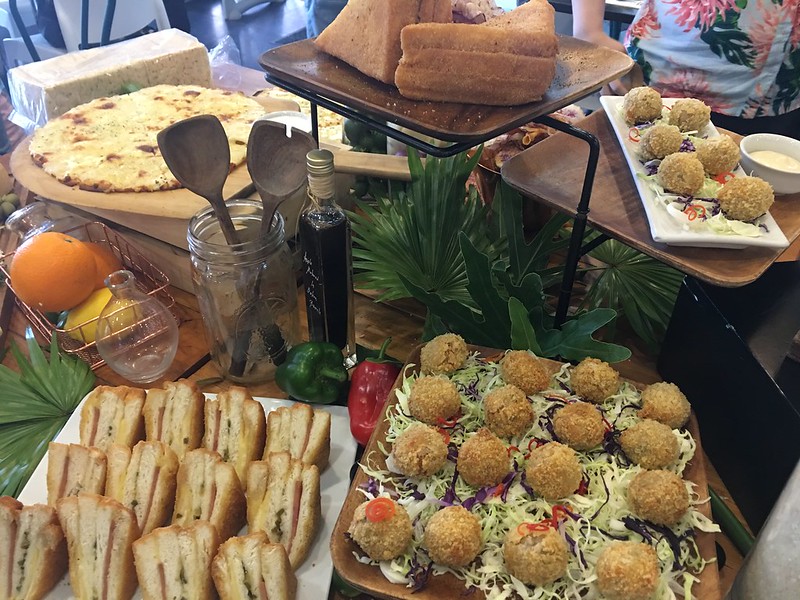
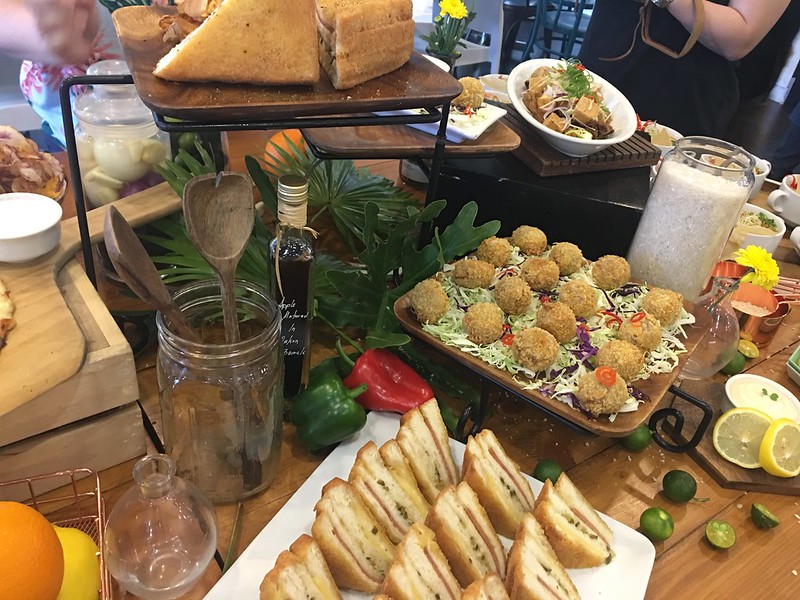
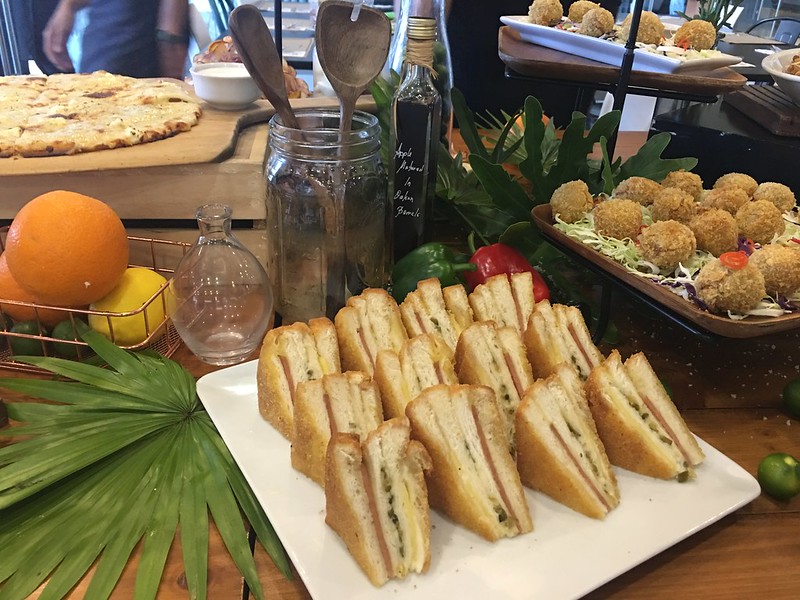
Suzi Wong Sandwich (Php270). A three-layered sandwich made of ham, cheese and pickles between four slices of butter-toasted crusted bread and served with house-made deep-fried purple camote chips.

Ombu, Tomas Morato

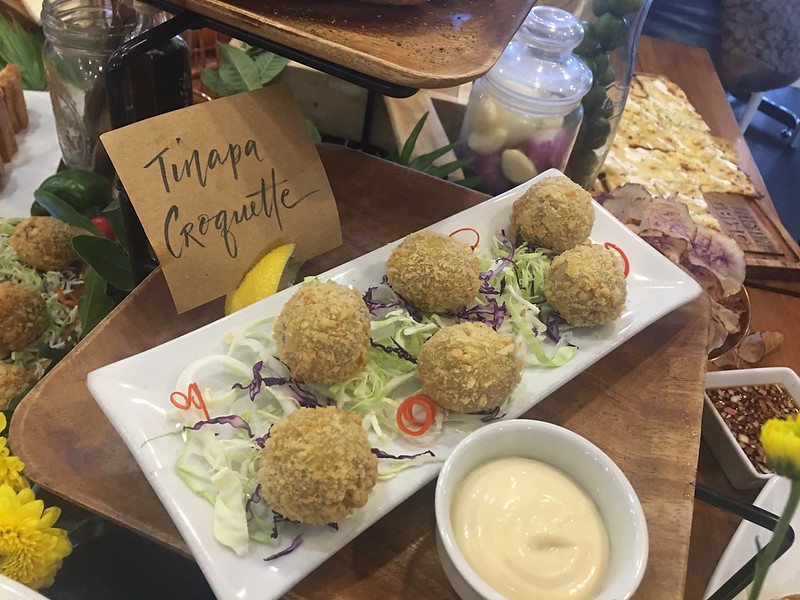
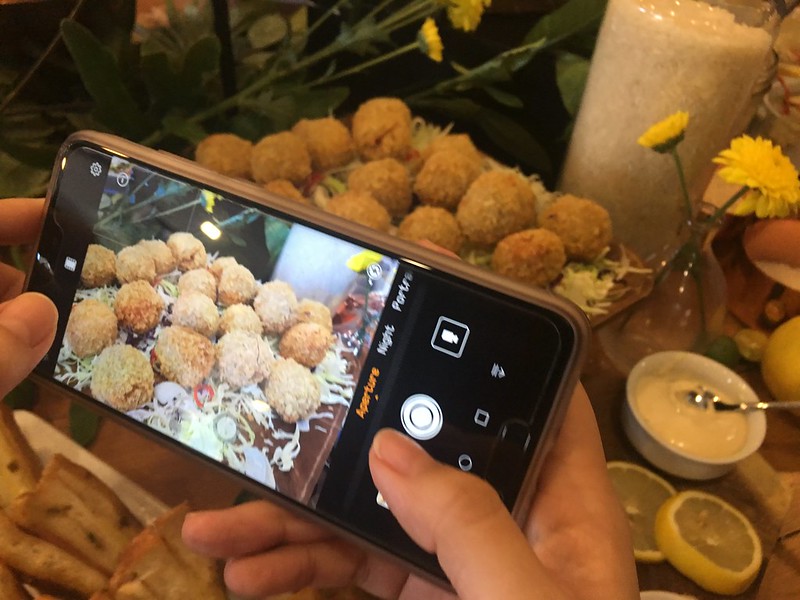
Tinapa Croquettes (Php240). Tinapa (smoked milkfish) is combined with a creamy bechamel sauce and sauteed onions, then coated with breadcrumbs, deep-fried to a crisp golden brown and served with a house-blend special garlic mayo dip.

Ombu Kusina, Tomas Morato

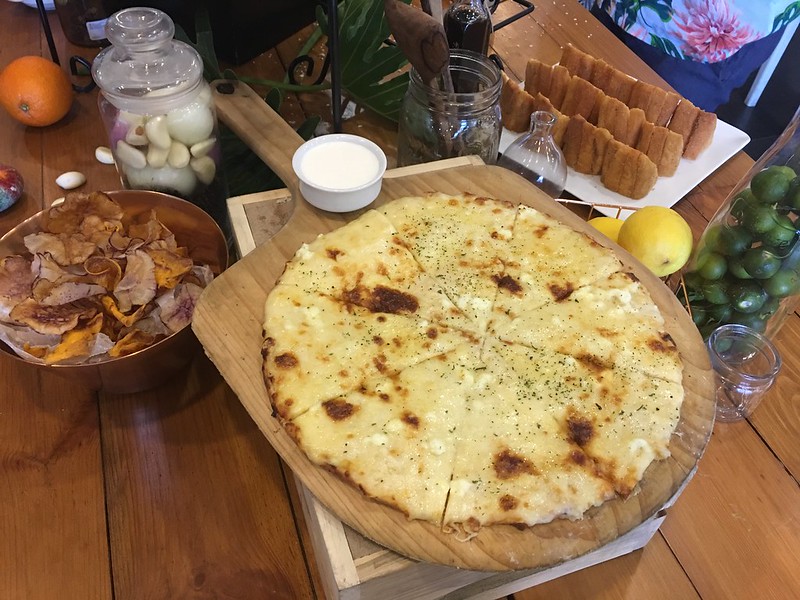
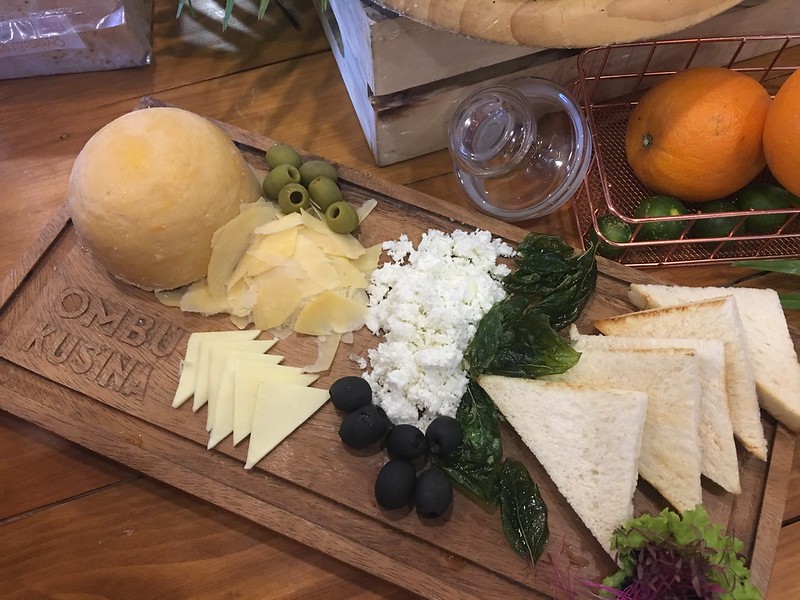
Three-Cheese Pizza (Php420). Mozzarella and cheddar cheeses are combined with the local kesong puti, a home-grown cheese made of carabao’s milk, on top of a crisp oven-baked pizza crust.

Ombu Kusina, Tomas Morato

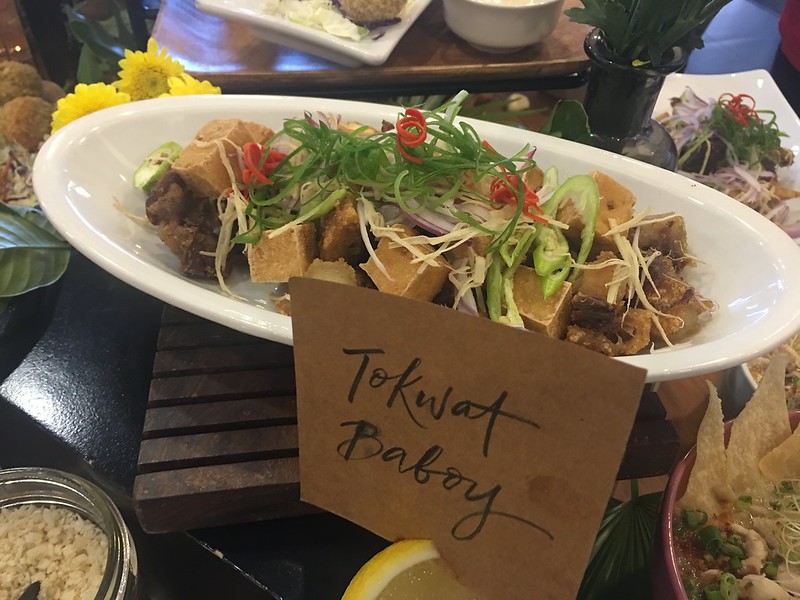
Tokwa’t Baboy (Php260). Tokwa (tofu) are cut into cubes, fried and served with hearty pork chunks in a house-blended spicy soy vinegar sauce. This is actually a great complement and a traditional companion to the next dish which is the…
Ombu Kusina, Tomas Morato

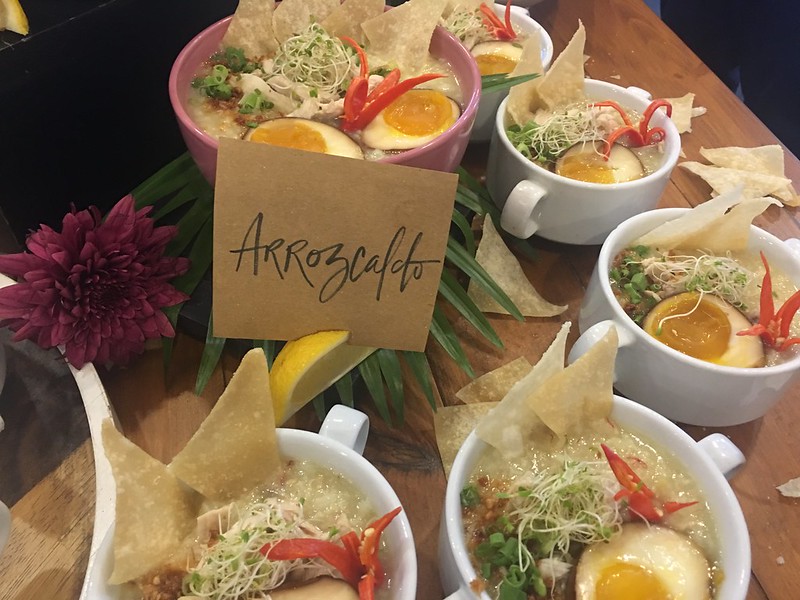
Arroz Caldo (Php130). The traditional Pinoy version of rice porridge with chicken pieces, it is highlighted by the use of cured, soft-boiled “ramen-style” eggs that adds a different dimension of flavor to the Pinoy merienda staple.

Ombu Kusina, Tomas Morato

These dishes and the seasonal halo-halo flavors all adhere to Ombu Kusina’s modern take on Filipino cuisine: infusing classic Pinoy dishes with new and exciting cooking styles and influences. These help to make Pinoy cuisine fresher and more relevant to a growing number of foodies, who are looking for their next food adventure.

Ombu Kusina, Tomas Morato

Ombu Kusina, Tomas Morato

Ombu Kusina, Tomas Morato

Ombu Kusina, Tomas Morato

Ombu Kusina, Tomas Morato

Ombu Kusina, Tomas Morato

Ombu Kusina, Tomas Morato

Ombu Kusina, Tomas Morato

And if that isn’t reason enough for you to hie on over to Ombu for a taste of its innovative and flavorful dishes, how about this: use my code – VIPBeingJellybeans – when you dine in and get 10% off your food bill!

Check it out and let me know what you think!

Ombu Kusina is located at the Ground Floor, Sequioa Hotel, Mother Ignacia corner Timog Avenue, South Triangle, Quezon City, open daily from 6.30am to 10.30am. For inquiries and reservations, call +63 2 441179.

Read my review of a previous visit to Ombu Kusina here.

Disclosure: Together with other foodies, I was invited to join a foodie meetup held at this restaurant. Food items mentioned here were served to allow us to sample the fare and were not paid for by the attendees, including myself.

The Coffee Bean & Tea Leaf launches summer flavors with its coconut ice-blended drinks

Feeling the summer heat yet?

As the temperatures rise, so does the need for refreshing icy drinks to cool down the body and soothe the spirit.

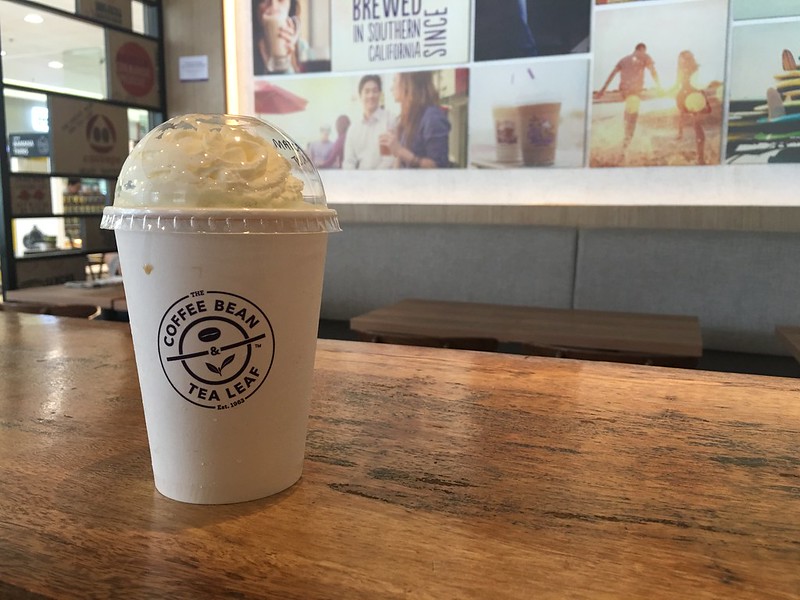
The Coffee Bean & Tea Leaf recently launched a series of drinks for local denizens like you to have a taste of #SummerInYourHands.

These three ice-blended drinks feature that staple flavor of summer: the coconut.

This tropical fruit has long been associated with cool drinks enjoyed at the seaside or while relaxing in the shade, a tasty escape for the body and tastebuds amidst the scorching heat of the sun. It is also known for its resilience, with fruits traversing oceans, setting roots and growing in new shores where their land.

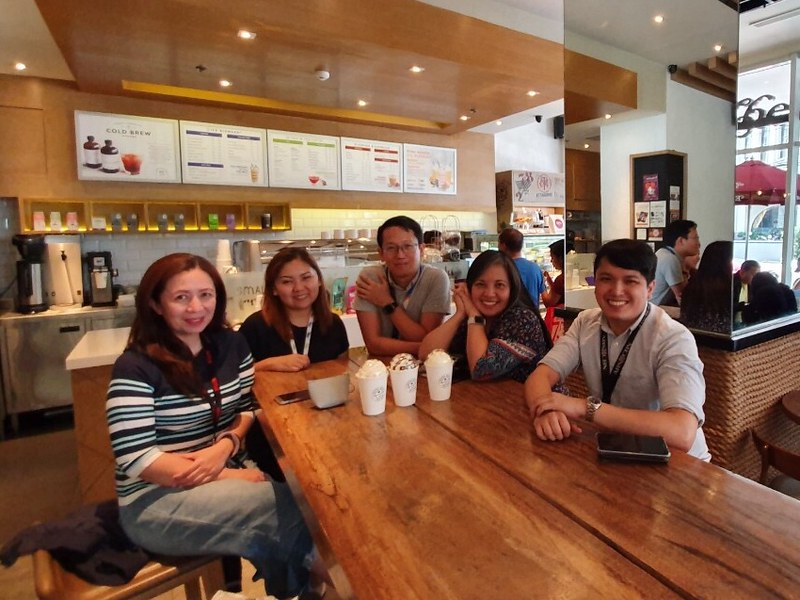
Thanks to GiftAway e-gift coupons from CBTL, facilitated and shared by Marj Liwag of LittleMsPrinter.com, my officemates and I were able to sample the three new seasonal coconut-based drinks at a nearby CBTL outlet. These include:

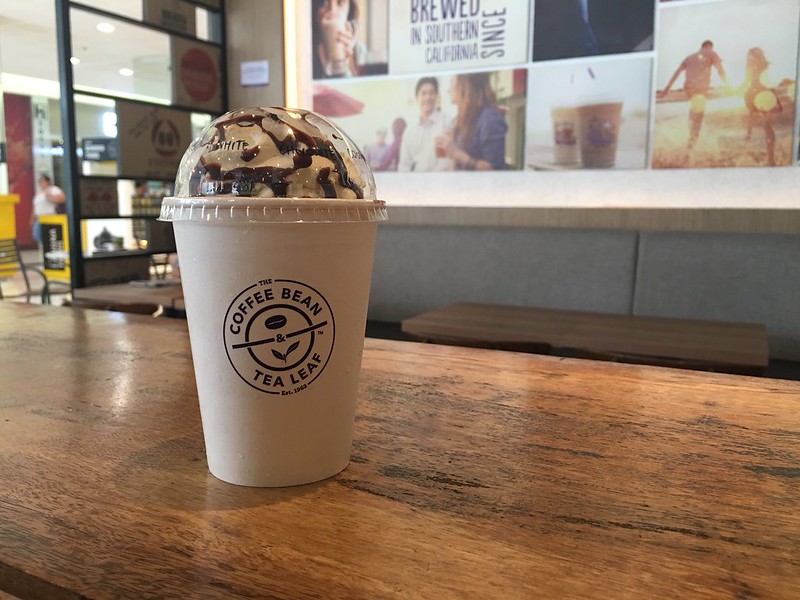
White Chocolate Coconut Dream. This is the most subtly flavored of the three drinks, with the coconut and the white chocolate flavors blending together well. Among the three drinks, this is actually my favorite.

CBTL Coconut Series

Dark Chocolate Coconut. More strongly flavored than its white chocolate counterpart, this drink has the coconut flavor taking a backseat to the richer and more complex dark chocolate.

CBTL Coconut Series

Matcha Coconut Ice Blended. Who would have thought that matcha, essentially powdered green tea leaves, and coconut would go so well together? In this drink, the matcha serves as an earthy frame for the light coconut flavor.

CBTL Coconut Series

My coworkers and I ordered the drinks to-go: these served as our lunchtime reward, refreshments that fueled us with energy and positivity for the rest of the work day.

CBTL Coconut Series

CBTL Coconut Series

These ice-blended coconut drinks are available At Php185 (regular) or Php285 (large) at all CBTL branches in the metro, ready to quench the thirsts and soothe the souls of us office workers this summer.

Check them out and tell me what you think!

Trivia: Did you know that The Coffee Bean & Tea Leaf invented ice-blended drinks over twenty years ago?

In the summer of 1987, an employee brought a blender to one of the original Southern California stores and started whizzing together ice, coffee extract and chocolate powder. This started the blended coffee craze which continues until today. Imagine what our summers will be without these refreshing icy drinks!

Check out my other posts on The Coffee Bean & Tea Leaf:

Raise your kids to be sustainable diners

When I was a kid, I was expected to be at my best behavior especially when my family eats at a restaurant. It was the perfect opportunity for me to display that I have imbibed the “elbows off the table”, “use the proper utensils,” and “finish all the food on your plate” rules, among others.

Thanks to the recent WWF-Philippines Savour Planet workshop, The Sustainable Diner: A Key Ingredient to Sustainable Tourism, I learned that, aside from the social niceties of eating out, the younger generation should be taught to eat responsibly and sustainably as well.

For instance, did you know that food waste is actually the biggest threat to the environment today? Seventy percent of terrestrial biodiversity loss and and 69% of global freshwater use is attributable to food production and consumption. A significant portion of this concerns dealing with food waste.

With this in mind, WWF-Philippines launched its The Sustainable Diner Project, an initiative that aims to lessen food wastage and contribute to the improvement of the implementation of sustainable consumption and production processes in the foodservice sector.

The Sustainable Diner’s Savour Planet series aims to empower and educate Filipino diners, media partners, the academe, as well as fellow non-government organizations and food security projects on the importance of sustainable food systems and sustainable dining.  It released a nine-step guide for the public to follow when eating at restaurants to contribute to efforts in lessening food waste.

Being both a foodie and a mom, I reflected on how to integrate these concepts to both aspects of my life. Here’s my take on how you can apply the guide when dining out with the family:

One: Dine in sustainable restaurants often.

A sustainable restaurant is one that incorporates sustainability in its operations: from sourcing of ingredients, food preparation and service to clean up and waste disposal. Earth Kitchen Katipunan which hosted the workshop, for example, espouses the farm-to-table concept in acquiring ingredients that not only lessens the carbon footprint involved food transport but also supports local farms and indigenous communities.

Talk to your kids about these concepts and how to spot these kinds of eateries. You can also apply similar tactics employed by restaurants when packing their baons.

Two: Choose dishes made of ingredients that are in season.

In-season local produce involves far less transport from where they are grown to your plate. Restaurants that use such produce also take advantage of their plentiful supply and freshness.

Personally, I associate certain fruit flavors with seasons and I look forward to the time when I can taste them again. For example, luscious ripe mangoes are for the summer while the sweet and earthy avocados are best enjoyed during the rainy season.

When dining out with your kids, do point out which fruits are in season. This will help them see that there is a proper time for everything, and they can learn to anticipate when they can enjoy their favorite fruits again.

Three: Be adventurous! Try plant-based dishes.

When dining out, expose your kids to dishes that feature plant-based ingredients. Vegetarian-friendly eateries such as Wabi-Sabi and Pantry by Rub Rack, for example, both feature tasty meat-free dishes that kids will love.

You can even incorporate more produce in your home cooking. In case, plant-based food does not figure much in your cooking repertoire, you can always refer to cookbooks on the subject.


Four: Order only what you can finish.

Many of us have received admonishments from our parents while we were growing up to finish whatever is on our plate at mealtimes. This is actually a reminder for us to be mindful of how we consume. Finishing off our plates means less wasted food; eating our three square meal a day is a luxury considering that many in the world actually experience involuntary hunger.

When kids are at their favorite restaurants, they sometimes want to order all their favorites and resort to pester power to get their wishes. As parents, we should guide them to only order what they can consume.

Alternatively, we can also bring reusable take-home containers so you can bring leftovers home.

Five: Ask about the dish and its ingredients.

By asking the restaurants about what goes into the food they serve you as well as the livelihoods they support, you are letting them – as well as your little ones – know that these concerns are important and factors into the decision of which business you want to support.

Six: Don’t be afraid to request for modifications.

There’s really no harm in asking for minor changes in the way the food is prepared or served, especially if it doesn’t significantly impact the restaurant’s operations. Requests such as “less oil please,” or “leave out ingredients that I’m allergic to or won’t eat” will, at the very least, be considered by the restaurant staff. Making your preferences heard and addressed also teaches your children about their rights as consumers.

Seven: Bring your own reusable utensils.

Restaurants usually provide disposable plastic spoons, forks or straws. Avoid using them to lessen those being just thrown away and adding to the landfills. When possible, bring your own set that you can clean at home afterwards.


Eight: Segregate your waste properly.

If your favorite eateries are still not into waste segregation, encourage them to practice it. Waste segregation makes it easier for everyone – the restaurant owner, the waste disposal team, the government and even you as the consumer – to maximize all the resources involved in handling your food.

For example, the leftover bits of food can be composted to fertilize soil for farmers, the dry materials can be recycled while the actual waste that go to landfills are minimized.

Teaching your kids to segregate is a good way to teach them to classify things and view them according to their maximum potential use.

Nine: Educate your friends about sustainable dining.

Encourage your kids to share their sustainable dining habits to their friends by gifting their friends with reusable utensils or inviting their friends over to your place where they can see how you practice it.

Seeing your kids influence their friends for the good of the environment is quite an achievement as a parent.

Bringing up kids who are environmentally aware and practice sustainable dining not only helps in environmental conservation but also imparts values and behaviors to them that will stand them in good stead as they take their place in society.

For more details about WWF-Philippines and its initiatives, visit wwf.org.ph.

This post contains affiliate links.

Check out my posts related to conservation and the environment:

Header image by Pablo Merchan Montes on Unsplash

Starting the day right at Milky & Sunny, Tomas Morato

We keep hearing that breakfast is the most important meal of the day.

No wonder, with all the health benefits that the meal has been touted to confer on those who partake of it. Among the positive effects that Natural Food Series website purports that breakfast brings are:

Promoting psychological health. Eating food rich in brain-nourishing minerals like potassium, magnesium and selenium helps in improving concentration and guarding against illnesses such as Parkinsons and Alzheimers.

Giving energy to your body. Breakfast powers your body to do the work you need to do for the rest of the day.

Promoting heart health. Food with nutrients such as omega-3 and good fats help in maintaining cardiovascular health by enhancing your heart’s cells healing power.

If these samplings of health benefits aren’t enough to get you to rushing to wolf down some breakfast as soon as you wake up, then Milky & Sunny‘s all-day breakfast menu surely would.

Milky & Sunny, Tomas Morato

Milky & Sunny, Tomas Morato

While most of us usually enjoy the first meal of the day at home, Milky & Sunny prides itself on breakfast dishes you will journey to their nearest branch to taste.

Milky & Sunny, Tomas Morato

Milky & Sunny, Tomas Morato

Together with fellow Zomato foodies, I was able to try out some of the resto’s signature dishes which include:

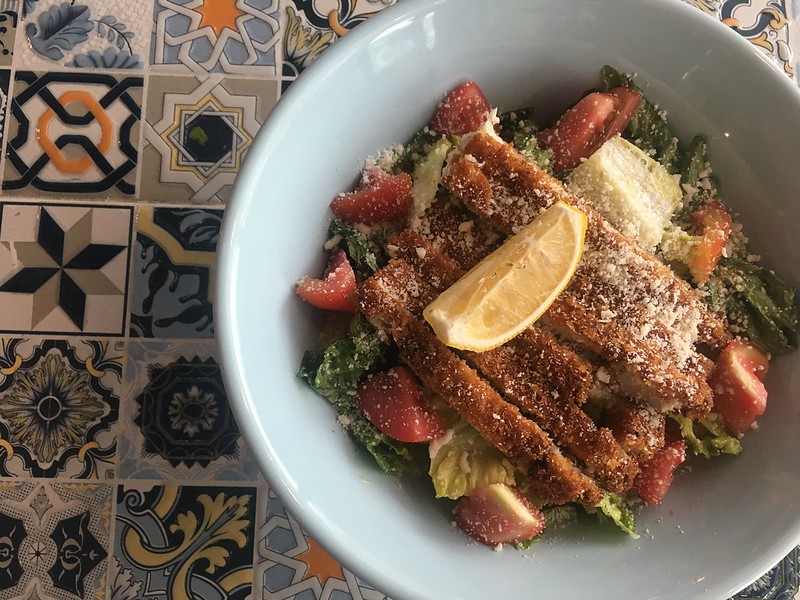
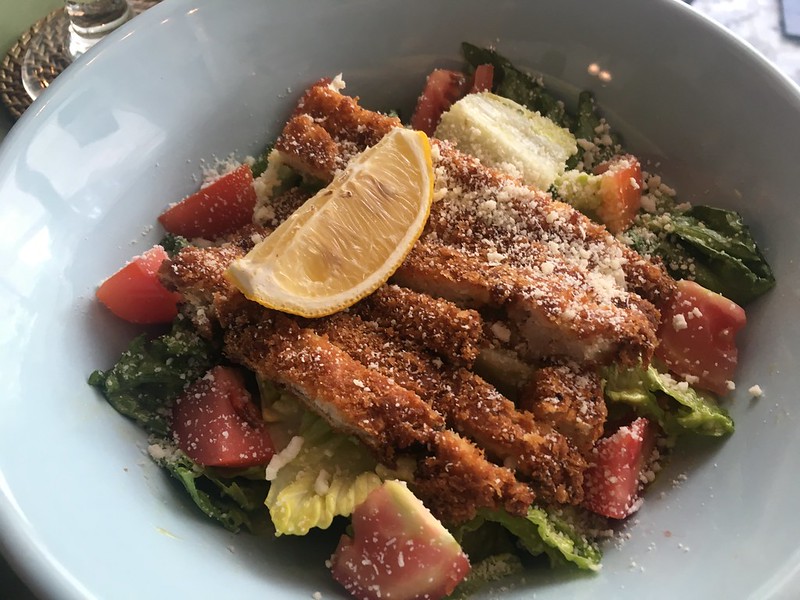
Buttermilk Chicken Caesar Salad (Php200). The resto claims that the the dressing is the real deal and I can agree. The Ceasar dressing is well-incorporated balanced into the crisp lettuce, while the deep-fried battered chicken breast adds some heartiness to this light dish.

Milky & Sunny, Tomas Morato

Milky & Sunny, Tomas Morato

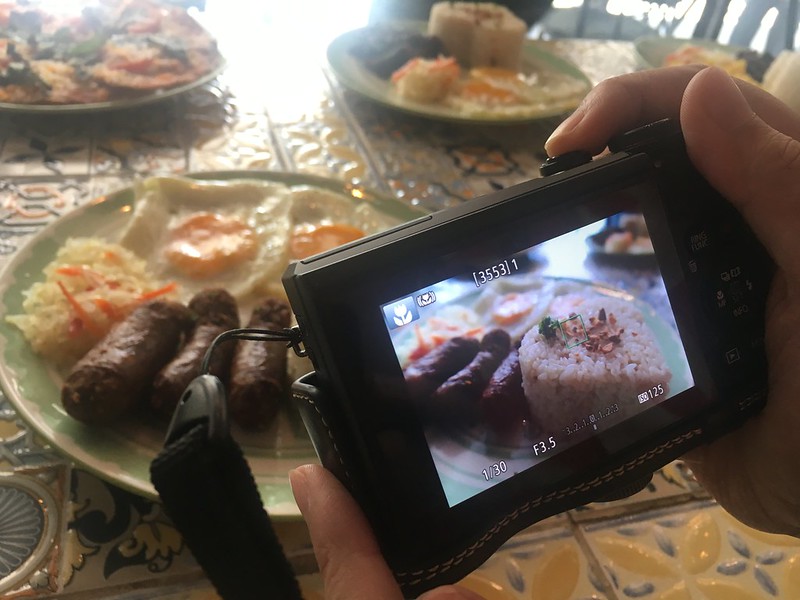
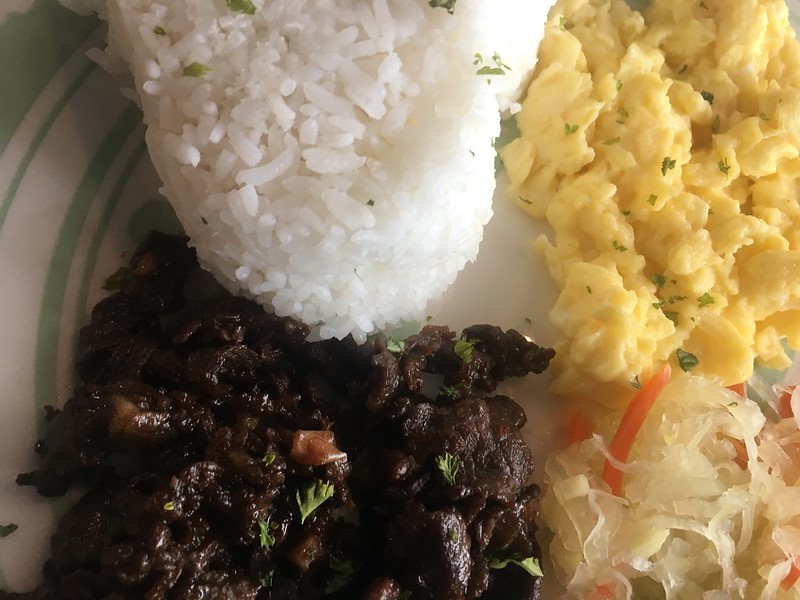
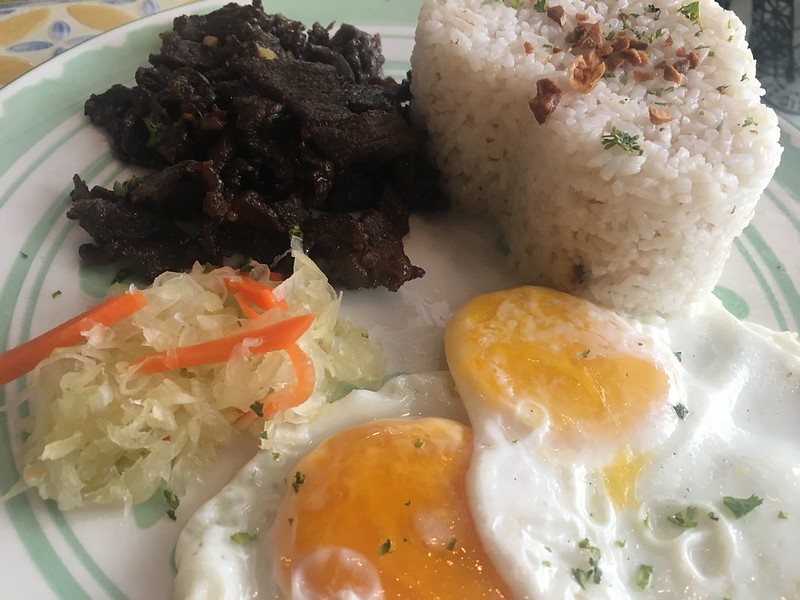
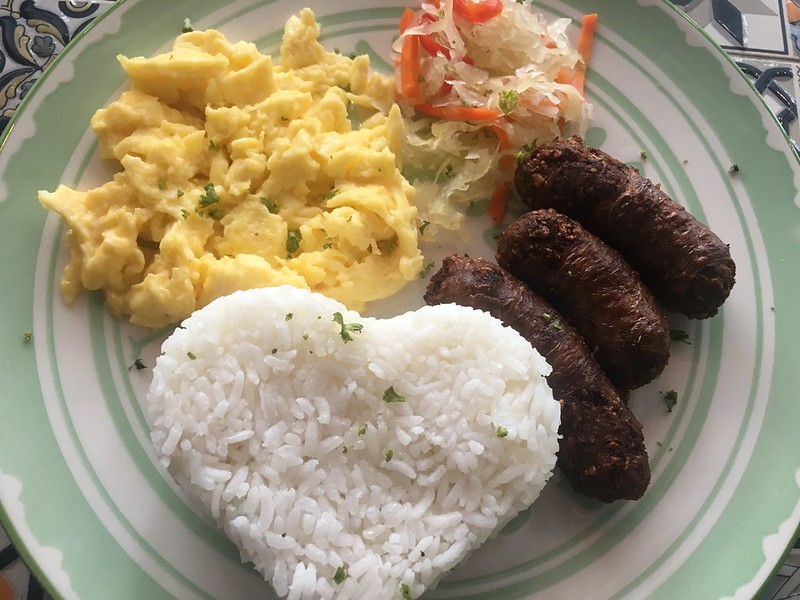
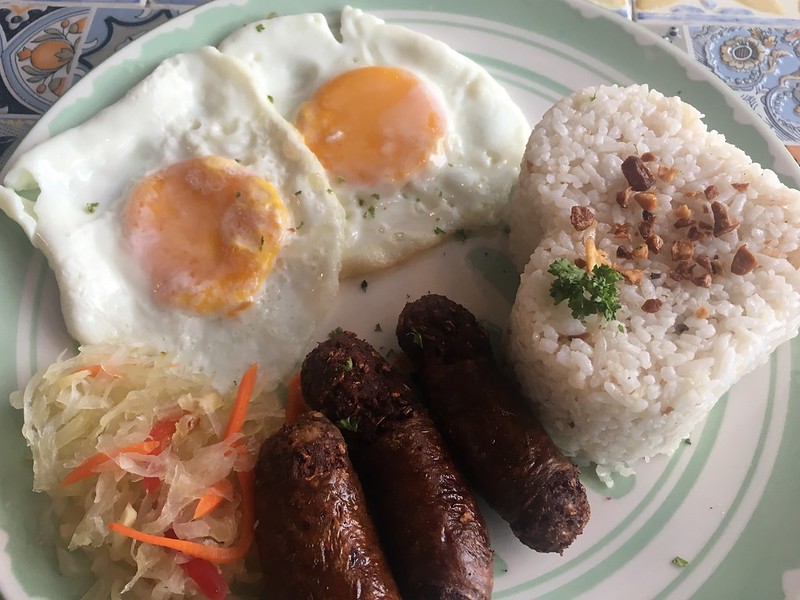
Tapa Rice Meal with Egg (Php225) and Garlic Lonnganisa Rice Meal with Egg (Php190). With these hearty meals, you can choose how you want your rice (plain or garlic) and eggs (scrambled or sunny side up) to be served. Yep, it’s your call. The tender beef strips of the tapa were cooked in a special Pinoy-style marinade with a great harmony of salty and sweet flavors, while the garlicky longganisa goes quote well with the eggs.

Milky & Sunny, Tomas Morato

Milky & Sunny, Tomas Morato

Milky & Sunny, Tomas Morato

Milky & Sunny, Tomas Morato

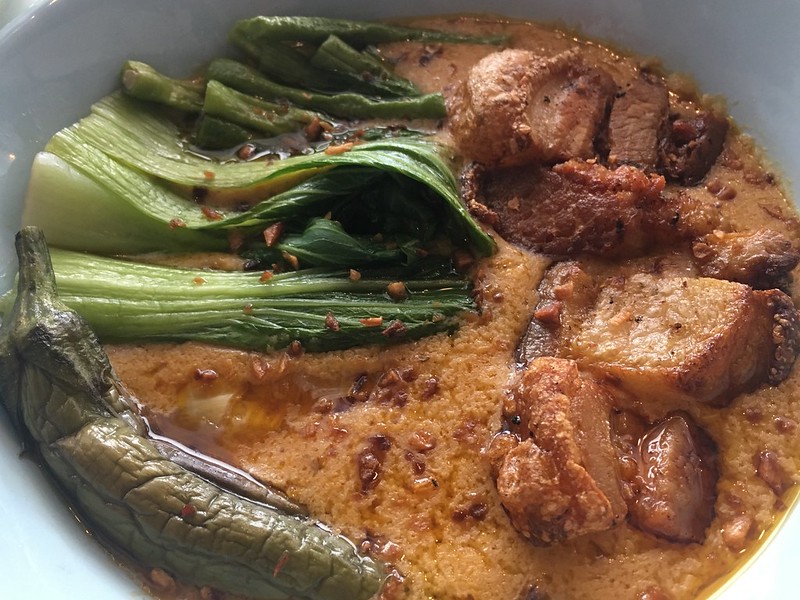
Crispy Kare-kare with Rice (Php320). Crunchy pork belly served on a bed of rich peanut sauce together with leafy greens, eggplant and banana bud, along with a serving of salty bagoong (shrimp paste).

Milky & Sunny, Tomas Morato

Milky & Sunny, Tomas Morato

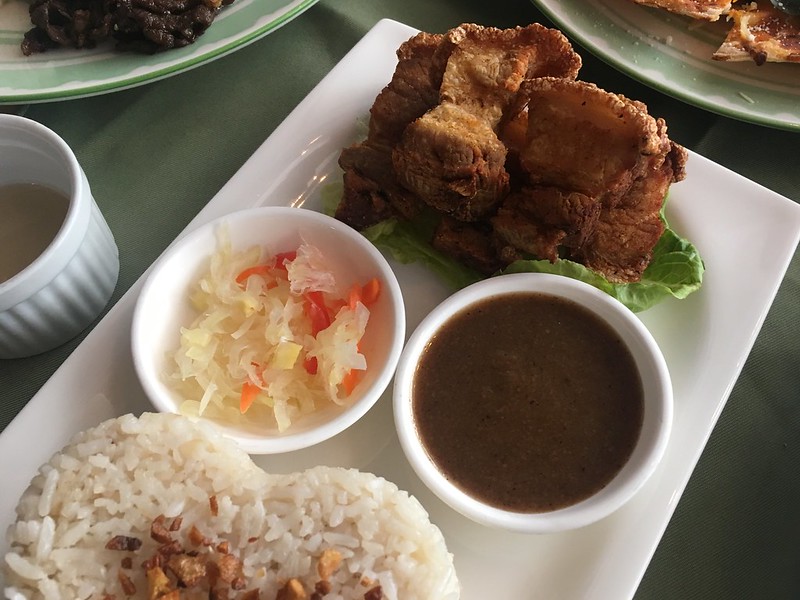
Lechon Kawali with Rice (Php175). The classic Pinoy dish is comprised of pork belly simmered to tenderness then deep-fried in a pan until crispy and golden. Together with rice, achara and lechon sauce, it is a filling and flavorful meal.

Milky & Sunny, Tomas Morato

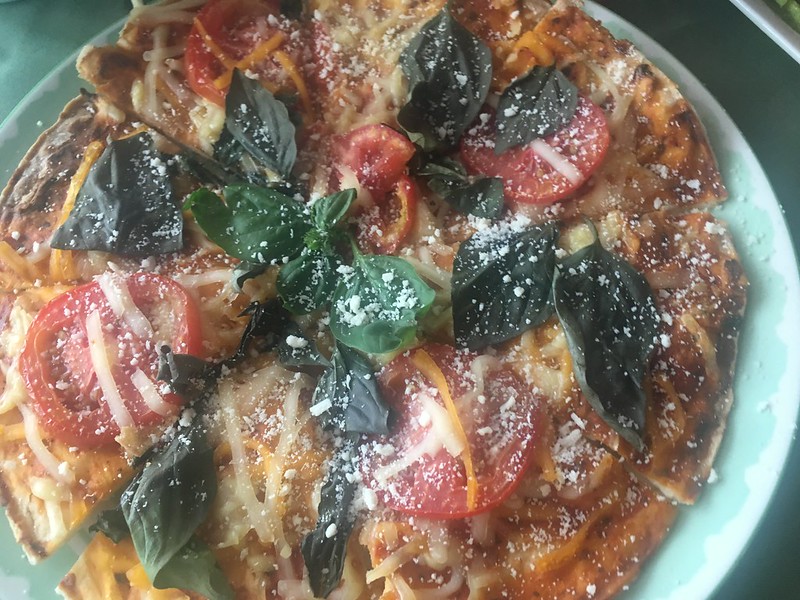
Margherita Pizza (Php180). A light yet tasty pizza made of tomatoes, Italian cheeses, fresh basil and extra virgin olive oil on a thin crunchy crust.

Milky & Sunny, Tomas Morato

Milky & Sunny, Tomas Morato

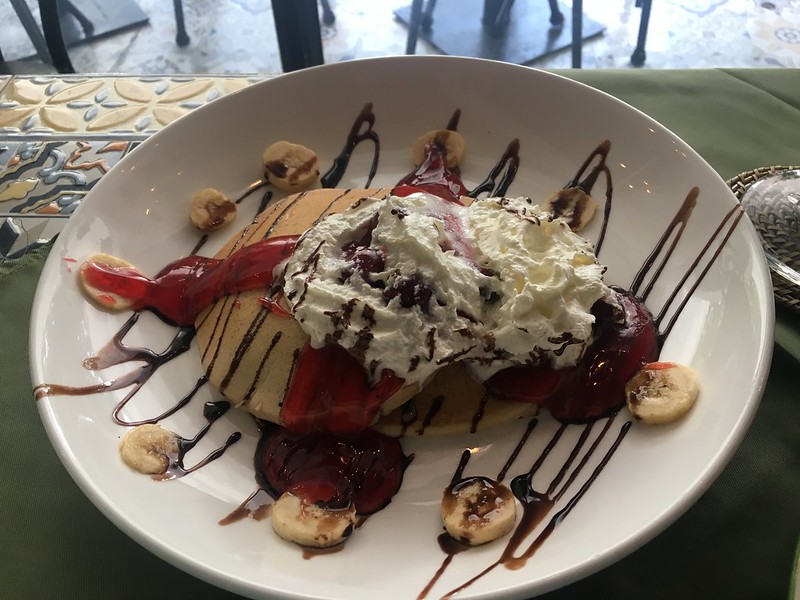
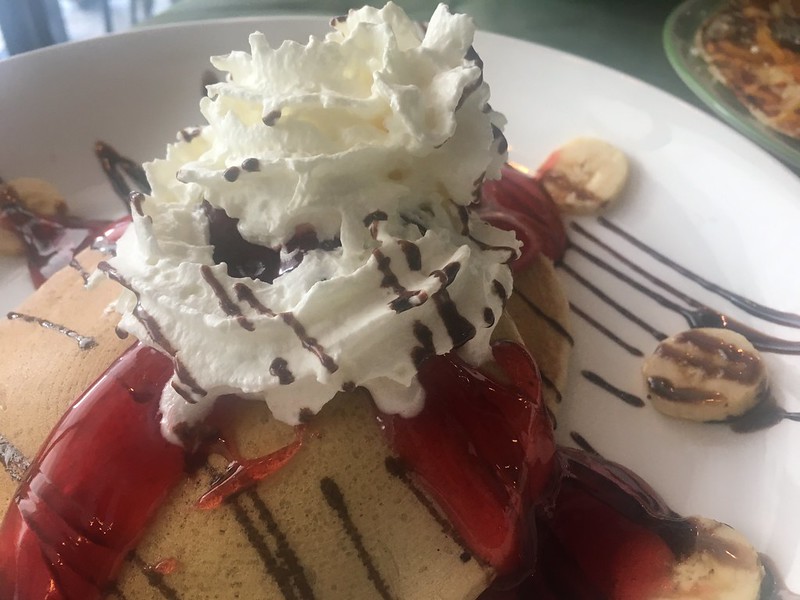
Strawberry Banana Pancake (Php180). Two pieces of regular-sized pancakes mace with strawberry puree and served with frothy whipped cream, banana slices and drizzles of strawberry and chocolate syrup.

Milky & Sunny, Tomas Morato

Milky & Sunny, Tomas Morato

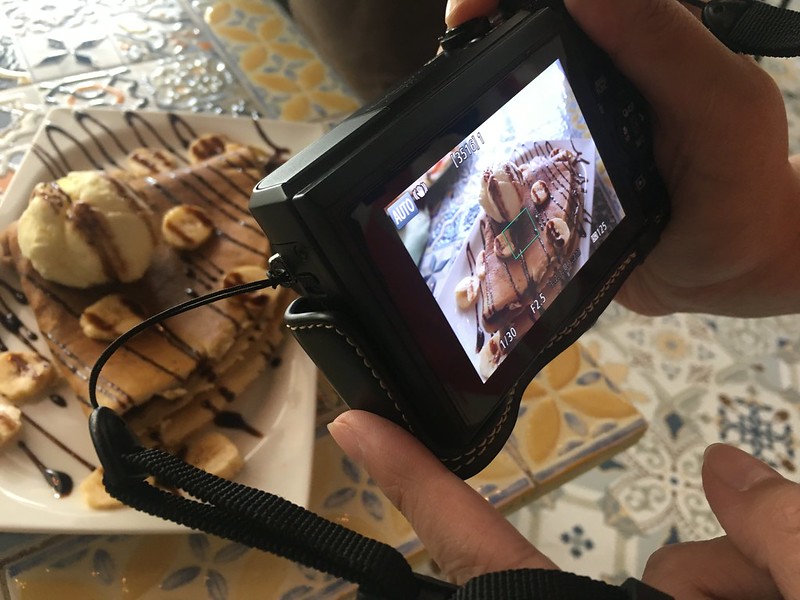
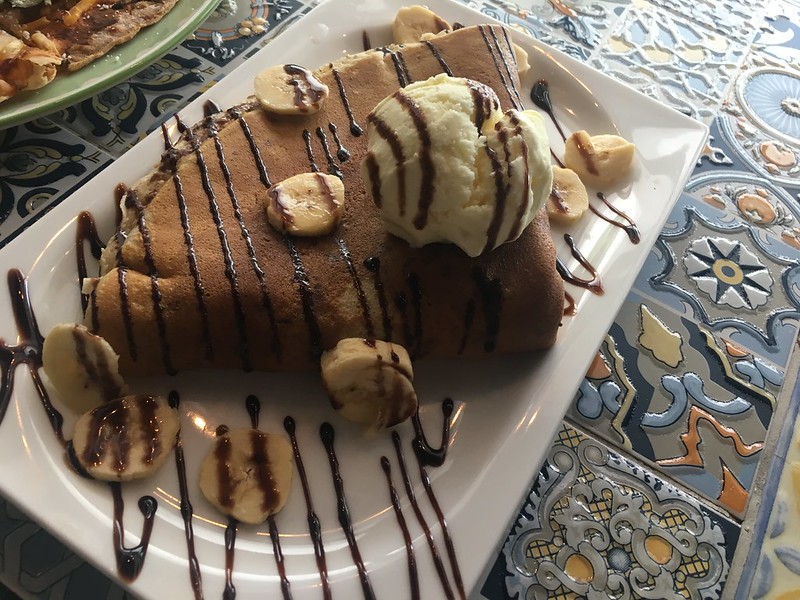
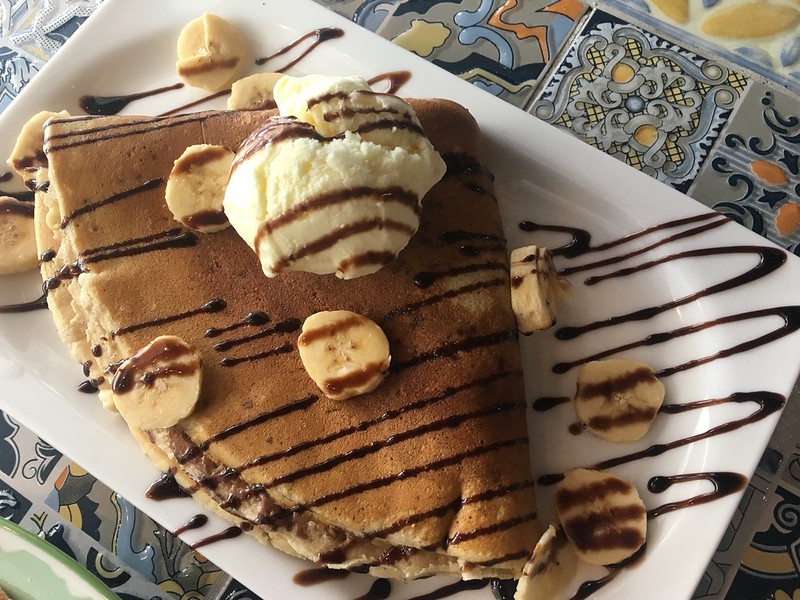
Hazelnut Banana Crepe (Php300). Vanilla-filled crepe topped with ice cream and served with banana slices and drizzled with chocolate syrup.

Milky & Sunny, Tomas Morato

Milky & Sunny, Tomas Morato

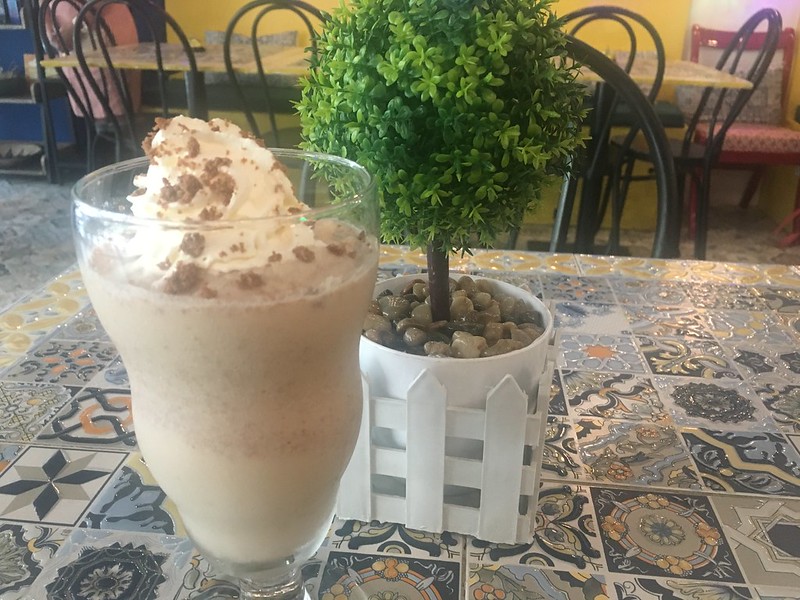
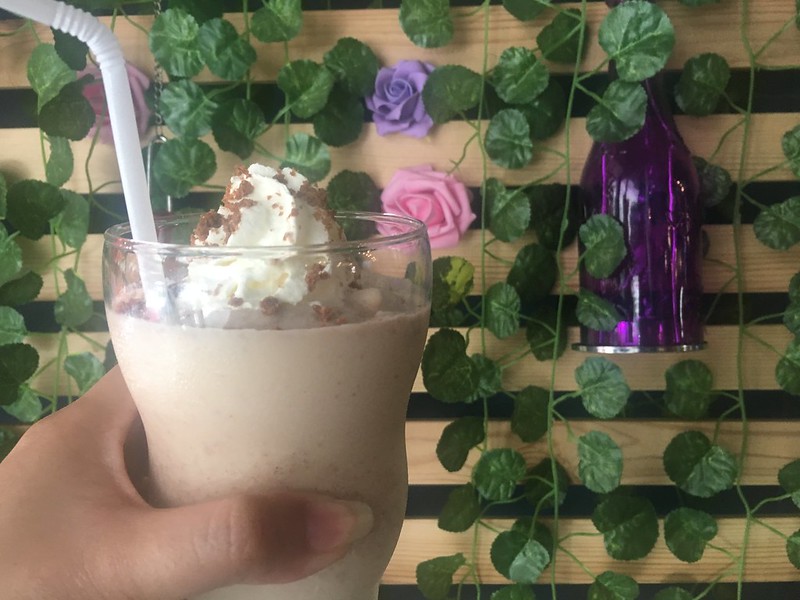
Malted Milkshake (Php150). Its flavor is driven by the toasty milk powder blended with milk and topped with crea, and nuts.

Milky & Sunny, Tomas Morato

Milky & Sunny, Tomas Morato

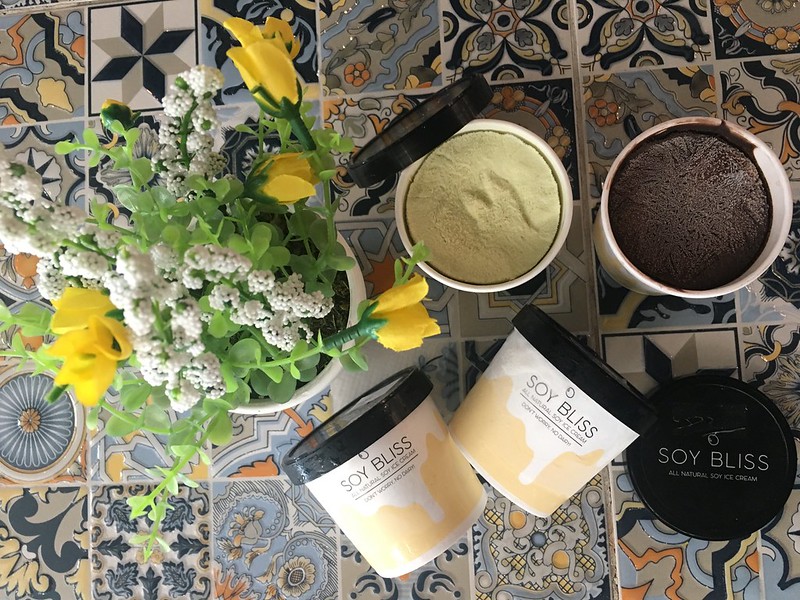
Soybliss Ice Cream (Php100). A non-dairy ice cream that caters to the lactose-intolerant and the health conscious. I opted for the Avocado flavor which has a strong soy flavor and is not too sweet. I wish the avocado flavor is more apparent, though.

Milky & Sunny, Tomas Morato

With healthy and hearty choices of food to break your fast, Milky & Sunny is a happy start to your day. Check this place out and let me know what you think!

This Milky & Sunny branch is located at Ground Floor, Ignacia Place, 62 Mother Ignacia Corner Sergeant Esguerra Avenue, South Triangle, Quezon City. It is open from Mondays to Saturdays, from 11am to 5pm.

Milky & Sunny Menu, Reviews, Photos, Location and Info - Zomato

Disclosure: Together with other foodies, I was invited to join a foodie meetup held at this restaurant. Food items mentioned here were served to allow us to sample the fare and were not paid for by the attendees, including myself.

Check out my reviews of other breakfast places:

No place for food waste! WWF-Philippines kicks off Savour Planet 2019 with a new theme

Together with Earth Kitchen Katipunan, Rise Against Hunger Philippines, Solu, and Greenspace, World Wide Fund for Nature (WWF) Philippines launched the new theme for the media trip series’ second year in Quezon City last March 16, 2019.

2.4 million Filipino families experienced involuntary hunger at least once in the past three months. Only 1 out of 3 Filipino households are considered food secure. In 2016, 6.8% of Filipino households experienced not having any food at home.

These sobering statistics give us a glimpse of the reality that families are facing when it comes to the major hunger issue we are experiencing in the Philippines. And yet, it has been estimated that each Filipino still wastes an average of 3.29 kg of rice per year, which, when totaled, would be enough to feed 4.3 million Filipinos.

There is clearly a gap between the amount of food we are able to produce as a country and the amount of food made available for our citizens to consume. That gap is actually the amount of food that we knowingly or unknowingly waste.

“Food waste is the biggest threat to nature today. When 70% of terrestrial biodiversity loss and when 69% of global freshwater use is attributed to food consumption and production, knowing about food waste is not enough. We must do something. We must create sustainable food systems for the survival of both Filipinos today and tomorrow”.

Zero Food Waste, WWF-Philippines

With that call to action, Melody Melo-Rijk, WWF’s Project Manager for Sustainable Consumption and Production in the Philippines, welcomed participants from Quezon City to the launch of the Savour Planet workshop’s new theme – No Place for Waste.

Recognizing the importance of educating Filipino diners on various ways of how they can help lessen food waste, WWF-Philippines, through its pioneer project on sustainable consumption and production, The Sustainable Diner: A Key Ingredient for Sustainable Tourism, has launched the 2019 run of its flagship media trip series at Earth Kitchen Katipunan – a restaurant dedicated to supporting local farmers and indigenous communities through the promotion of the farm-to-table concept. As the project’s flagship series, Savour Planet aims to empower and educate Filipino diners, partners from the media, the academe, as well as fellow non-government organizations and food security projects on the importance of sustainable food systems and sustainable dining. While last year’s theme, Cooking with a Purpose, focused on establishing an intimate connection between diners and the food that they eat through cooking, the new theme aspires to take that connection further by empowering diners to explore different avenues by which they can help keep the food on their plates from being wasted.

“All over the world, 1/3 of the food produced never reaches our plates every single year. Food waste is never okay. We have to instill this in the minds of our consumers because it is morally and socially unacceptable for us to waste food”,’ says Melo-Rijk, who opened the workshop by giving a brief introduction of The Sustainable Diner project and the context as to why the project was conceptualized in the first place. “When we talk about restaurants, food waste would also mean wasting money. There are hidden costs to food waste, some of which include labor cost, energy cost, disposal cost, and other added costs related to biodegradable waste management.”

To illustrate the gravity of the manner by which we waste food, Melo-Rijk brought to attention a source of food waste which most people usually contribute to without fully knowing its implications: ugly produce. The term “ugly produce” refers to produce that are misshapen, undersized, discolored, bruised, or in possession of unusual spots. These kinds of produce are usually ignored by the market, who would opt to go for “perfect-looking” items believing that they would taste better and would contain more nutrients than their bruised and battered counterparts. Melo-Rijk was quick to dispel this common perception. “When it comes to fresh produce, the ugly is just as good as the pretty in terms of taste and nutrition. Food safety is not based on outside appearances – for as long as the inside is not compromised, these food items should be safe to eat”,’ says Melo-Rijk. “Certain studies even promote that ugly produce can sometimes be more nutritious because most of them are organically farmed, with no alterations in terms of the nutrients that they contain. When we buy ugly produce, we help prevent food waste.”

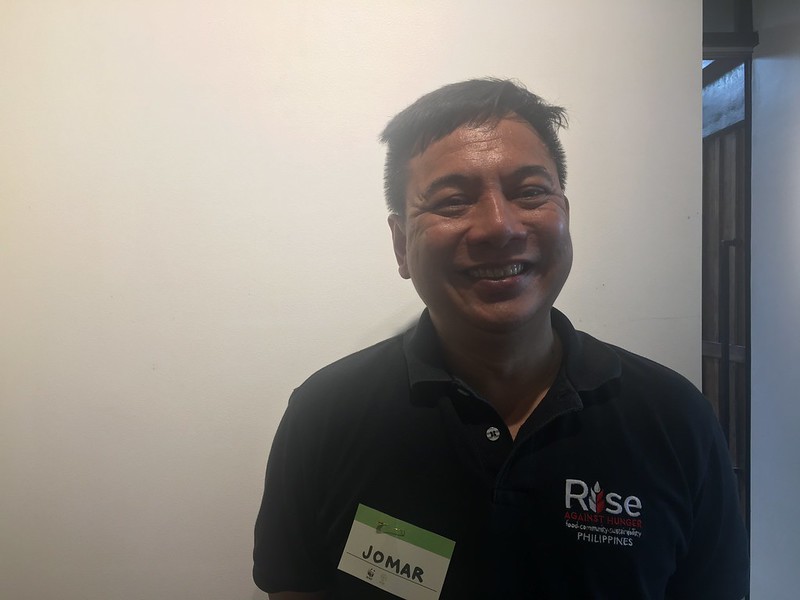
Jomar Fleras, the Executive Director of Rise Against Hunger Philippines, then talked about the hunger situation in the Philippines, with an emphasis on the role of food banks in both the alleviation of hunger and the rescuing of food that would otherwise be thrown away. He opened to the participants the option of food donation as a viable means of decreasing instances of food waste in their daily lives and contributing to the greater goal of sustainable development. “To those who are familiar with the Sustainable Development Goals, we know that at the very core of these goals is the capability to ensure food security at the household level. When it comes to SGD 2, which is Zero Hunger, there is absolutely no compromise. There are no reduction targets, plain as day, we need to end global hunger”,’ says Fleras. “With existing policy frameworks in the Philippines that encourage the donation of food for charitable purposes, food banking becomes a vital platform to the attainment of SGD 2 and the prevention of further food waste. With Rise Against Hunger Philippines and the Good Food Grocer, our mission is to provide nutritious and safe food to nutritionally at-risk individuals and families.”

Zero Food Waste, WWF-Philippines

Aside from donating food to avoid food waste, there is also much talk about the ways in which we manage our waste. Waste management is becoming a big problem, especially in developing countries like the Philippines where consumption in various forms, including food, has risen tremendously. Proper waste segregation can prove to be instrumental in salvaging food from our landfills, especially when 52.31% of our solid waste consists of biodegradables, which includes food waste and garden waste. This is where Solu comes in, and their Lead Strategist, Pang Delgra, made a great case on why our waste management systems need to innovate to keep up with the times. “The current waste management system is broken. People want to segregate, but they know the effort is futile when everything is just being brought to the same landfill anyway”,’ says Delgra.
“As a platform that connects all market participants and incentivizes citizens to sell their segregated waste materials, Solu enables Filipinos to make money from their waste and to help the environment through sustainable waste disposal”.

Zero Food Waste, WWF-Philippines

The micro-talks ended with a presentation on bokashi composting, led by Rina Papio, Founder of Greenspace by introducing the participants to the concept of bioremediation, or the use of biological organisms to break down environmental pollutants and solve environmental problems, Rina was able to paint a clear picture on how microorganisms can turn food waste into nutrient-rich compost that will help keep our soils healthy. “Bokashi composting is a great way for individuals to divert food waste away from our landfills. With the help of beneficial microorganisms, we can turn food waste into healthy soil and keep it from polluting the Earth”,’ says Papio. “With bokashi composting, anyone can create their own green space in just four easy steps. Just collect your food waste and layer it with bokashi bran, tightly seal your bokashi bucket to allow for anaerobic fermentation, mix your fermented food waste with soil, and then after four weeks, you will already be able to use the compost you made in your garden.” During the actual demonstration, the participants gamely participated in the afternoon bokashi workshop, where they learned first-hand how they can help regenerate the soil and even grow their own food using repurposed food waste in the form of bokashi compost. Afterwards, The Sustainable Diner team surprised the participants with a giveaway of 5 bokashi composting kits. The lucky winners will use these kits to start off and write about their composting journey.

Zero Food Waste, WWF-Philippines

By emphasizing to Filipino diners the need to reduce food waste and by introducing them to different food waste reduction and diversion techniques and platforms, WWF-Philippines hopes to foster a greater consciousness when it comes to addressing the effects of business-as-usual food consumption and production patterns. Sustainable dining is not just about the food that we are about to consume in the moment, but also about the food that we will leave behind. With innovation, ingenuity, and inspiration, it is possible to prove that here in the Philippines, there really is just no excuse nor place for food waste.

Zero Food Waste, WWF-Philippines

About WWF:

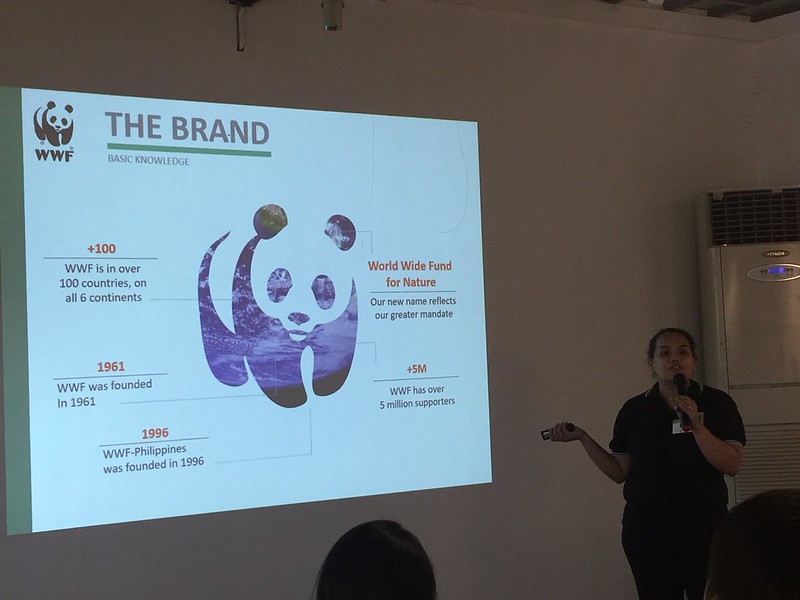
WWF is one of the world’s largest and most respected independent conservation organizations, with over 5 million supporters and a global network active in over 100 countries. WWF’s mission is to stop the degradation of the Earth’s natural environment and to build a future in which humans live in harmony with nature, by conserving the world’s biological diversity, ensuring that the use of renewable natural resources is sustainable, and promoting the reduction of pollution and wasteful consumption.

WWF-Philippines has been successfully implementing various conservation projects to help protect some of the most biologically-significant ecosystems in Asia since its establishment as the 26th national organization of the WWF network in 1997.

About SCP and The Sustainable Diner:

The Sustainable Diner project of WWF-Philippines aims to contribute to improving the
implementation of sustainable consumption and production (SCP) and lessening food wastage in the country. WWF-Philippines wants to engage the government, food service businesses, and consumers so they will support sustainable dining practices and help make the Philippines’ food service industry more environmentally friendly.

The Sustainable Diner project, under Sustainable Consumption and Production, is part of the International Climate Initiative (IKI). The Federal Ministry for the Environment, Nature Conservation, and Nuclear Safety (BMU) supports this initiative on the basis of a decision adopted by the German Bundestag.

For more details about WWF-Philippines and its initiatives, visit wwf.org.ph.

Details provided by WWF-Philippines in a recent press release.

Check out my posts related to conservation and the environment:

Sake-tasting at Dohtonbori, Greenhills

Sake, an alcoholic beverage made of fermented rice, is a long standing tradition in Japanese cuisine. It can be served chilled, at room temperature or heated, depending on the drinker’s preferences, the quality of the sake and the season.

Sake Masterclass, Dohtonbori

During a recent Sake Masterclass held in Dohtonbori’s first-ever store in Greenhills, my fellow foodies and I were treated to different kinds of sake produced by Japan’s premier sake brewer Kubota, paired with the resto’s okonomiyaki and other dishes. With the help Kubota’s Sake Master Keichi Nagatsuka, our group traced the history and traditions surrounding the production of sake.

Sake Masterclass, Dohtonbori

Sake Masterclass, Dohtonbori

Sake Masterclass, Dohtonbori

Kubota Sake are produced in the Niigata prefecture, one of Japan’s quality rice producing areas, where various factors come into play to bring about Japan’s celebrated sake. From the premium Gohyakumangoku rice grown in the area, the water from melted snow to the cold snowy climate that limits bacteria growth during the brewing process, Niigata is home to many sake breweries.

Kubota is also guided by the principle of Jizake – the brewing of sake with the natural resources of the region. This ensures that the production of sake also protects the land, the natural environment and the local community. Even washi, the paper used to label the sake bottles, are handmade by a local artisan.

The sake we sampled during the event include:

Kubota Senjyu. Characterized by its moderate aroma, a delicate palate and clean and crisp finish, it can be served chilled or slightly warmed. Paired with Butatama (Pork) Okonomiyaki and Chicken Karaage.

Sake Masterclass, Dohtonbori

Kubota Junmai Daiginjo. With a hint of pear and melon, its elegant aroma, and the blend of acidic and fruity flavors, it can be served chilled for diners to enjoy the clean and crisp aftertaste or at room temperature to savor its unique aroma. Paired with Veggie Supreme Okonomiyaki and Chicken Shio.

Sake Masterclass, Dohtonbori

Kubota Manjyu. Kubota’s flagship premium sake with a complex yet pleasant flavor, floral aroma and smooth texture, it can be served served slightly chilled or warmed. Paired with Kalbi (Beef) Yakiniku and Four Cheese (Mozarella, Cheddar, Parmesan and Gouda) Okonomiyaki.

Sake Masterclass, Dohtonbori

Sake Masterclass, Dohtonbori

Sake Masterclass, Dohtonbori

The pairings of Kubota sake with Dohtonbori’s okonomiyaki and other signature dishes helped to bring out their complementing flavors, with sake supporting the tastes and textures of the viands.

Sake Masterclass, Dohtonbori

Sake Masterclass, Dohtonbori

Dontonbori is named after one of Osaka’s principal tourist destinations known for its myriad of food choice and vibrant nightlife. The restaurant is driven by “Teppan Communication,” the philosophy that seeks to make the environment surrounding the teppan enjoyable and fun, where diners experience a sense of connection to each other as they share a meal. (Teppan is the iron plate on which the restaurant’s signature dishes are cooked in front of the diner.).

Sake Masterclass, Dohtonbori

The resto’s signature dish is the okomiyaki, the Japanese savory pancake comprised of various ingredients. Its name is derived from “okonomi,” which means “how you like” and “yaki,” which means “cooked.” Dohtonbori’s okonomiyaki is made with okonomiyaki flour imported from Japan, eggs, cabbage, green onions, tempura bits, and other ingredients.

This Dohtonbori branch is located at Cullinan Prime Building, 8 Missouri Street, Greenhills, San Juan City open daily from 11am to 10pm). For reservations and inquiries, call +63 2 5702765.

Other branches are located at:

  • Third Floor, Mega Fashion Hall, SM Megamall, Ortigas, Mandaluyong City (open daily from 11am to 10pm)
  • Second Floor, UP Town Center, Katipunan Avenue, Diliman, Quezon City (open Sundays to Thursdays from 10am to 9pm and Fridays to Saturdays from 10am to 10pm)
  • Upper Ground Floor, Main Building, SM City North EDSA, Bago Bantay, Quezon City (open daily from 10am to 10pm)
  • Second Floor, Entertainment Mall, SM Mall of Asia, Mall of Asia Complex (MOA), Pasay City (open daily from 10am to 9pm)
  • Upper Ground Floor, SM City Fairview, Novaliches, Quezon City (open Sundays to Thursdays from 10am to 9pm and Fridays to Saturdays from 10am to 10pm)
  • Pacific Star Building, Buendia Corner Makati Avenue, Salcedo Village, Makati City (open daily from 10am to 10pm)

Disclosure: Together with other foodies, I was invited to join a Sake Masterclass held at this restaurant. Food items mentioned here were served to allow us to sample the fare and were not paid for by the attendees, including myself.

Top food finds at the Greenfield Weekend Market

With such hectic weekdays in the metro, it really seems weekends are made for us city slickers to just catch our breath, de-stress and savor our time with our fam and friends.

And what better way to relax and enjoy with our nears-and-dears than to go on a food trip with them?

Fortunately for us, right in the center of the metro is a weekend mecca for foodies, with offerings that will appeal to varied and discerning tastes.

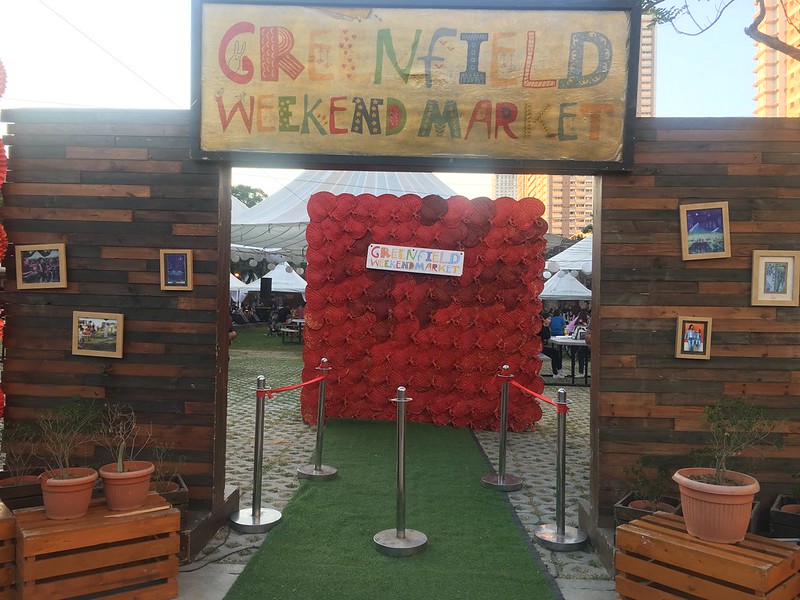
The Greenfield Weekend Market, held every Saturday at the Greenfield District’s Central Park in Mandaluyong City, is where foodies can go to enjoy wondrous varieties of food and drink by local artisan vendors. It’s country fair setup, which includes a dining experience under the stars and live music from featured local bands, contributes to a refreshingly chill vibe.

Greenfield Weekend Market

Greenfield Weekend Market

Greenfiel Weekend Market

During a recent visit to the Greenfield Weekend Market together with fellow foodies from #SaanSaPH, I was able to discover some interesting and tasty food finds.

Greenfield Weekend Market

Greenfield Weekend Market

Curious yet? Read on to find out what they are.

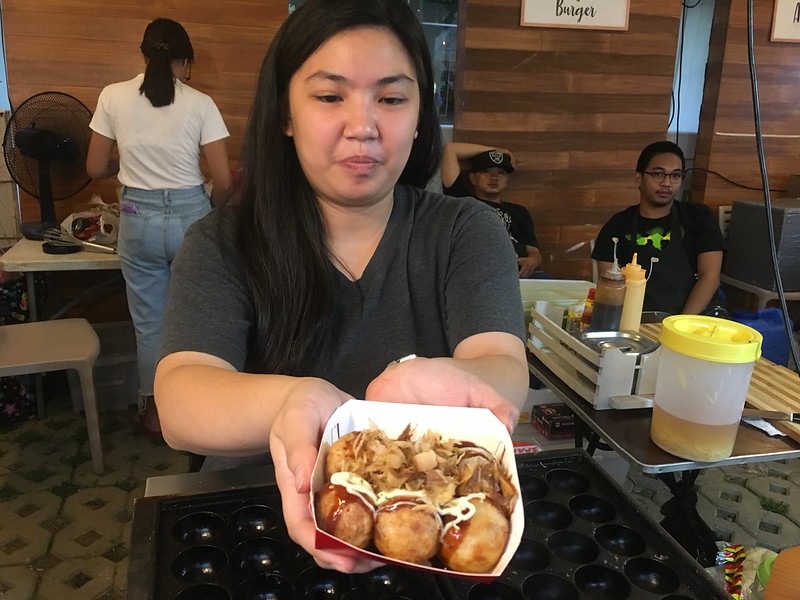
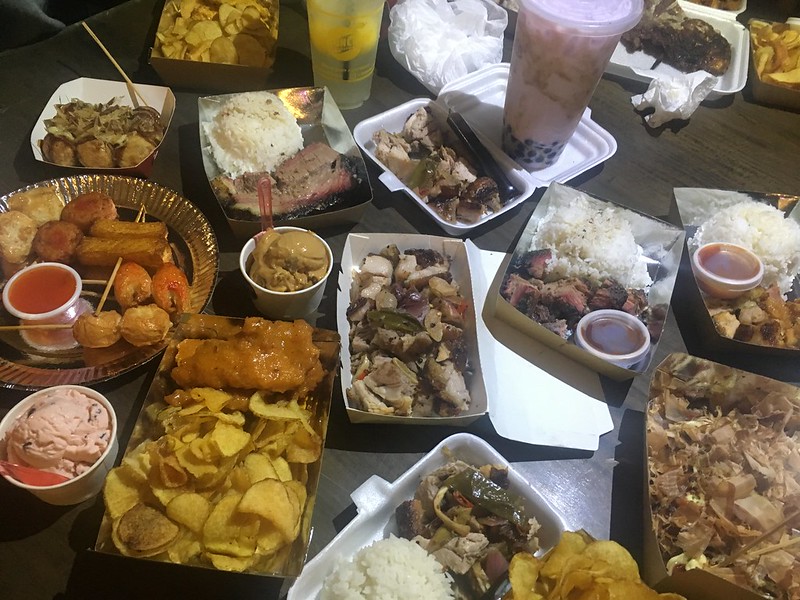
Takoyaki Balls from Shuma Gorath (Php95 for six pieces). Takoyaki are ball-shaped wheat flour-based snacks which originated from Japan. The balls served here are also flavored with green onions, tempura scraps and real octopus. Oh, and Marvel Comics geeks will surely find the store’s name familiar: Shuma Gorath is the villainous octopus-like alien ruler of several universes.

Greenfield Weekend Market

Greenfield Weekend Market

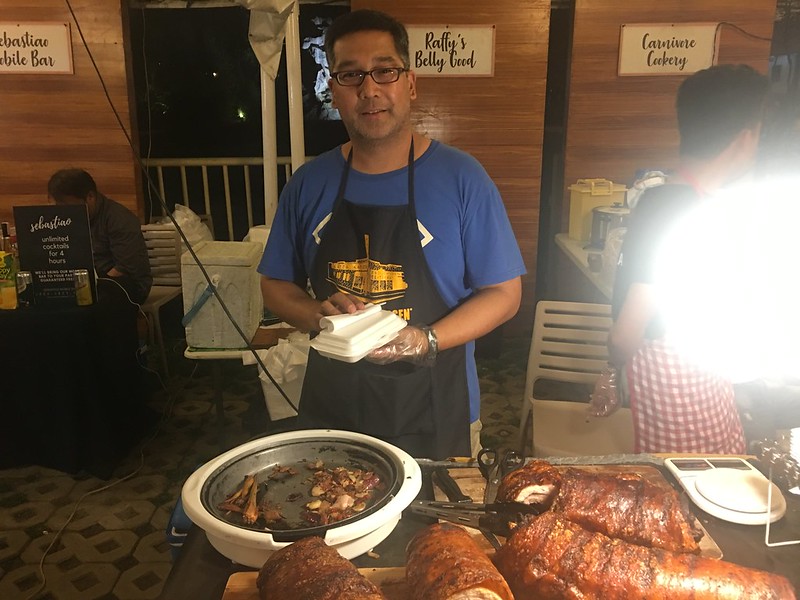
Cebu Lechon Belly from Raffy’s Belly Good (Php100 for 120 grams with no rice). Those flavorful pieces of pork belly, cooked Cebuano style, are now more easily accessible to us Metro Manila denizens, thanks to Raffy’s Belly Good. By the way, the store also accepts orders via + 63 2 2392466 or +63 917 8817239.

Greenfiel Weekend Market

Greenfield Weekend Market

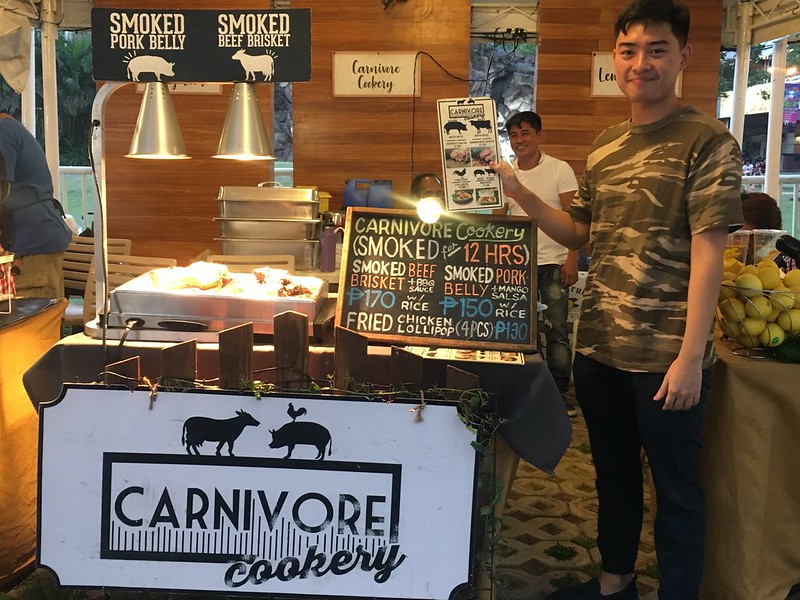
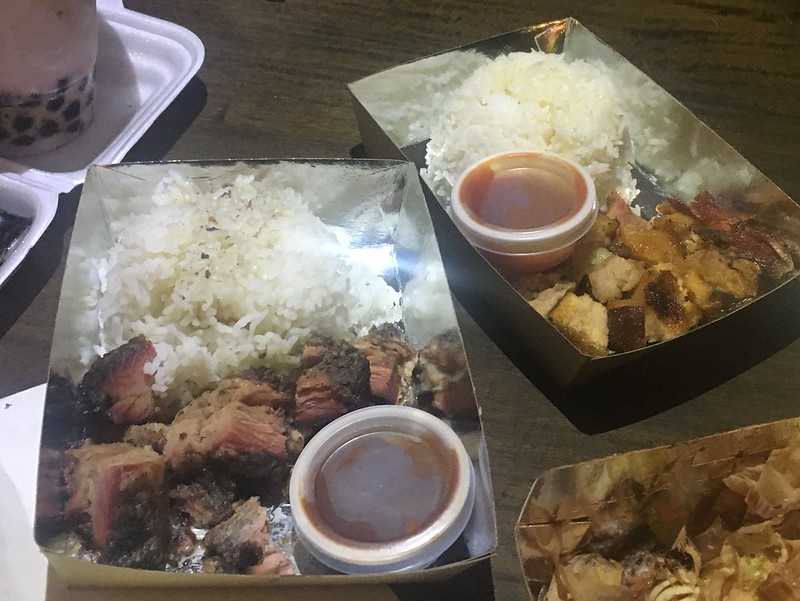
Smoked Beef Brisket (Php170 with rice and BBQ sauce) and Smoked Pork Belly (Php150 with rice and mango salsa) from Carnivore Cookery. Meat lovers, celebrate! Feast on these savory meats smoked for full flavor and tenderness for 12 hours! Want these delivered at home? Order via +63 917 52292222.

Greenfield Weekend Market

Greenfield Weekend Market

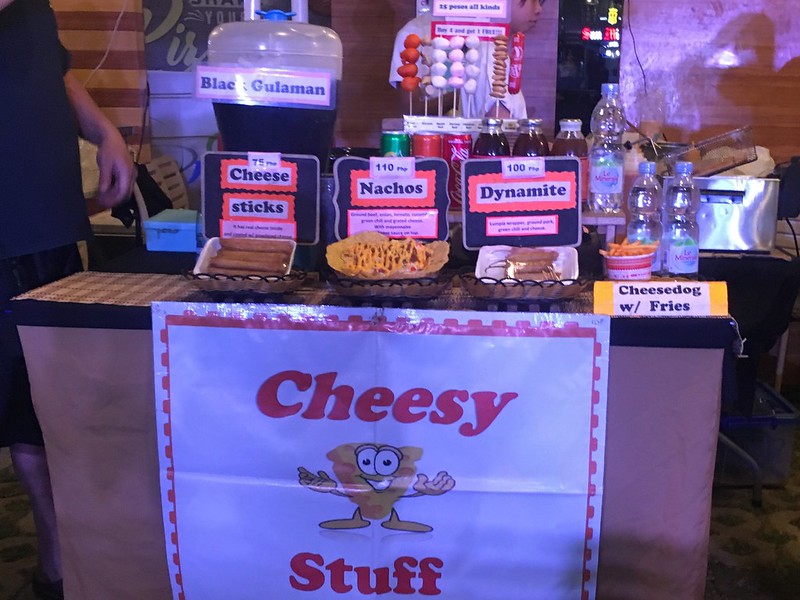
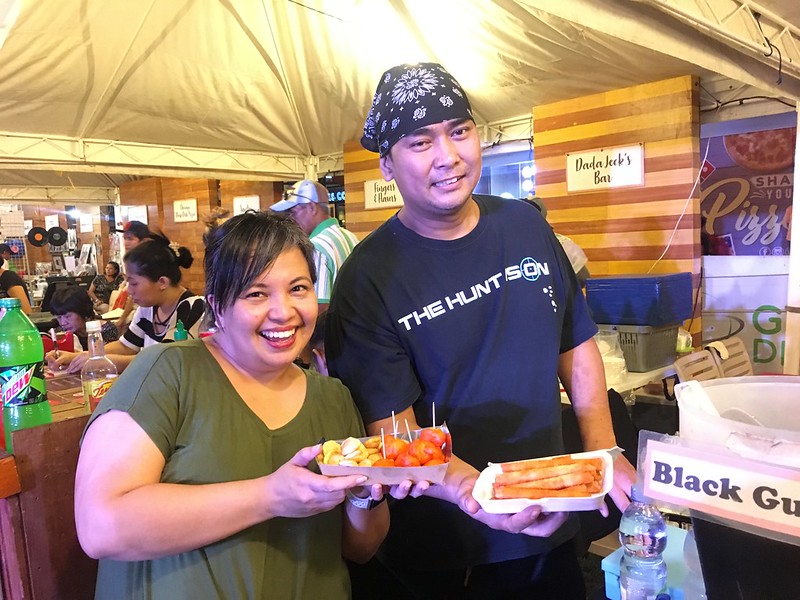
Fishballs, Squidballs and Kwek-Kwek (Php100 for four sticks plus 1) and Cheese Sticks (Php75) from Cheesy Stuff. Remember “Kuya, can I make tusok-tusok the fishballs?” Well, you’ll find yourself saying that again and again with Cheesy Stuff’s array of freshly cooked street food. Oh, and bite into the really cheesy cheese sticks, perfect snacks for the entire barkada.

Greenfield Weekend Market

Greenfield Weekend Market

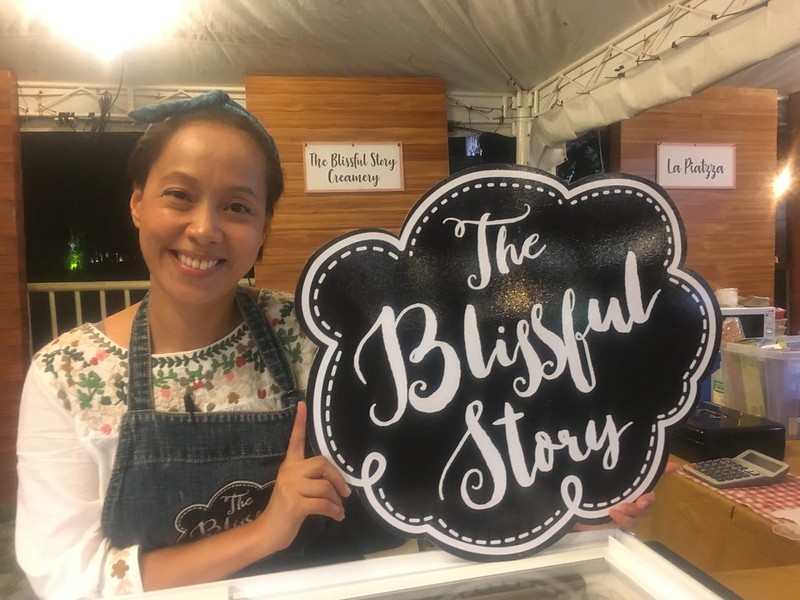
Spiked Carabao Milk Ice Cream from The Blissful Story Creamery (Php135 for single scoop). Ice cream is every kid’s favorite dessert, but these small-batch frozen treats made from carabao milk have something extra for us grownups: a little bit of Tequila Rose to go with the Strawberry Rose’s sweet fruity flavor and nutty cacao nibs for added oomph, amirite? By the way, you can also order this icy concoction online.

Greenfield Weekend Market

Greenfield Weekend Market

All these yummy discoveries and more are waiting for you in their respective food stalls at the Greenfield Weekend Market, held every Saturday from 4pm to 12 midnight at the Greenfield District Central Park, EDSA cor Shaw Boulevard, Mandaluyong City.

Check them out and do let me know what you think!

Disclosure: Together with other #SaanSaPH foodies, I was invited to check out the food stalls at this event. Food items mentioned here were served to allow us to sample the fare and were not paid for by the attendees, including myself.

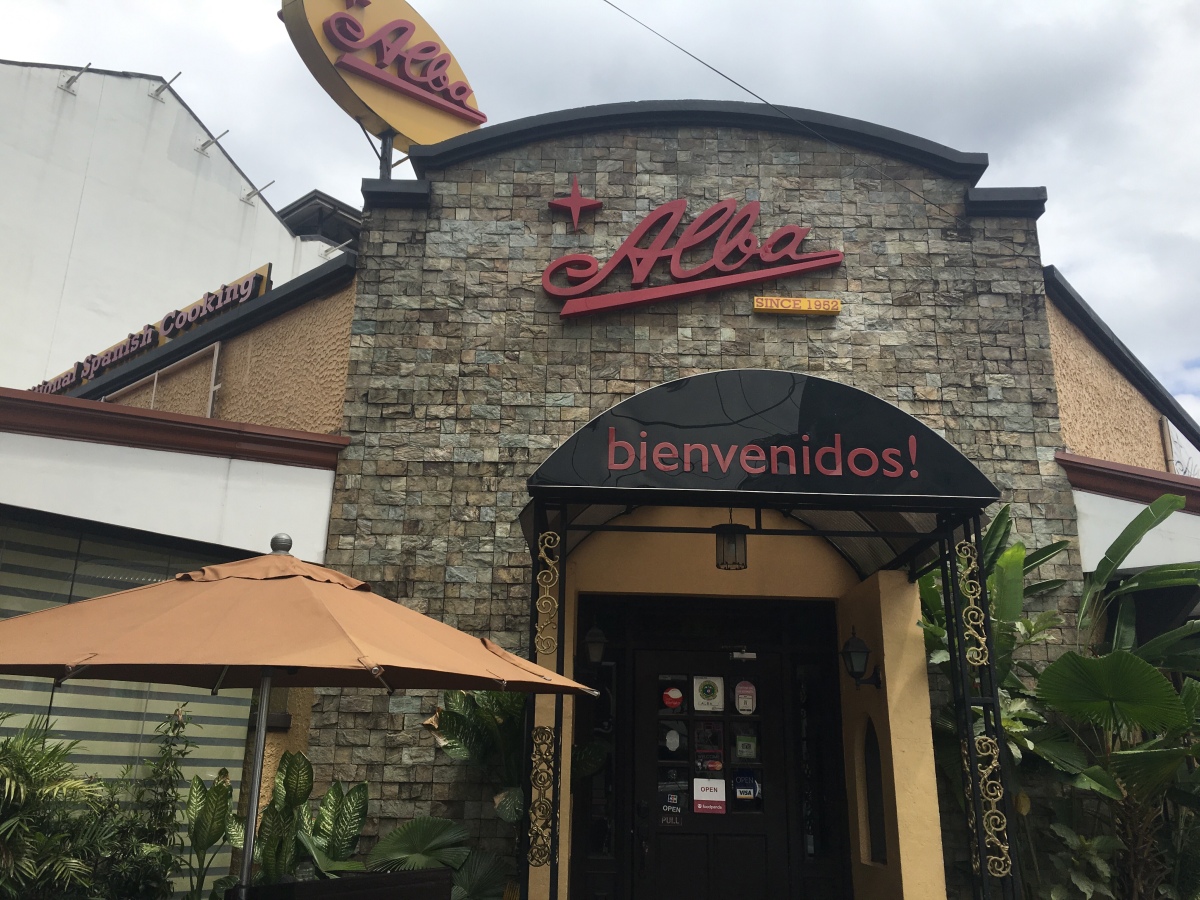
Traditional Spanish food at Alba Restaurante Espanol, Tomas Morato

Considering that Alba Restaurant Espanol has been around for more than sixty years, it’s a wonder I’ve only recently gotten around to dining at one of its branches.

Spanish cuisine has influenced Filipino food for centuries, so many of our favorite Filipino dishes actually have roots in Spain.

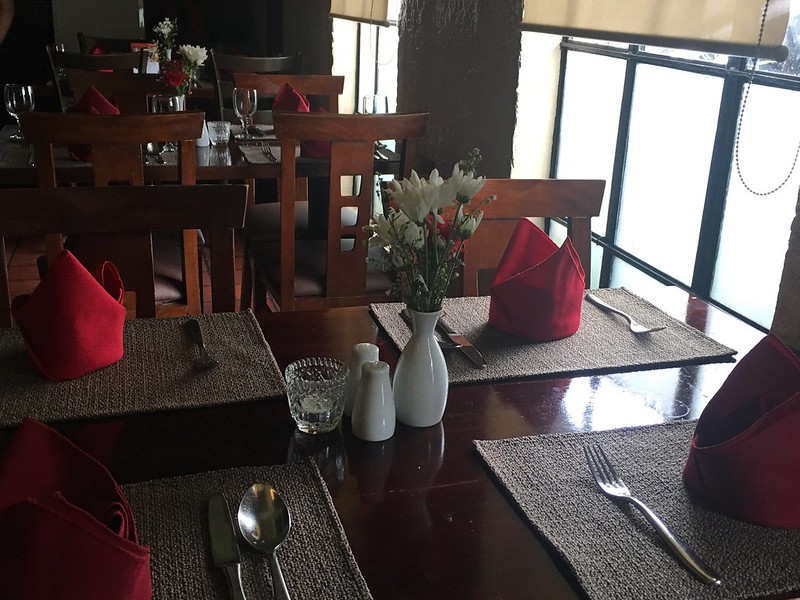
Alba, Tomas Morato

Alba, Tomas Morato

The flavors of Spanish food evoke the warmth and gaiety of its culture, shaped by the country’s long history of invasions and conquests wherein new ingredients, flavors and culinary styles were introduced and assimilated.

Founded by Senor Anastacio de Alba, a Spanish national, along with his son Chef Miguel in the 1950s. Since that time, it has become the de facto eatery for authentic Spanish fare by Manila’s who’s who as well as Manila’s tourists including Prince Juan Carlos of Spain and his wife Sofia during their visit to the country.

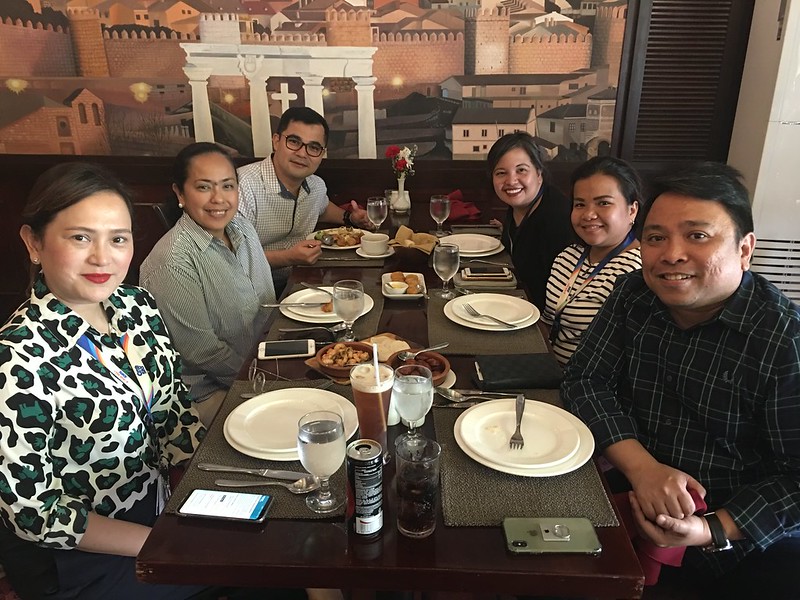
During one of my bouts of #ZomatoGold raiding together with my officemates, we decided to venture to the Tomas Morato branch of Alba for our lunch. The branch has been a fixture in the Tomas Morato food scene for as long as any of us can remember, and thanks to Zomato Gold’s 1+1 deal on food items, my companions and I were able to feast on some of its celebrated dishes.

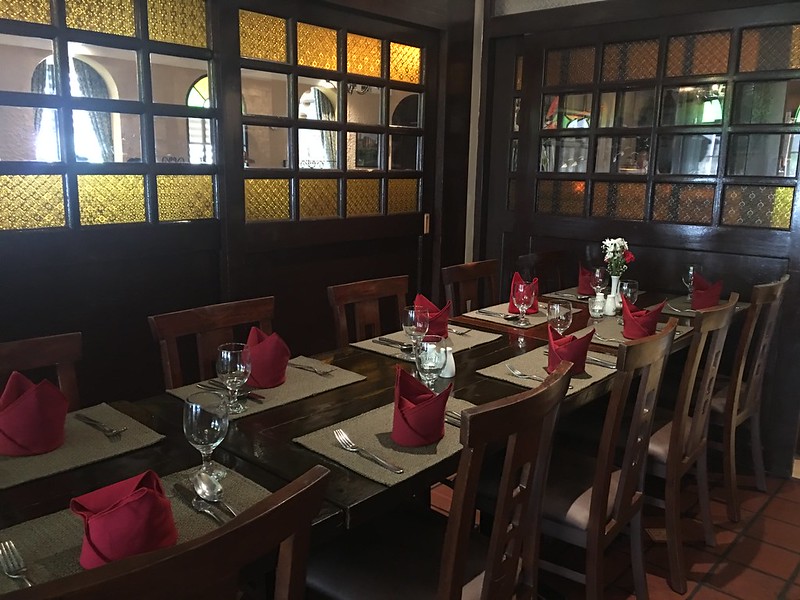
Alba, Tomas Morato

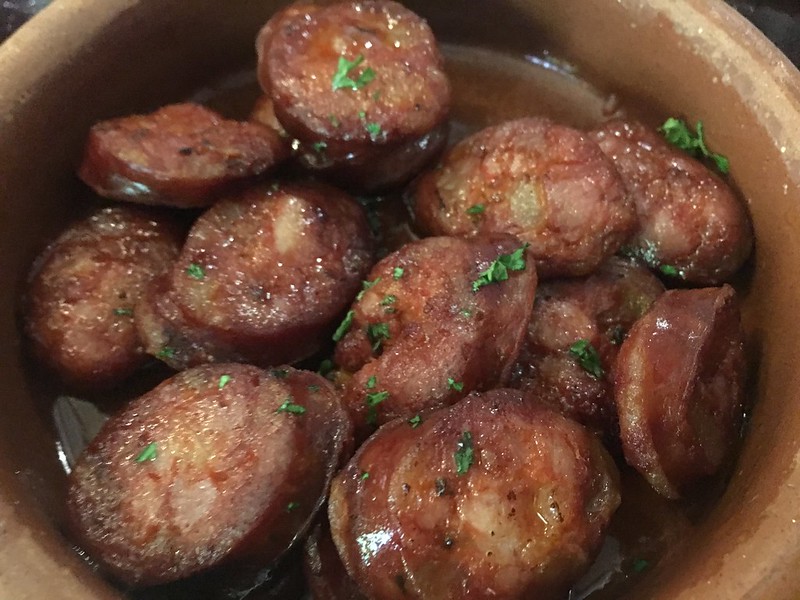
Chorizos Fritos (Php350). Homemade Spanish sausages lightly sauteed in oil.

Alba, Tomas Morato

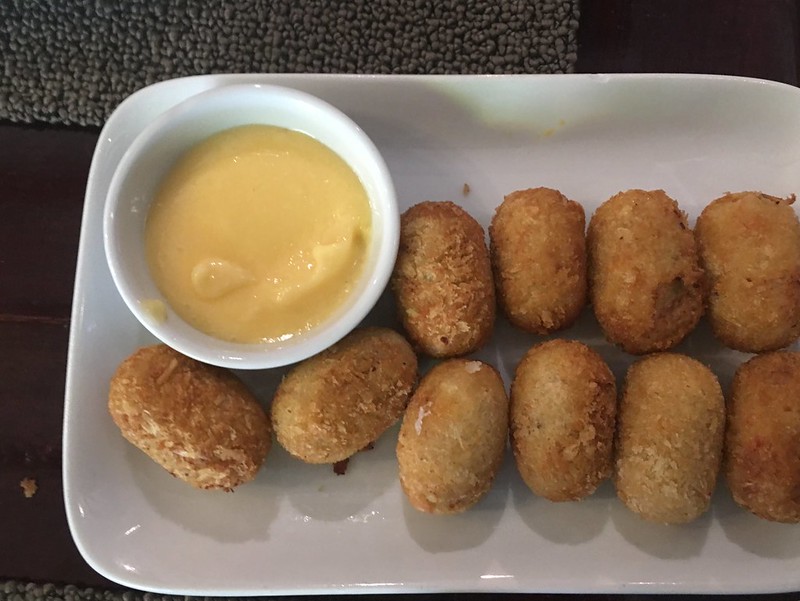
Croquetas de Pollo (Php240). Chicken and potato croquettes served with aoili sauce.

Alba, Tomas Morato

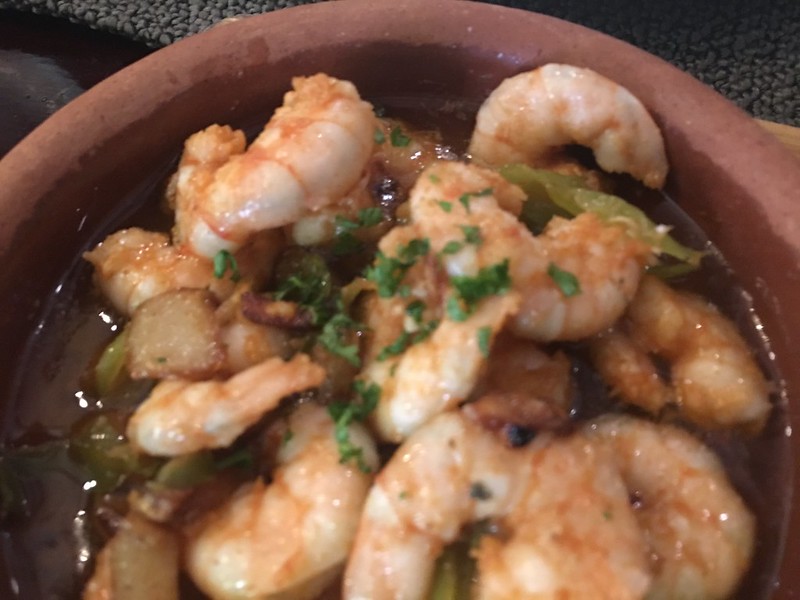
Gambas al Ajillo (Php370). Plump shrimps sauteed in garlic, chilis and oil.

Alba, Tomas Morato

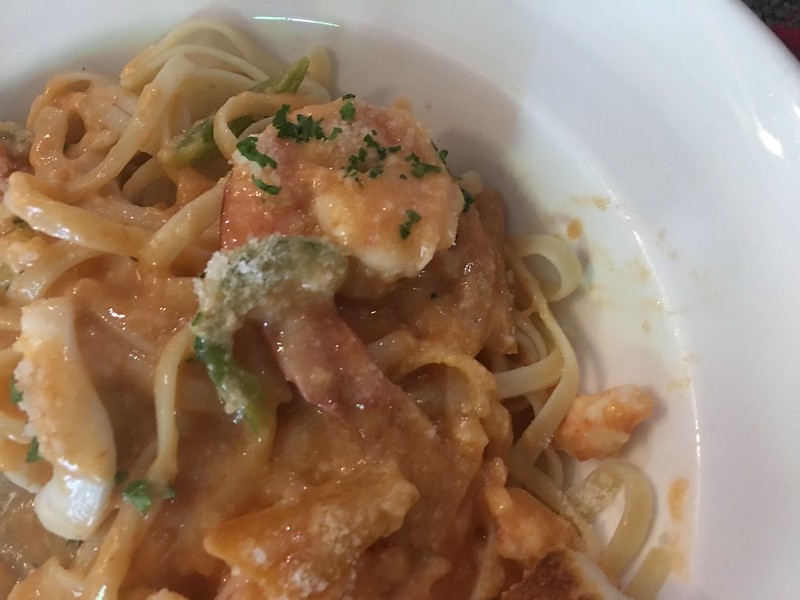
Pasta de Mariscos (Php300). Pasta noodles served in a seafood and tomato sauce.

Alba, Tomas Morato

Lengua Sevillana (Php500). Stewed ox tongue with mushroom and olives served in a rich sherry brown sauce.

Alba, Tomas Morato

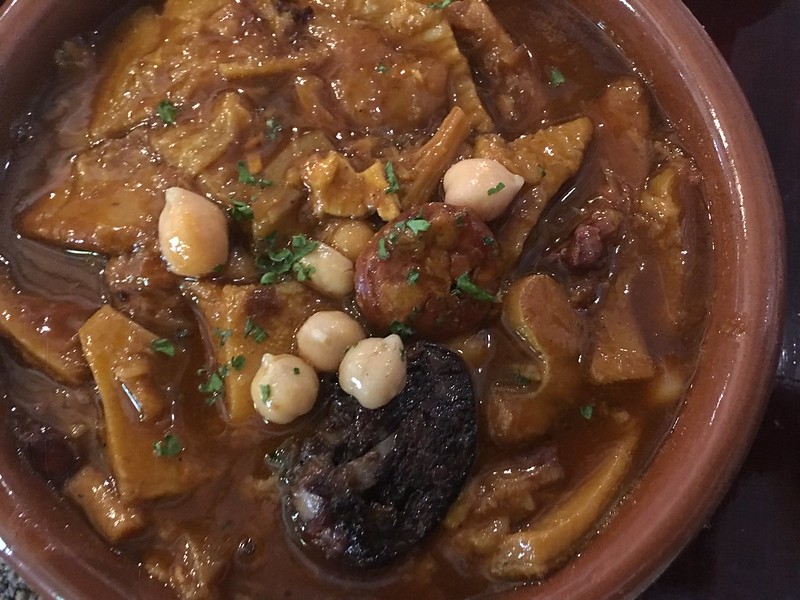
Callos ala Madrilena (Php420). Stewed ox tripe in rich tomato sauce.

Alba, Tomas Morato

I was happy to taste the Spanish variations of the dishes I grew up with. The callos and lengua, in particular, feature fork-tender meats and rich sauces that I just love.

On my next visit, I would love to avail of Alba’s Spanish Buffet. Imagine all sorts of tapas, paellas, carnes and postres you can eat for only Php795/head (lunch) or Php895/head (dinner)!

This branch of Alba is located at Tomas Morato Corner Scout Lozano Street, Sacred Heart, Quezon City, open daily from 11am to 11pm. For inquiries and reservations, call +63 2 9251912 or +63 2 9287129.

Other branches in the metro are found at:

  • Westgate Center, Filinvest City, Muntinlupa City, open daily from 11am to 11pm (Tel Nos: +63 2 7712178 or +63 2 7712179)
  • Fourth Level, Prism Plaza, Two E-Com Center, Ocean Drive, Mall of Asia Complex (MOA), Pasay City, open daily from 11am to 11pm (Tel Nos: +63 2 8088210 or +63 2 8082326)
  • 38 Polaris Street, Poblacion, Makati City, open daily from 11am to 11pm (Tel Nos: +63 2 8966950 or +63 2 8966951)
  • Level 2, North Wing, Estancia Mall, 1605 Meralco Avenue, Ortigas Center, Pasig open daily from 11am to 11pm (Tel Nos: +63 2 2534953 or +63 2 2588272)

Alba Menu, Reviews, Photos, Location and Info - Zomato

Thanks to Zomato Gold, several dishes from our order are FREE! Zomato Gold provides members with 1+1 deals on food or 2+2 deals on drinks. All you have to do is sign up for a Zomato Gold membership here. Use my code JELLYB to get 20% off the membership fee.

You can also book your table at Alba’s Mall of Asia Complex branch using Eatigo to get up to 50% off your food bill. Sign up using my referral link to get additional perks.

Check out my reviews of other restaurants serving Spanish food in the Metro:

Everyday’s a good day for ice cream at Sundays by Merry Moo, The Podium

What’s the simplest pleasure that you can picture yourself freely indulging in come the long hot summer?

For me, it’s ice cream, of course!

The icy yet velvety creamy feel of it on my tongue and the bursts of sweetness on my tastebuds combine to bring back memories of my childhood’s enjoyable summers, slurping this cool treat.

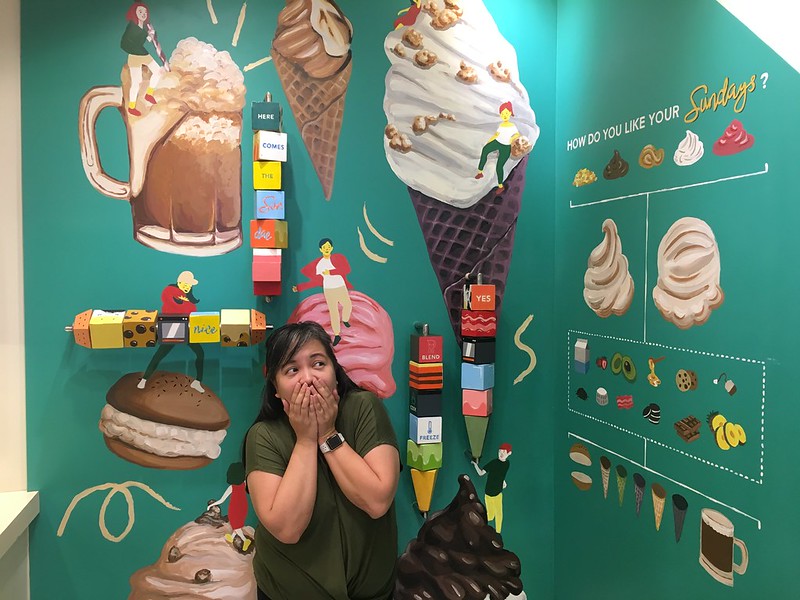
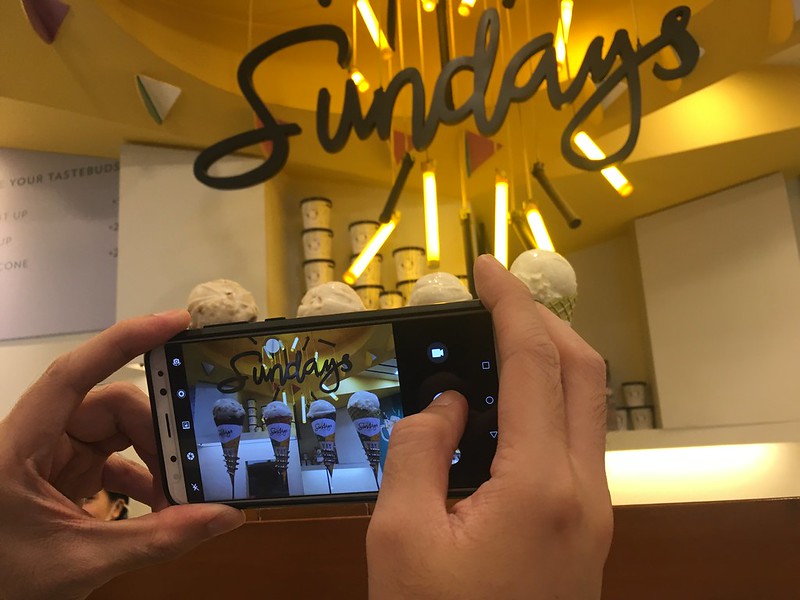
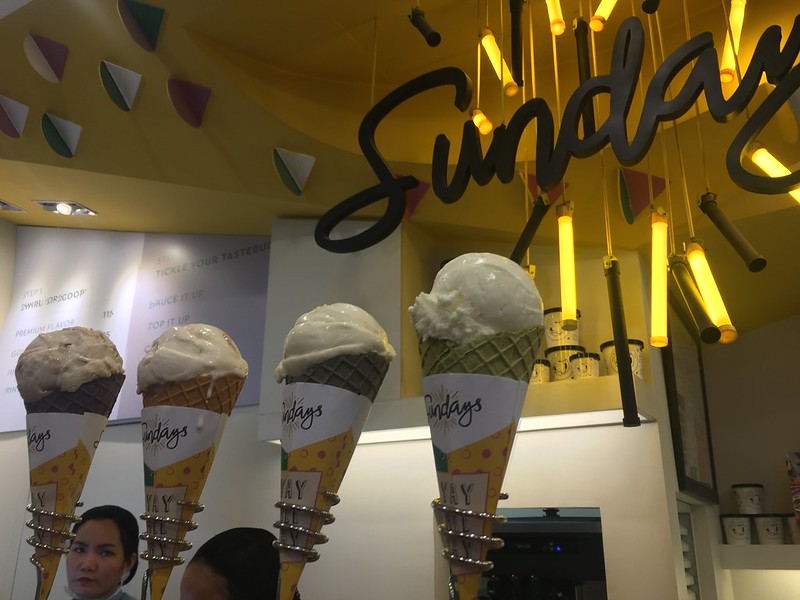
Well, with Sundays, Merry Moo’s first in-line ice cream store at the Corner Market Food Hall in the Podium, I won’t have to venture far to have a taste of my favorite ice cream flavors, and more.

Sundays by Merry Moo, The Corner Market Food Hall

Merry Moo made a name for itself with its artisanal and premium ice cream. Believing that happy cows make great dairy, it sources its milk from dairy farmers in Laguna whose herds are given expansive pastures to graze and roam freely. Since its dairy is non-UHT (Ultra Heat Treated), its milk and cream retain their flavors and nutritional content.

Sundays by Merry Moo, The Corner Market Food Hall

To guarantee freshness, Merry Moo’s ice cream is churned in small batches using fresh and locally sourced ingredients to produce yummy icy desserts that bring smiles to the faces of those who taste them.

Sundays by Merry Moo, The Corner Market Food Hall

Together with my fellow foodies, I was able to taste some of its new flavors which are:

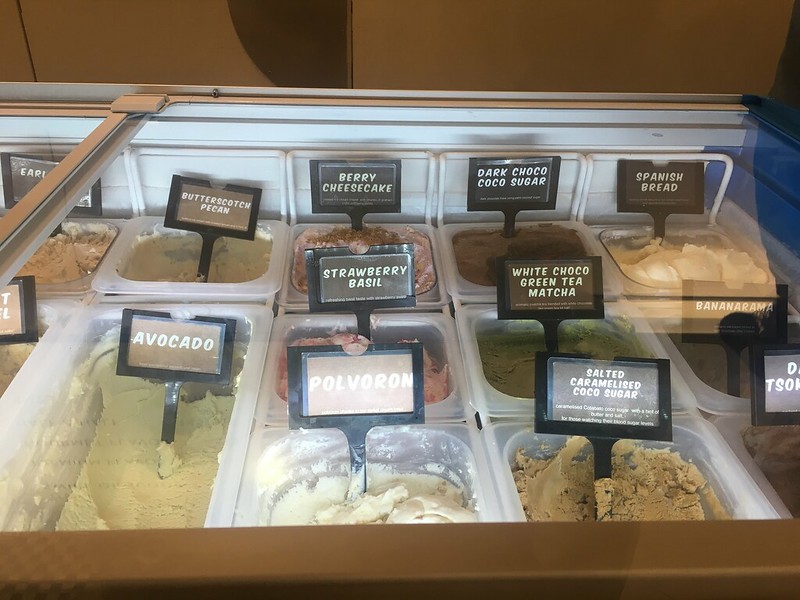
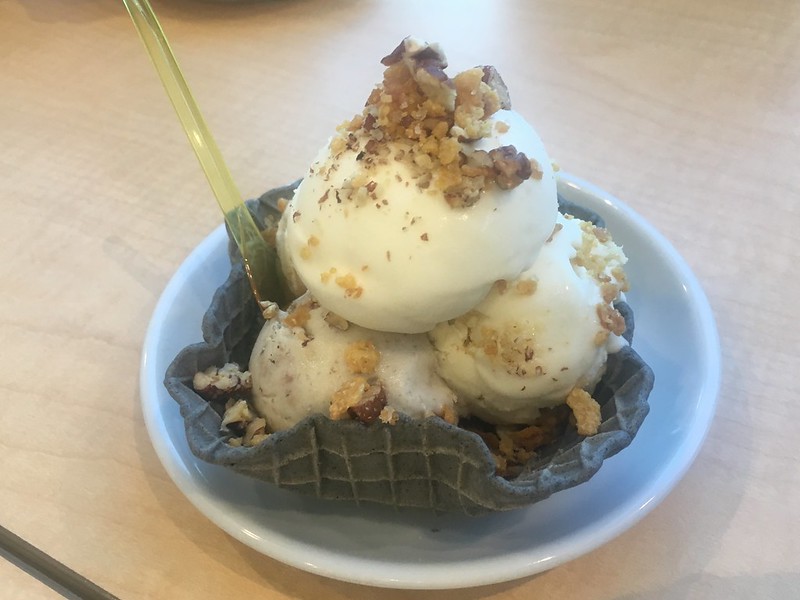
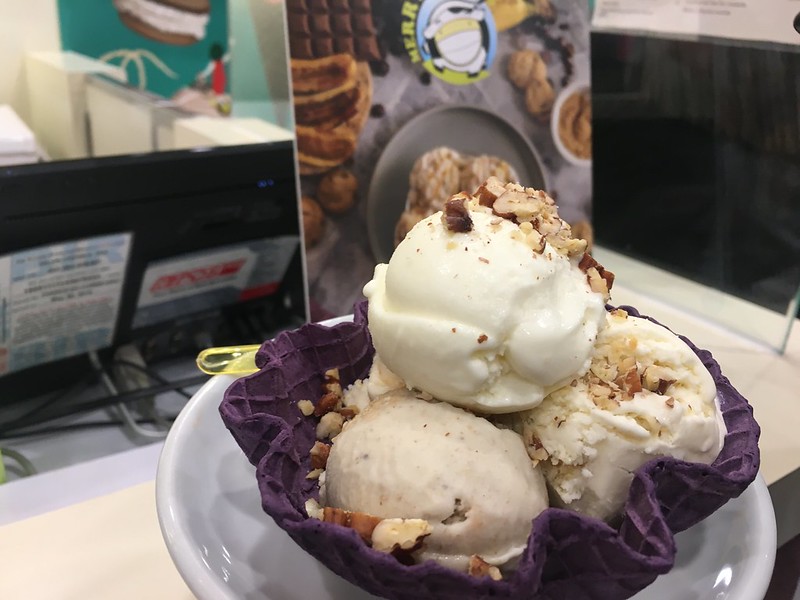
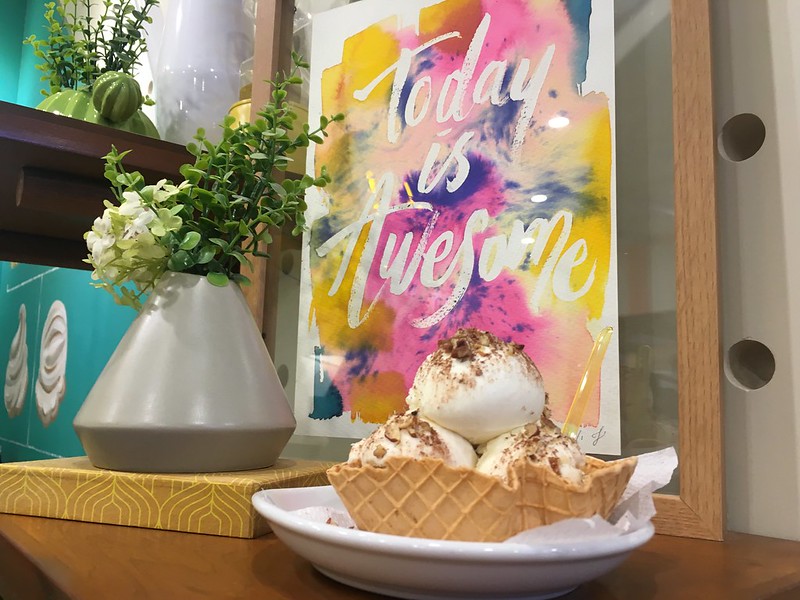
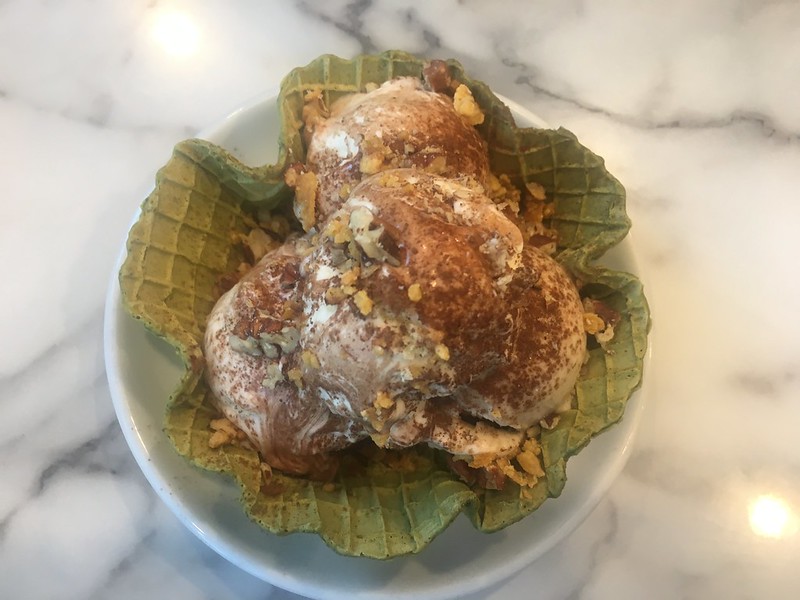
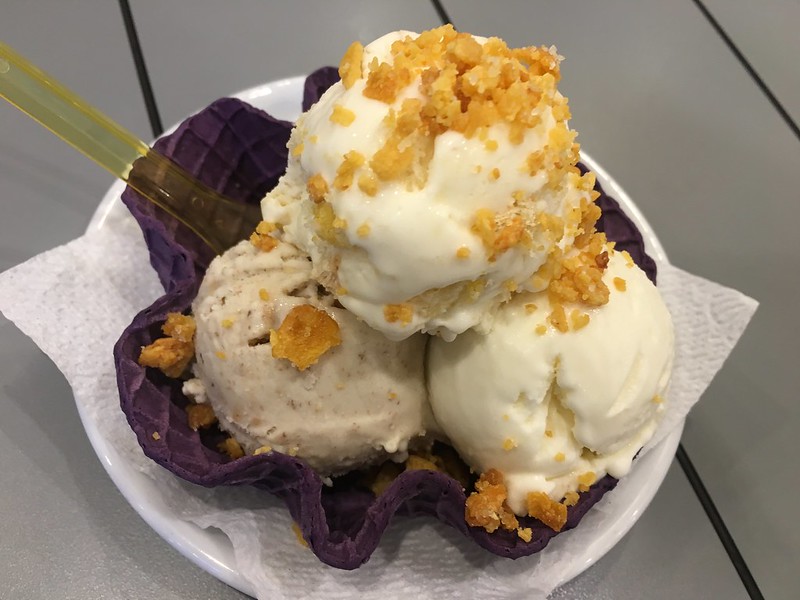
Bananarama. Brown sugar is added to Cavendish bananas which are then oven-roasted. Afterwards, the mixture is blitzed, added to fresh milk and cream, then allowed to steep overnight to let the flavors intensify before being placed in the ice cream batch freezer. Chocolate cookie chunks are then added to the churned ice cream.

Sundays by Merry Moo, The Corner Market Food Hall

Spanish Bread and Doughnut. Curiously, these two flavors come from the baked products that inspired them. To infuse the ice cream base with these flavors, the breads are blitzed then added to the milk and cream base. The mixture is allowed to steep overnight then placed in the batch freezer. More chunks of Spanish bread or doughnuts are then added to the churned ice cream.

Sundays by Merry Moo, The Corner Market Food Hall

Yogurt. Hacienda Macalauan in Laguna, Merry Moo’s dairy supplier, also produces Greek yogurt. This is used to infuse Merry Moo’s milk and cream base, resulting in ice cream that is a little more tart but still yummy.

Sundays by Merry Moo, The Corner Market Food Hall

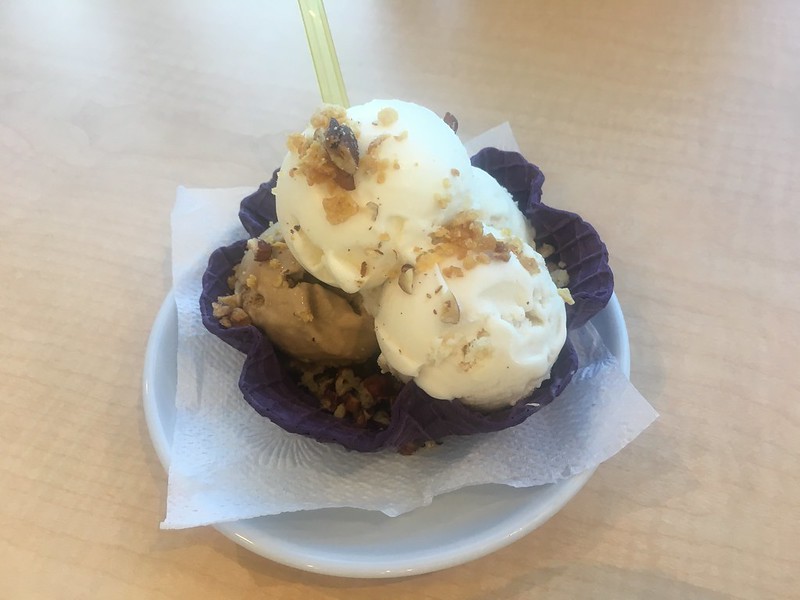
My scoops of these decadent treats were served on a crunchy waffle bowl, sprinkled with my chosen toppings: Horlicks, a sweetened malt-based powder, and buttered pecans.

Sundays by Merry Moo, The Corner Market Food Hall

The ice cream flavors sure are unusual, but call to mind tastes and textures that are near and dear to us. Who hasn’t whiled away a lazy afternoon munching on warm buttery Spanish bread, or added bananas to ice cream to for added fruity sweetness? Who hasn’t been caught in the recent frozen yogurt craze?

What I love most about Merry Moo’s ice cream is the thought and care that goes into the creation of each flavor. I plan to drop by one of its stalls soon to taste more of its flavors like Avocado and Salted Chocolate.

Sundays by Merry Moo, The Corner Market Food Hall

A scoop of Merry Moo’s premium ice cream flavors sells for Php115 while one of gourmet flavor sells at Php135. Add Php15 to drizzle your preferred sauce on it or add your favorite toppings for an additional Php20.

Want Merry Moo at your party? Have a scooping station for as low Php8,500, good for 100 servings.

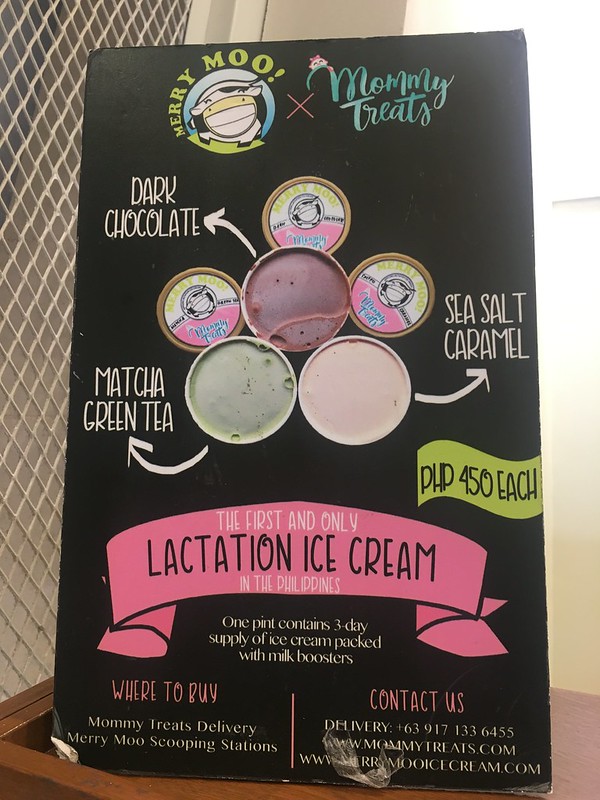
For the mumshies out there: Did you know that through its partnership with Mommy Treats, Merry Moo produces the country’s first and only lactation ice cream? At only Php450/pint, enjoy flavors such as Dark Chocolate, Sea Salt Caramel and Match Green Tea packed with milk boosters to improve your milk supply.

Sundays by Merry Moo, The Corner Market Food Hall

Sundays by Merry Moo is located at the The Corner Market, Second Floor, The Podium, ADB Avenue, Ortigas, Mandaluyong City, open daily from 11am to 10pm.

Disclosure: Together with other foodies, I was invited to join a foodie meetup held at this restaurant. Food items mentioned here were served to allow us to sample the fare and were not paid for by the attendees, including myself.